
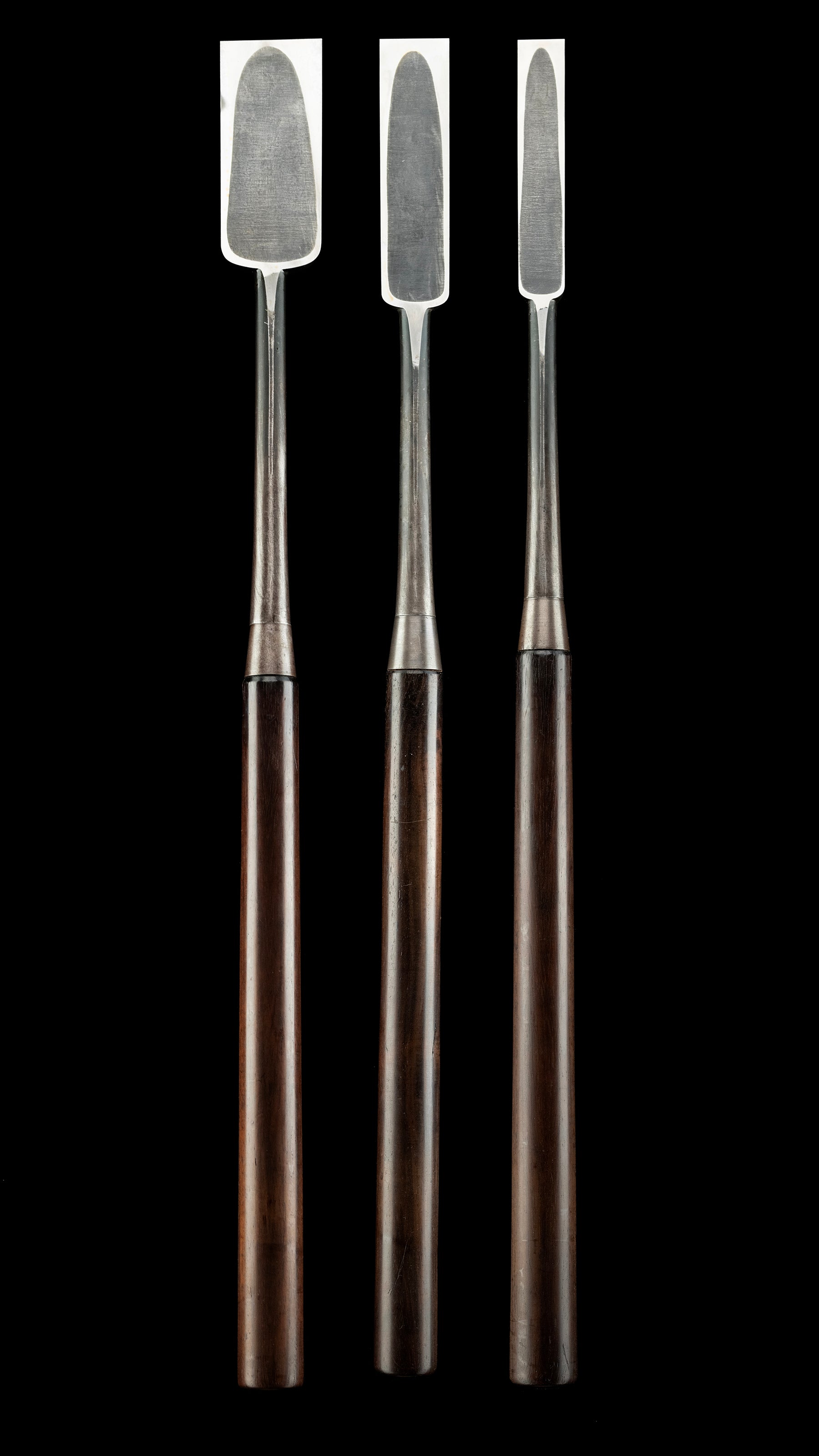
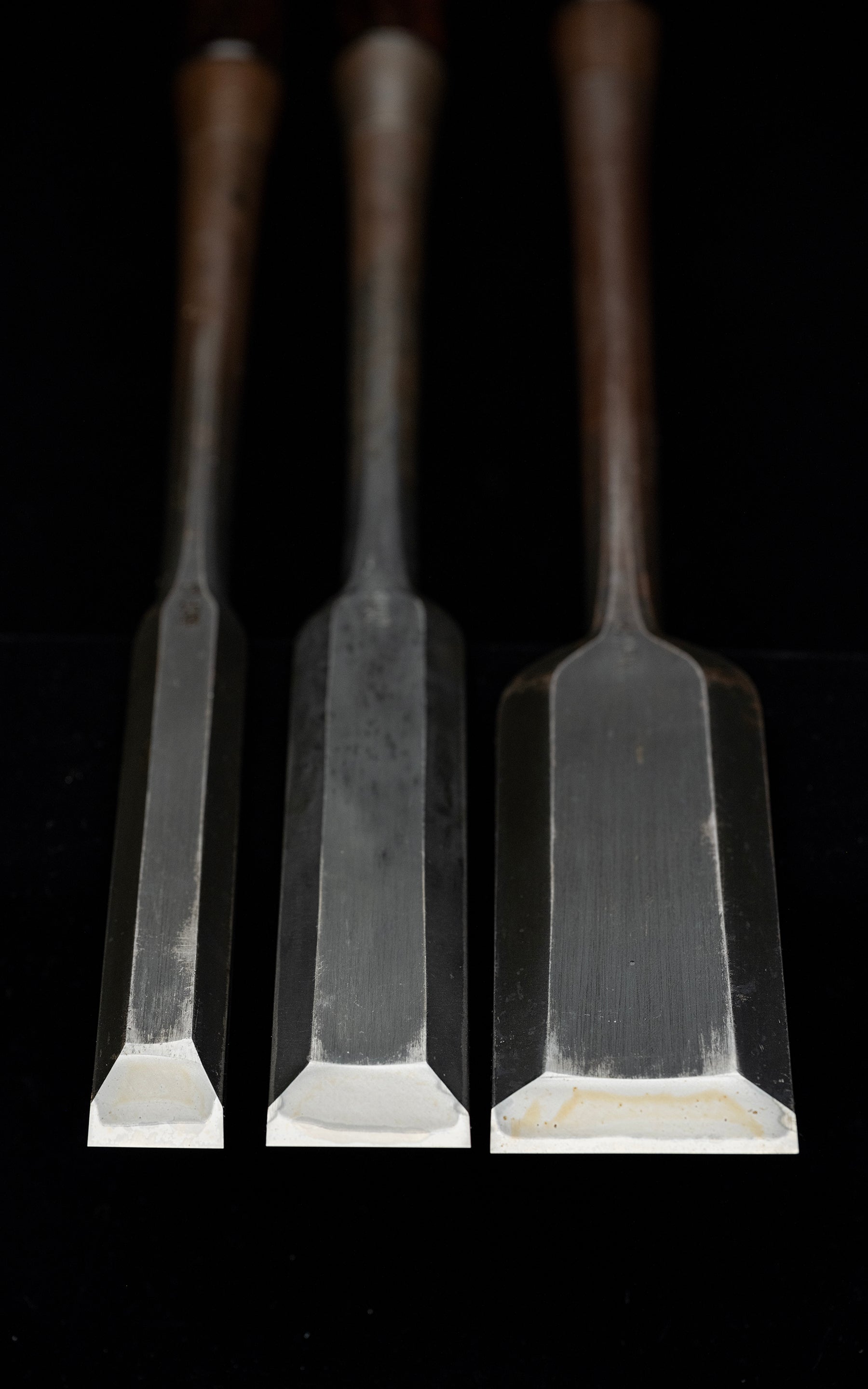
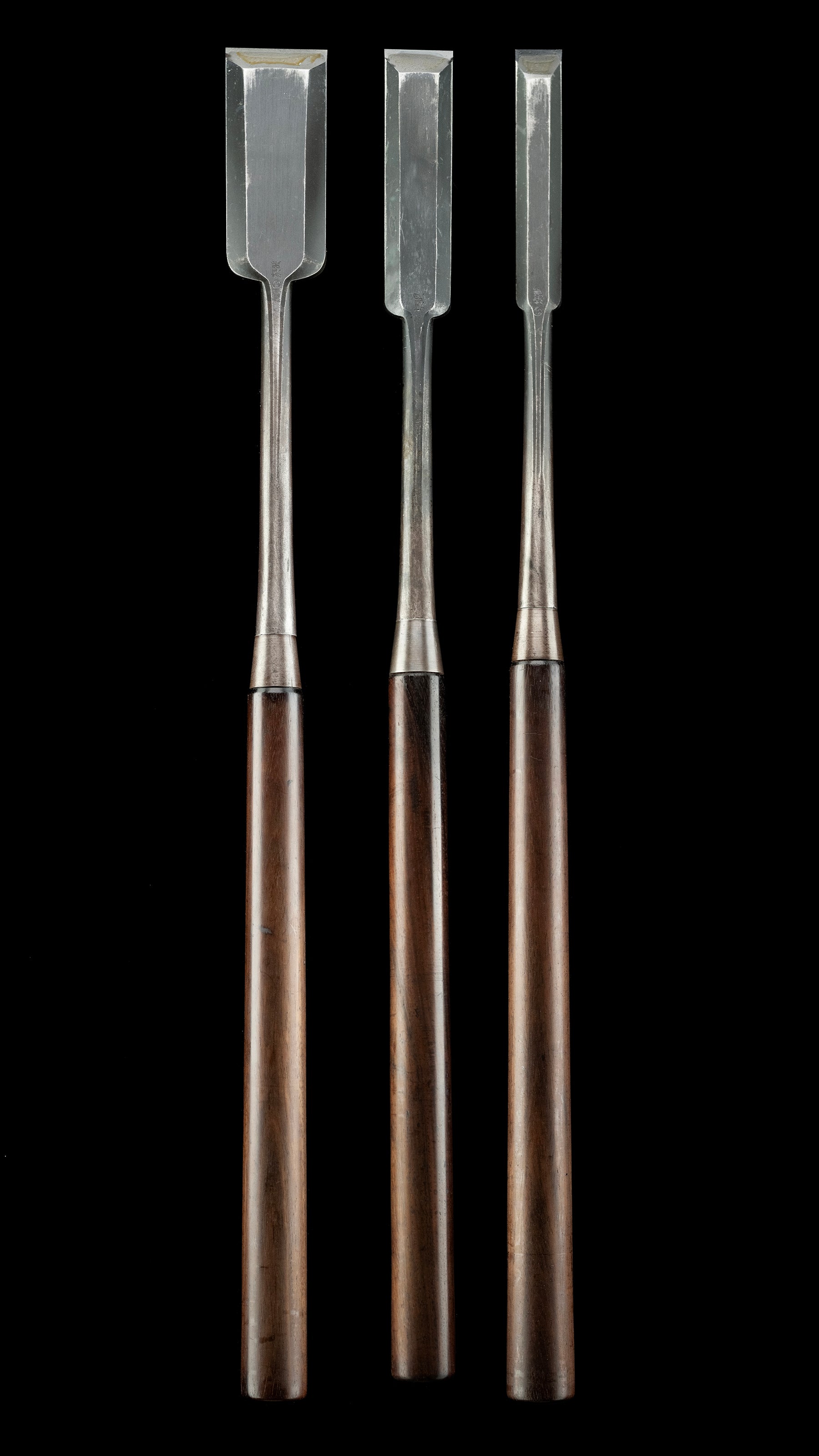
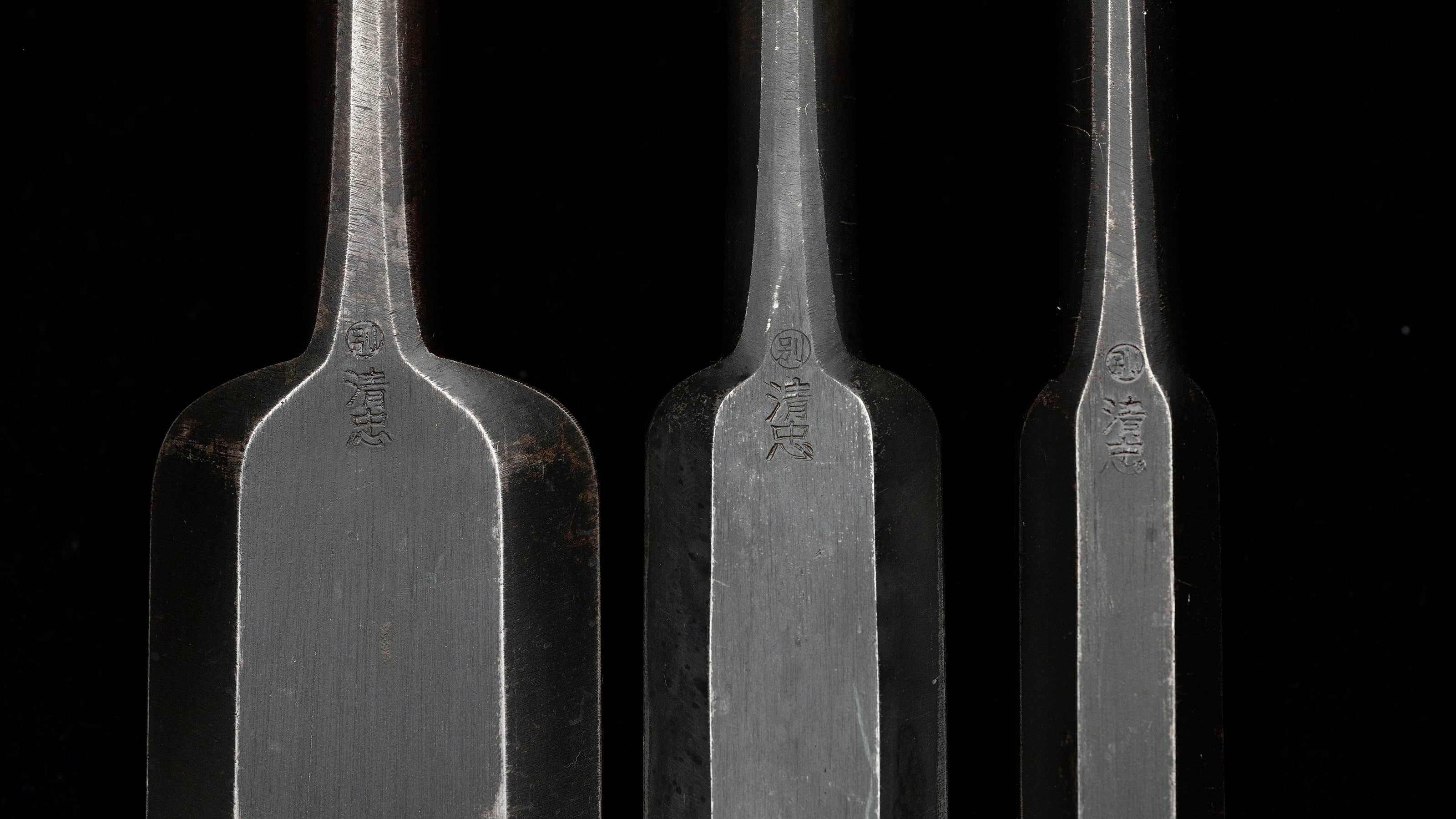
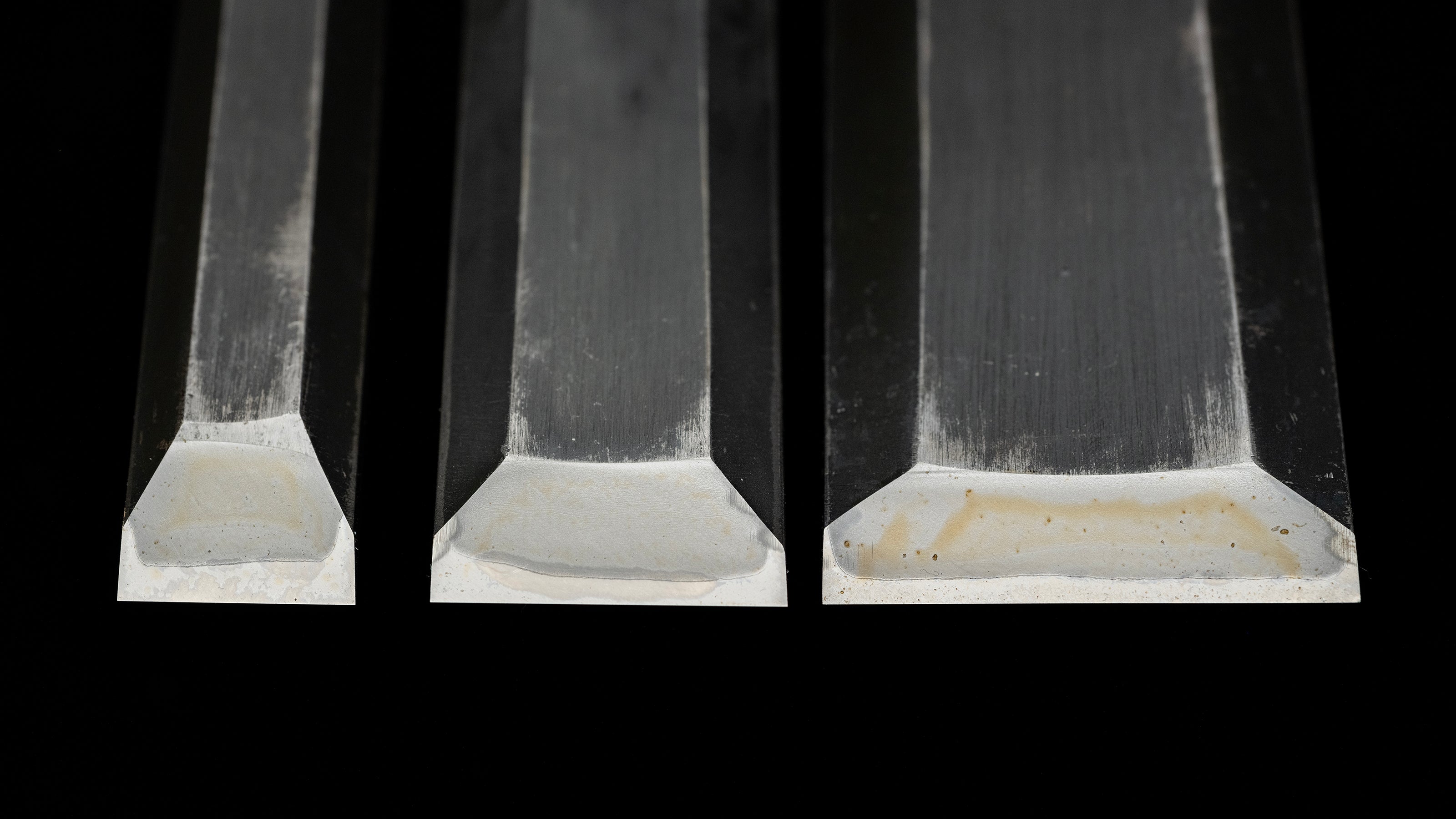
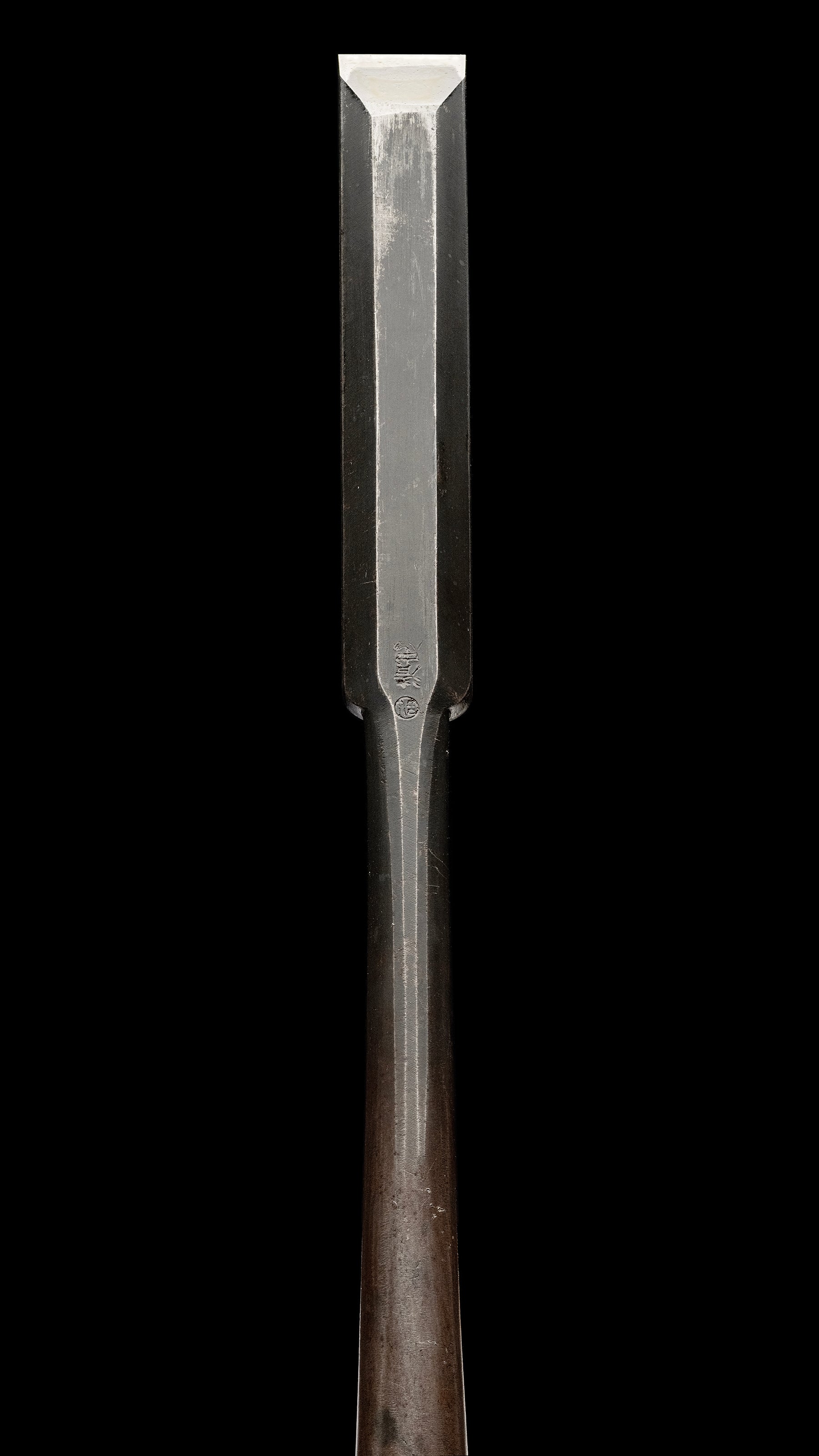
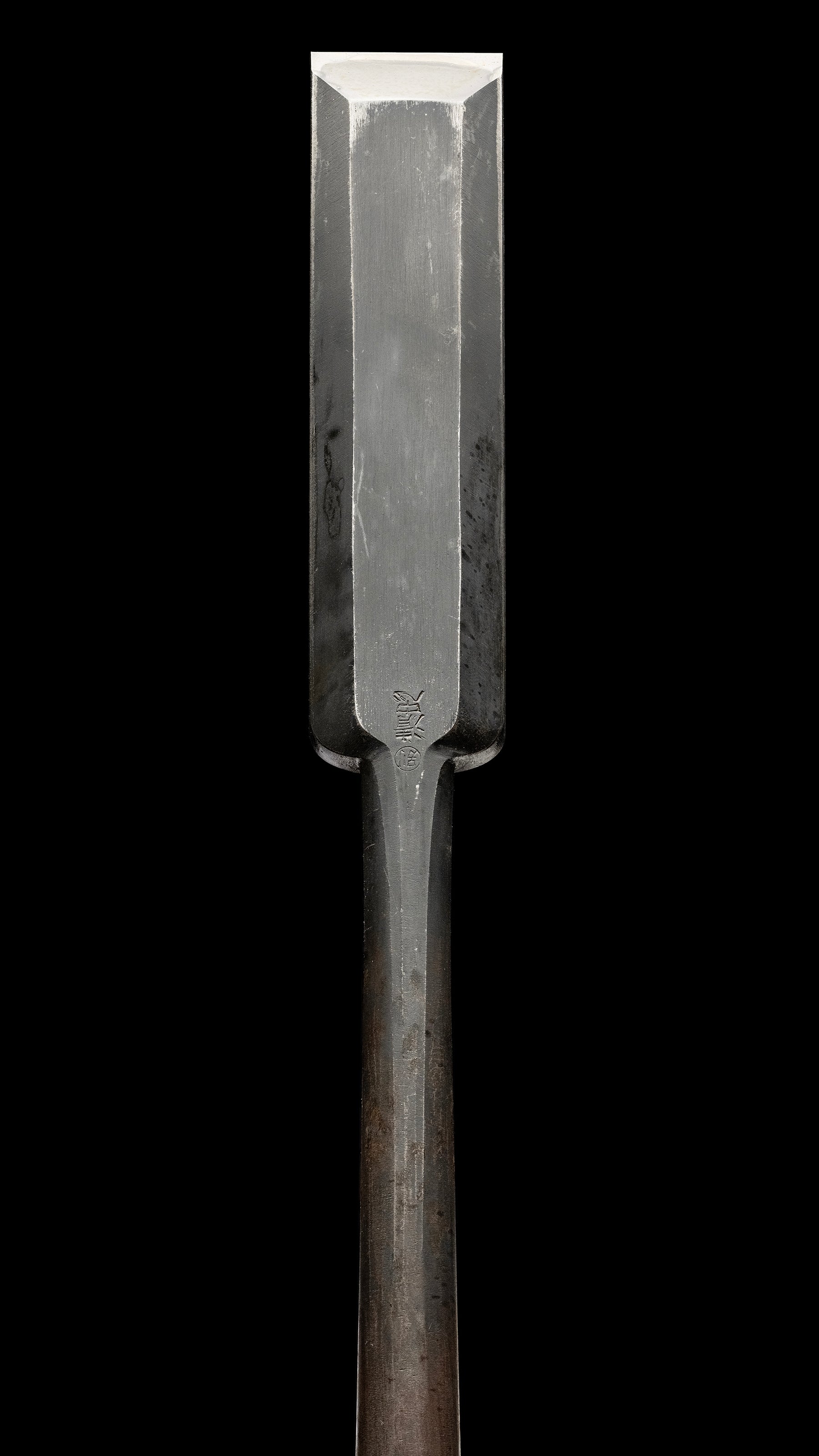
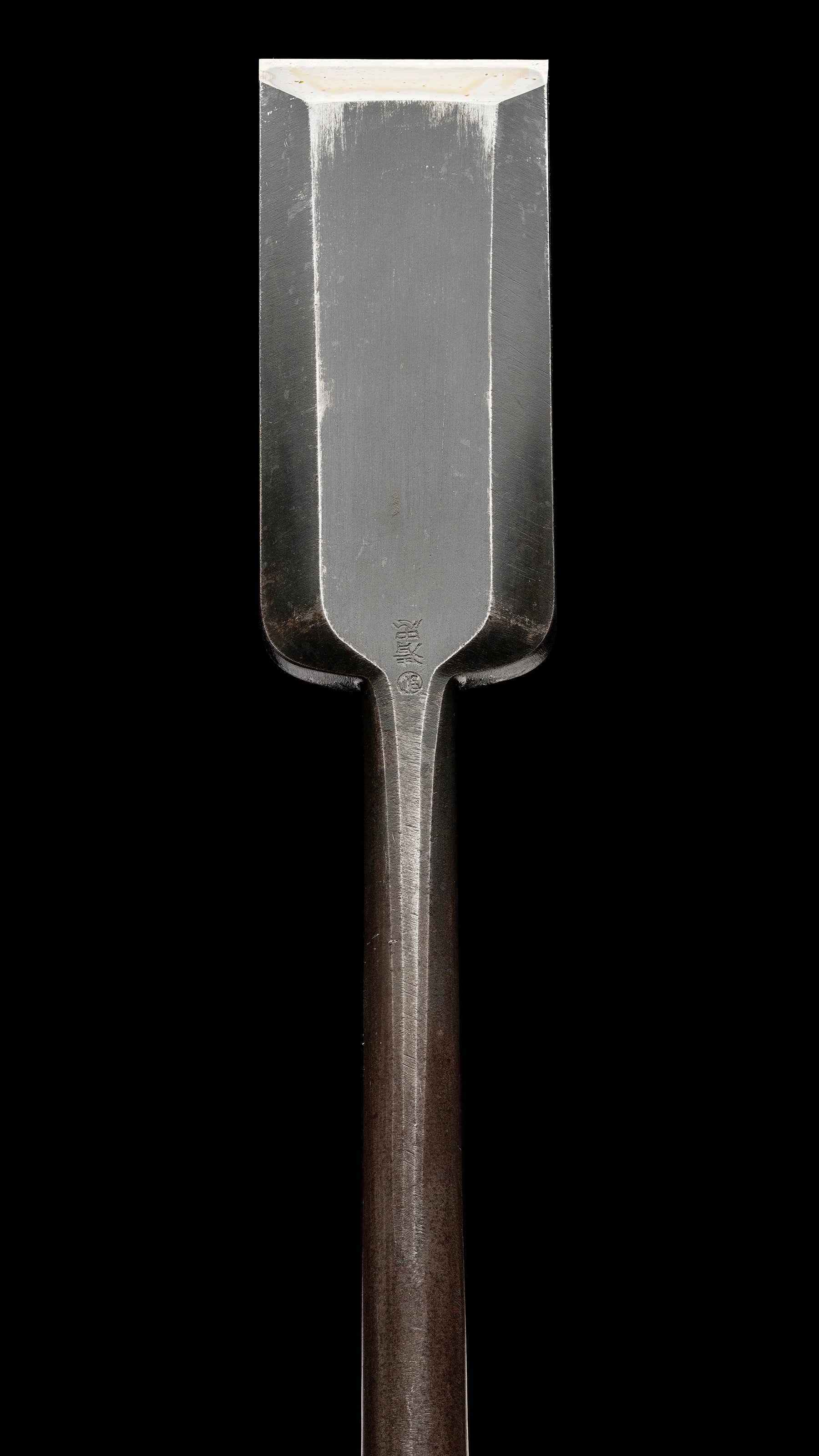
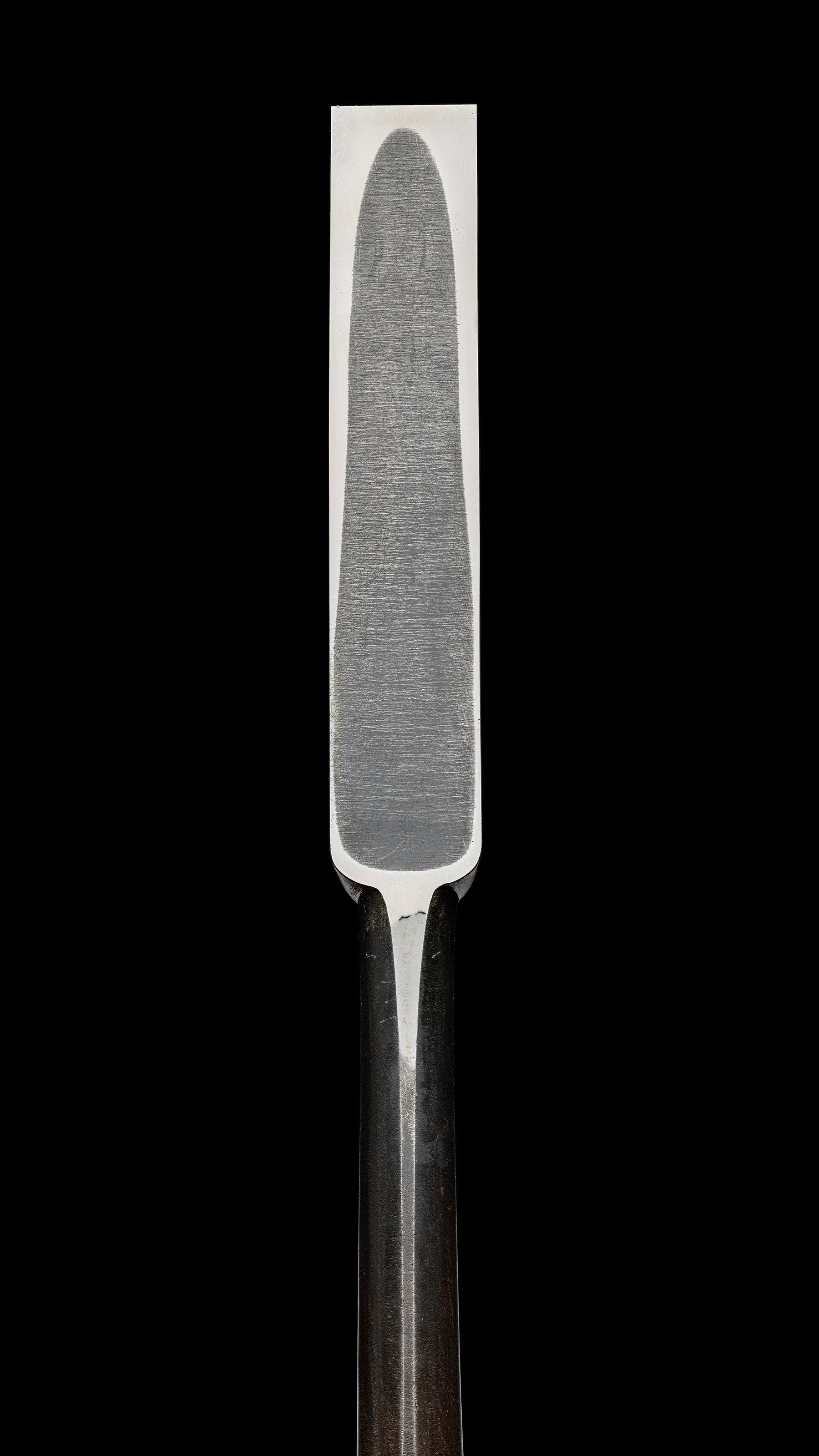
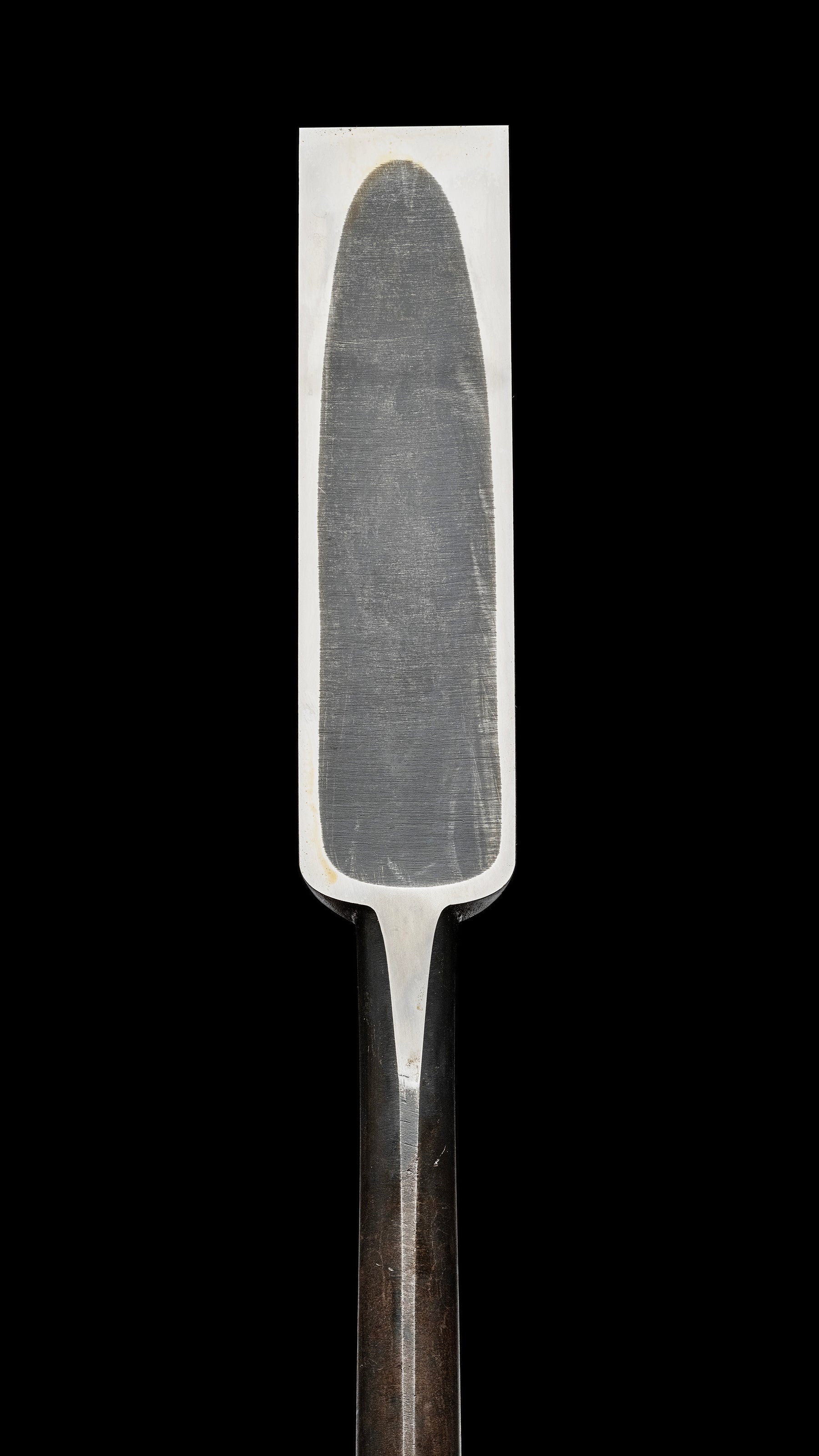
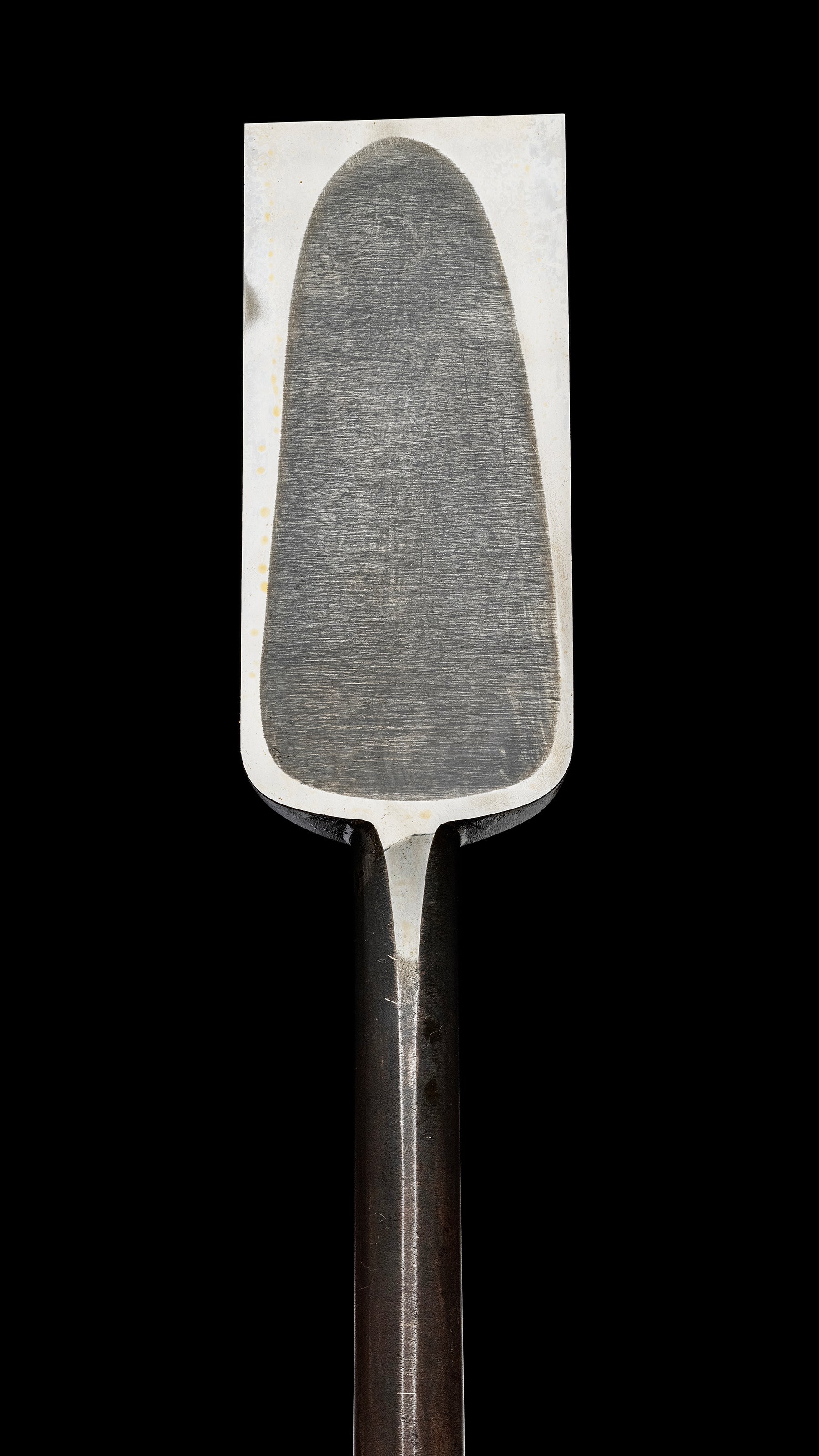
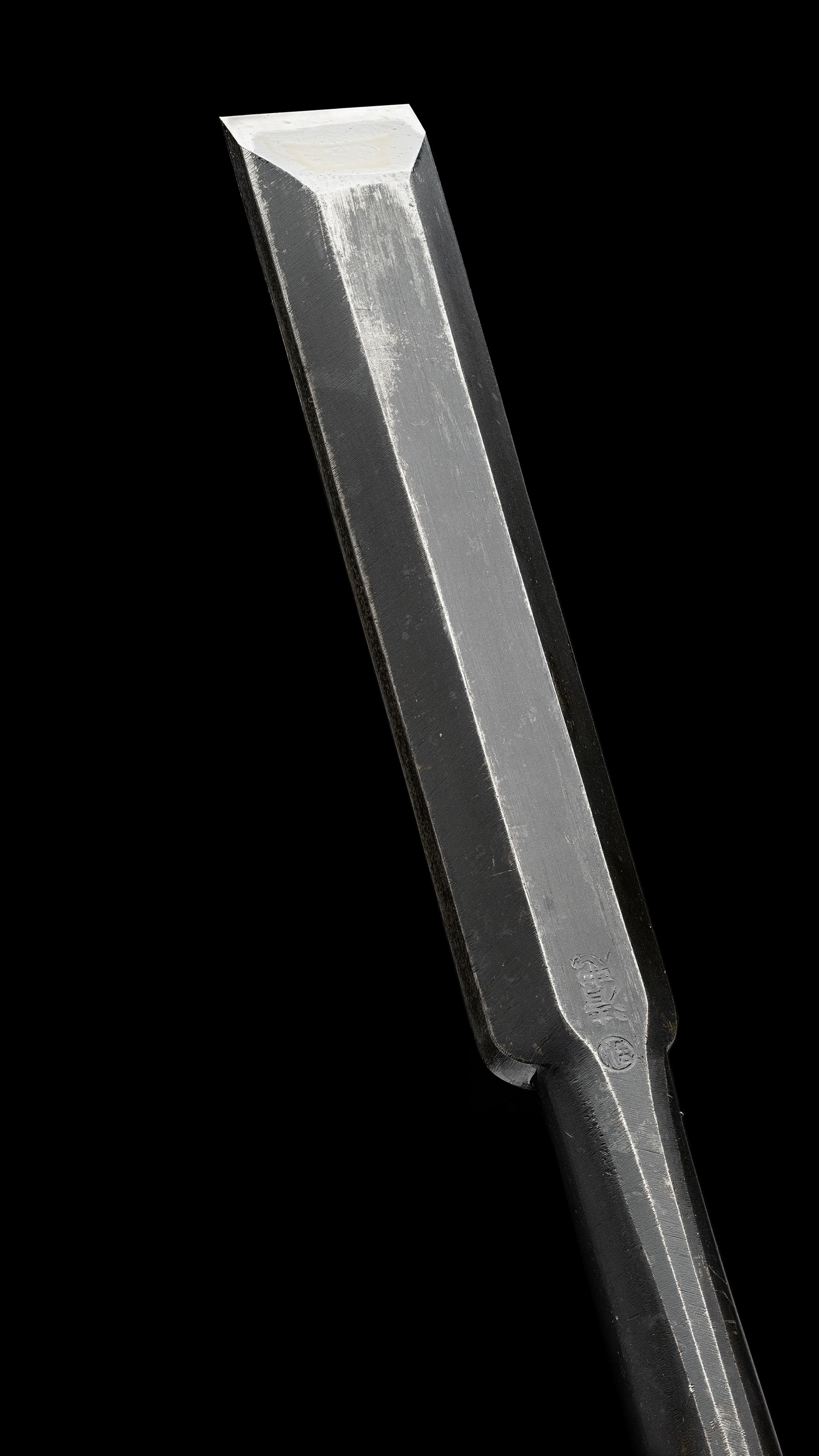
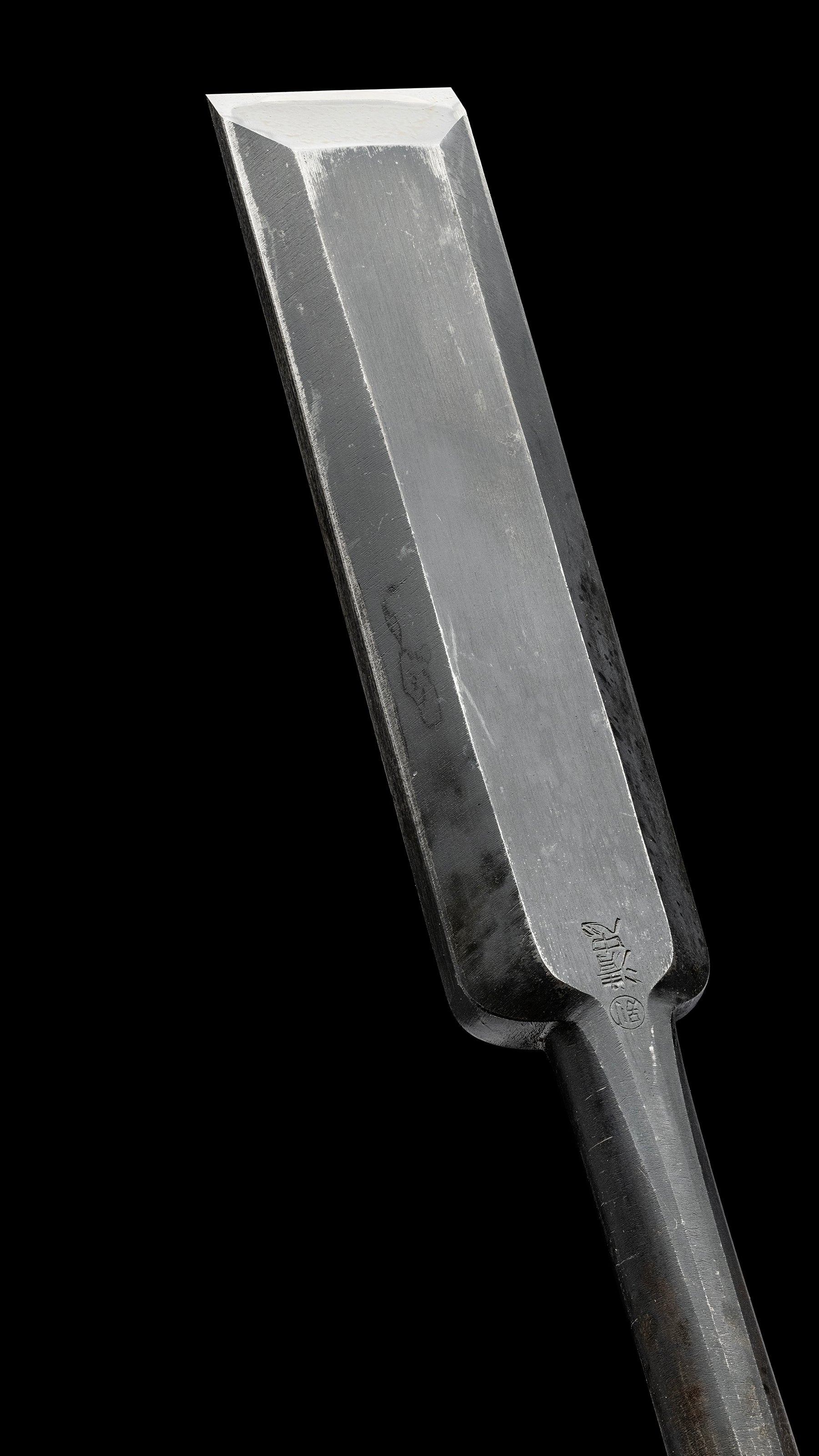
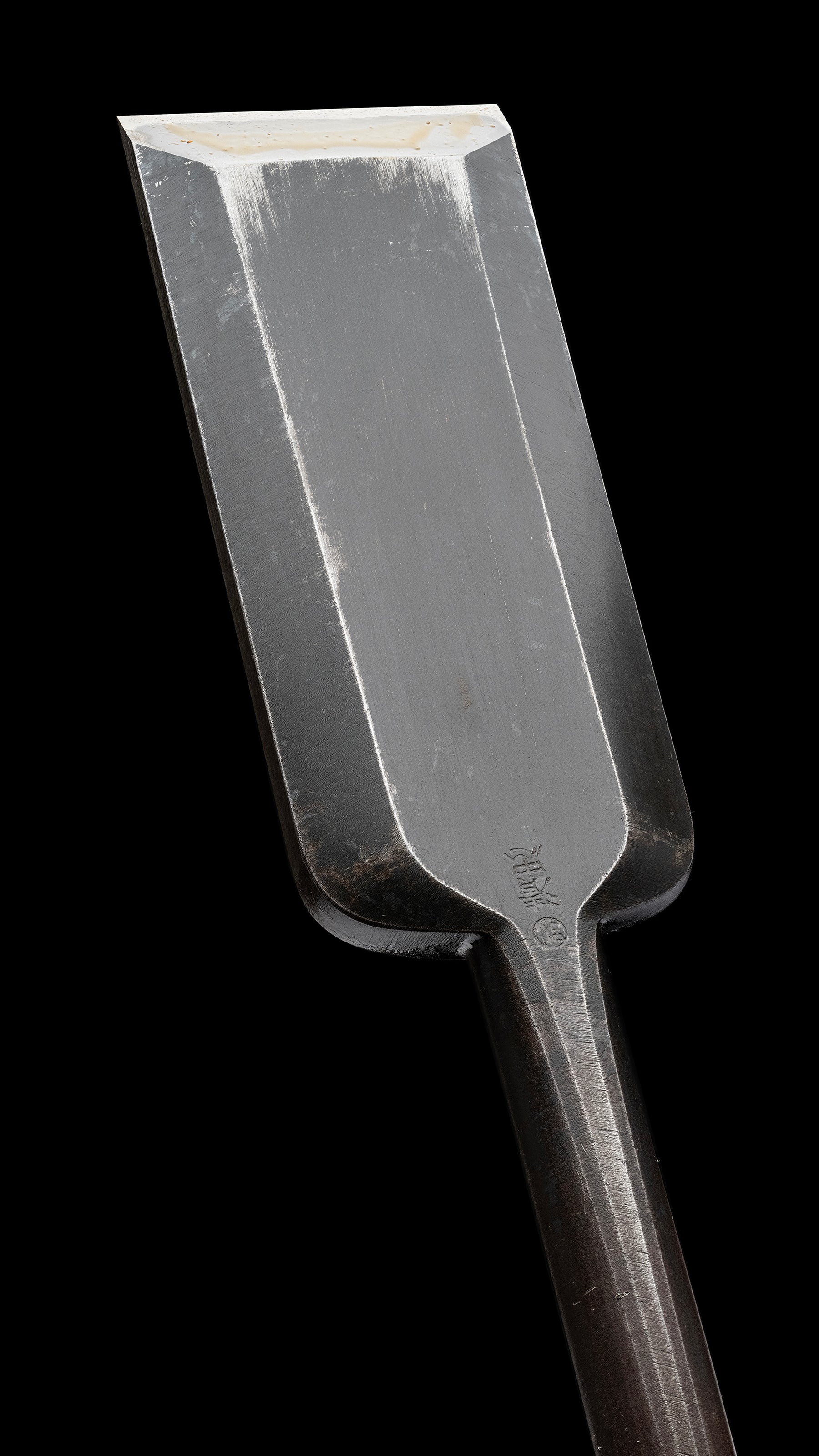
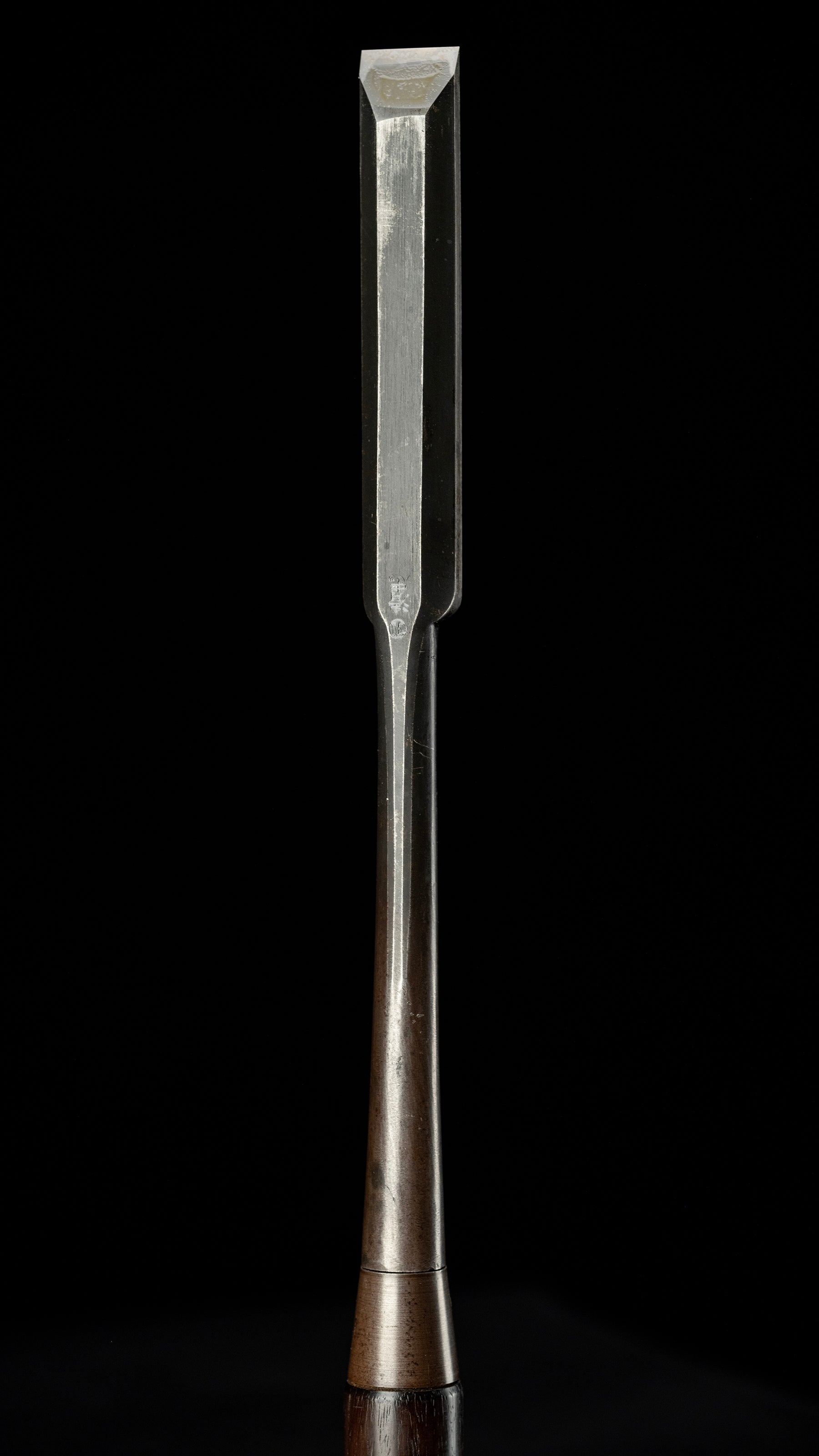
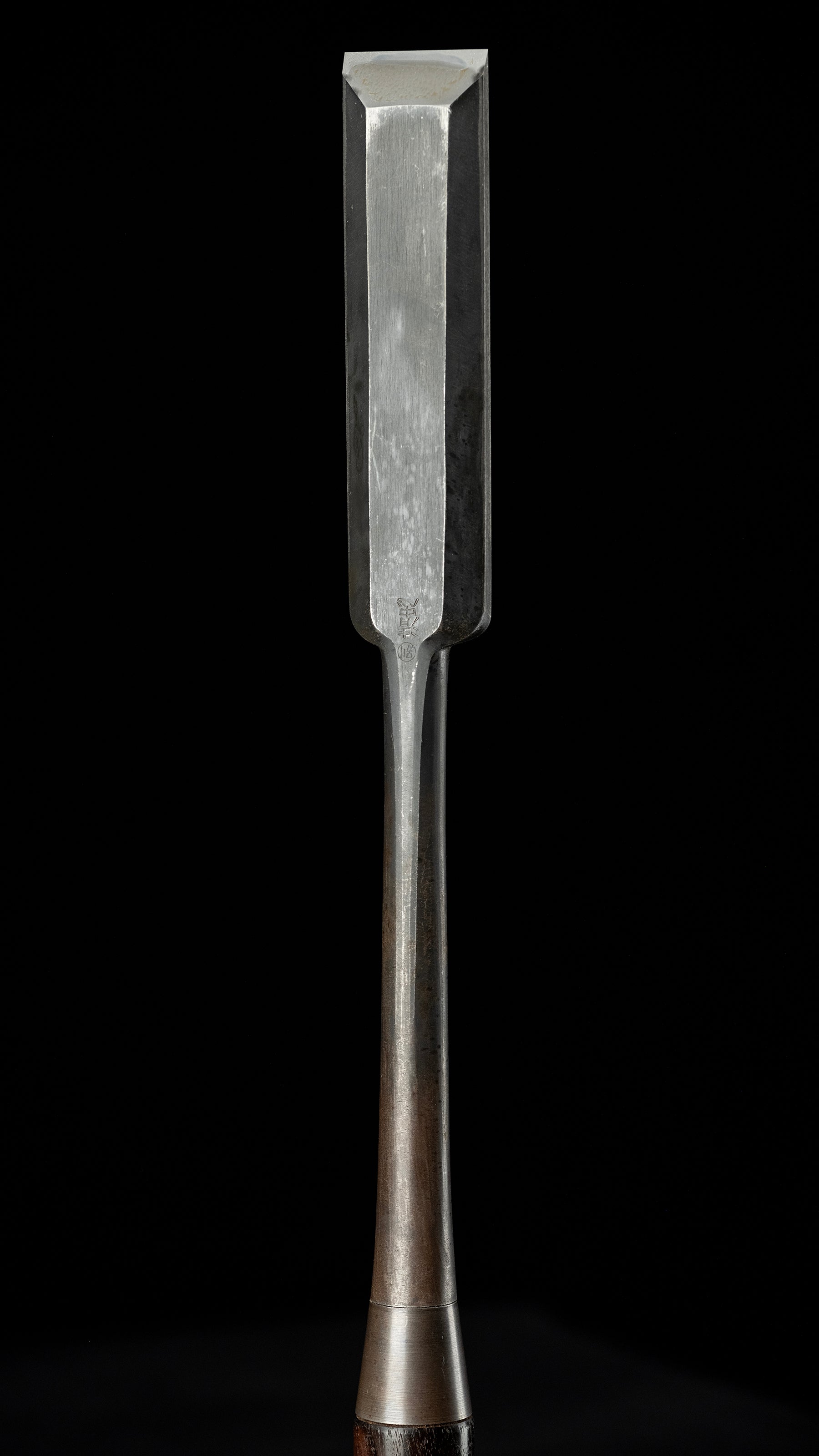
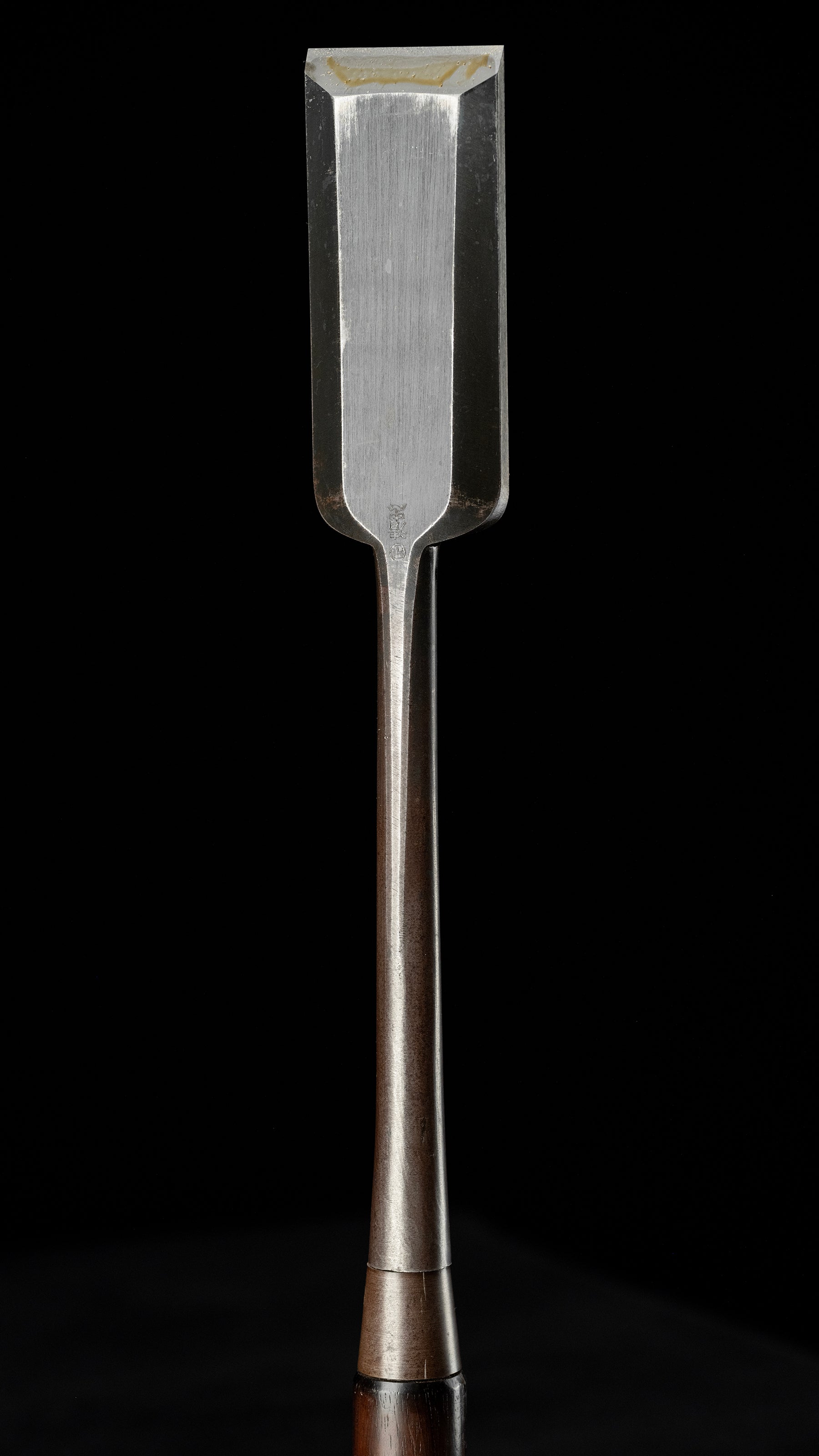
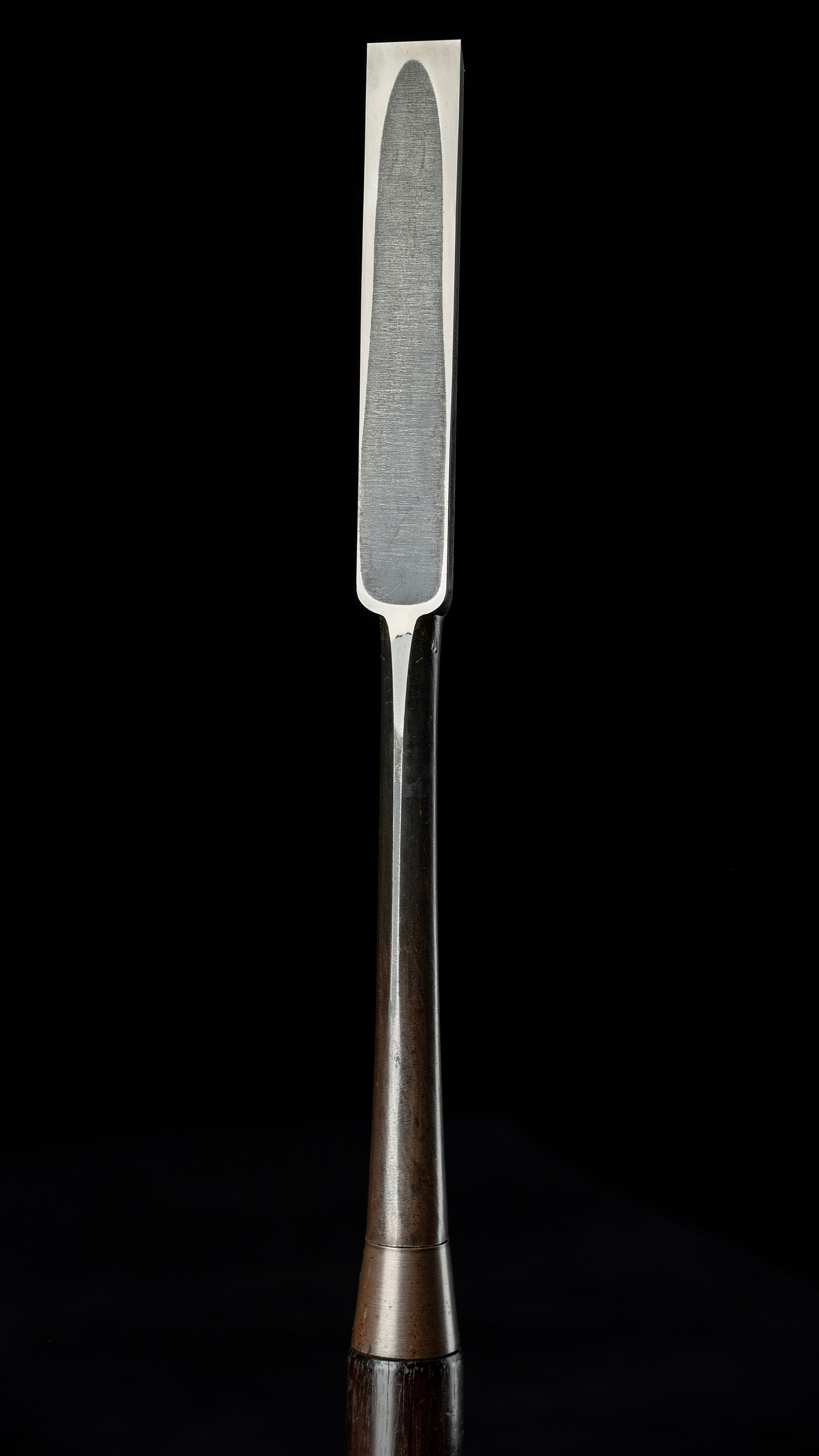
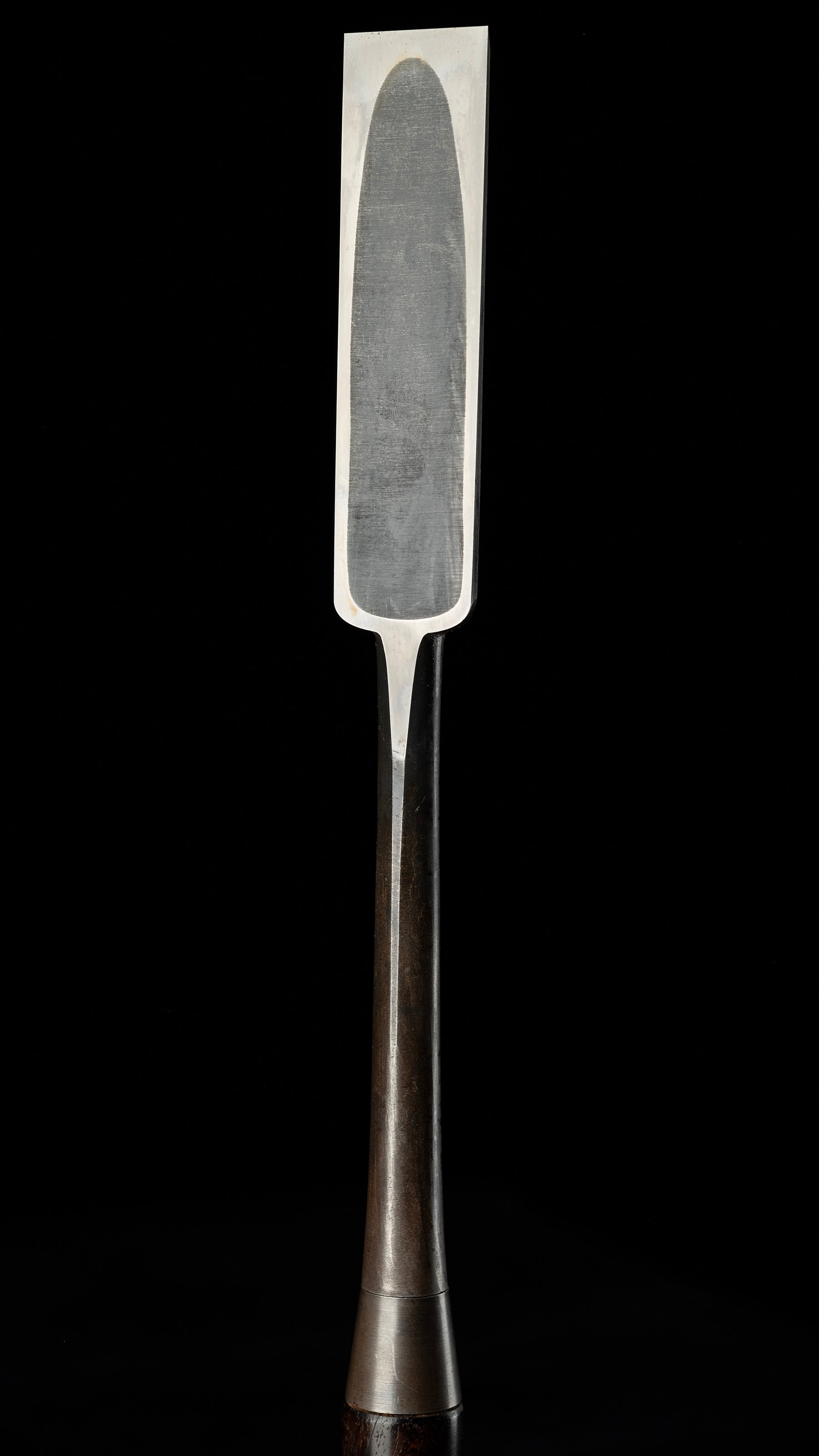
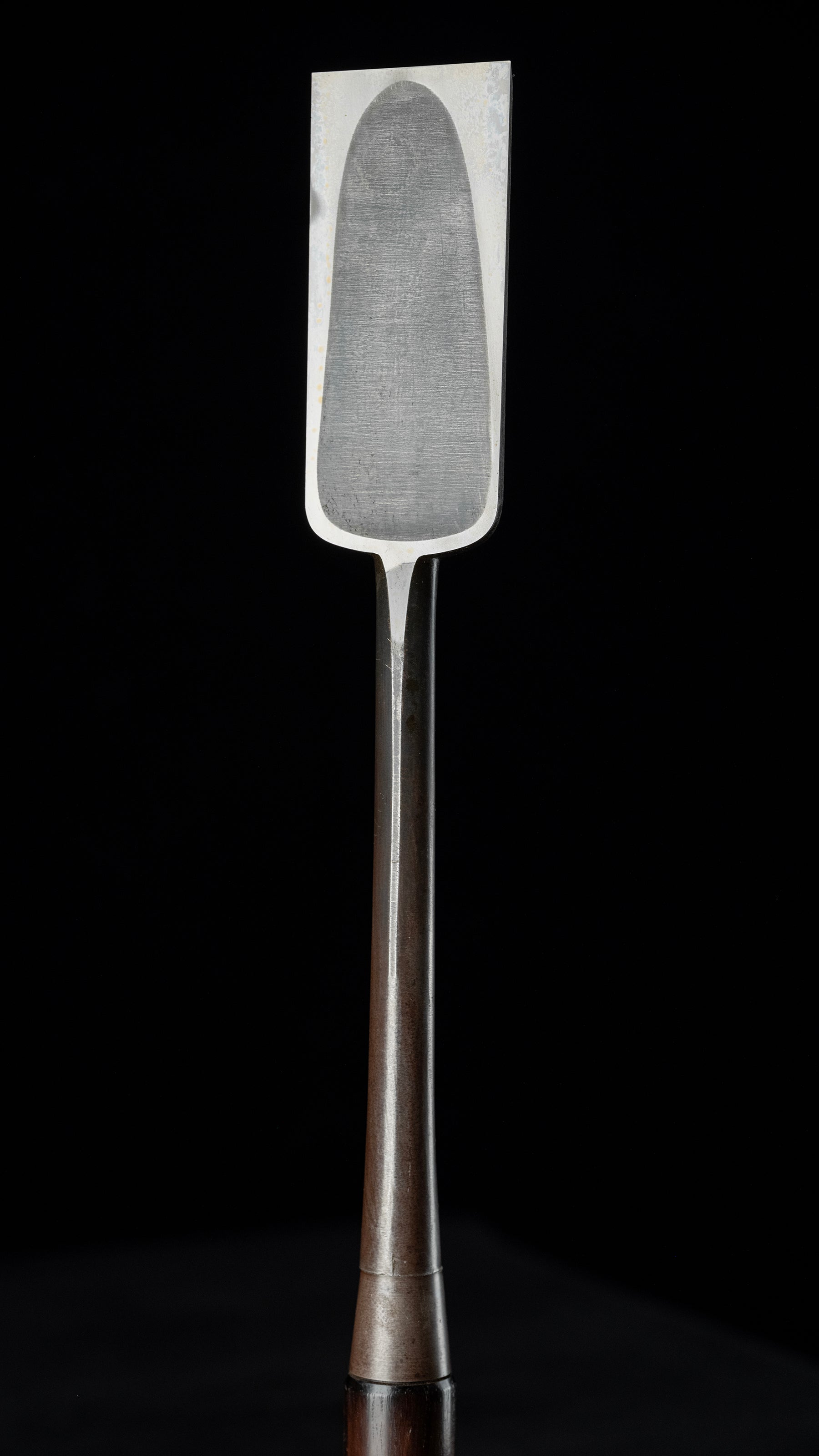
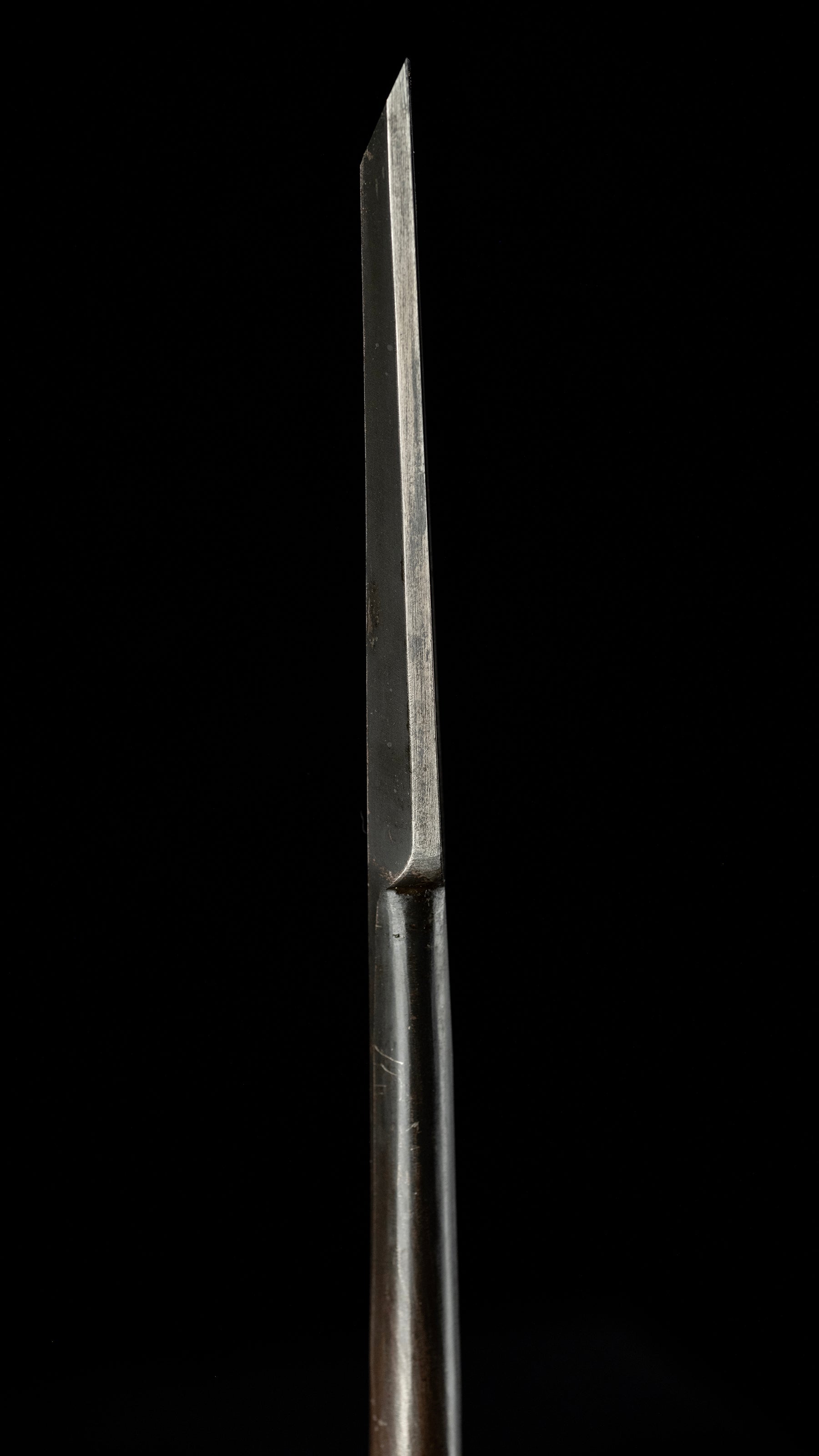
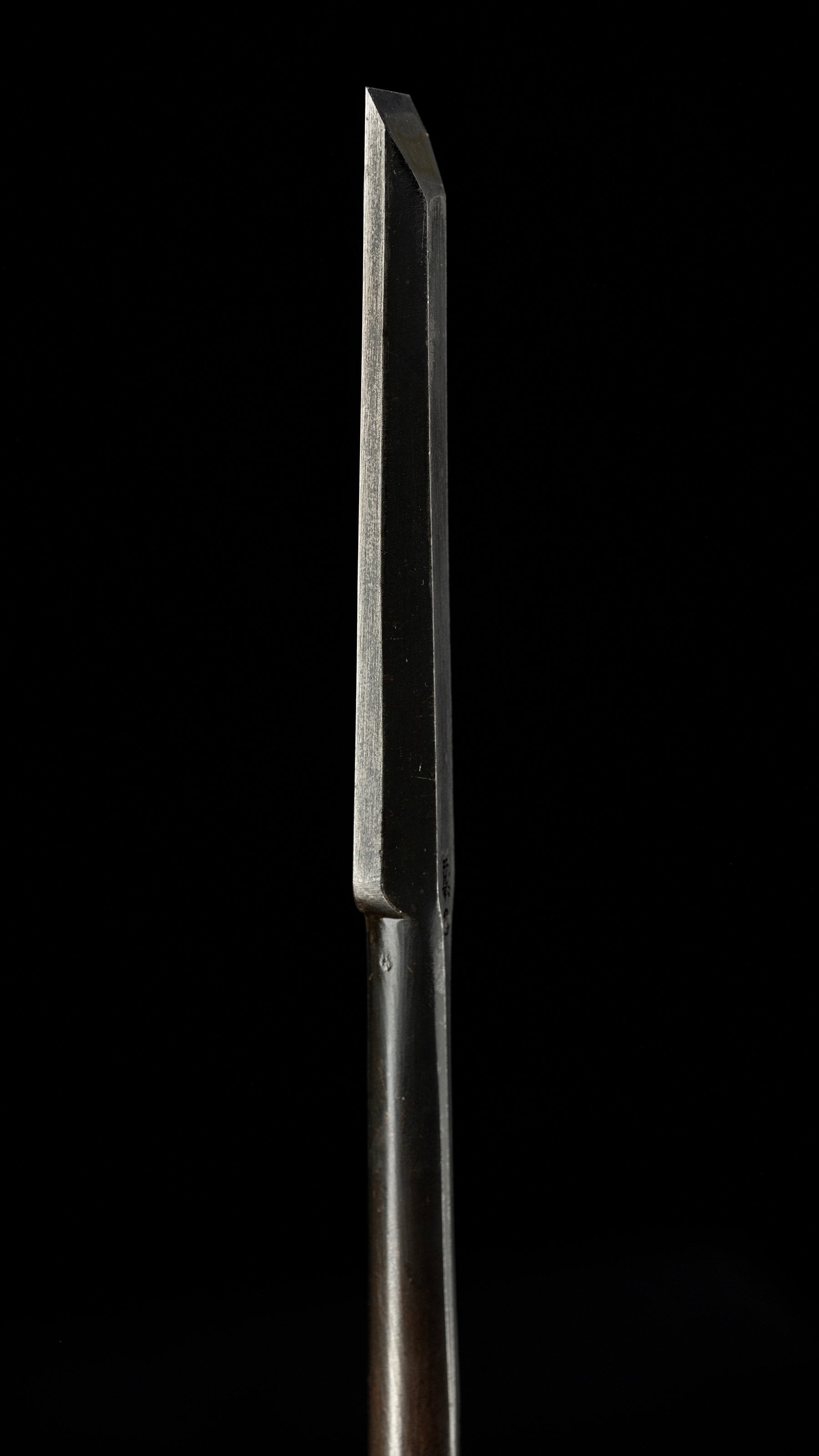
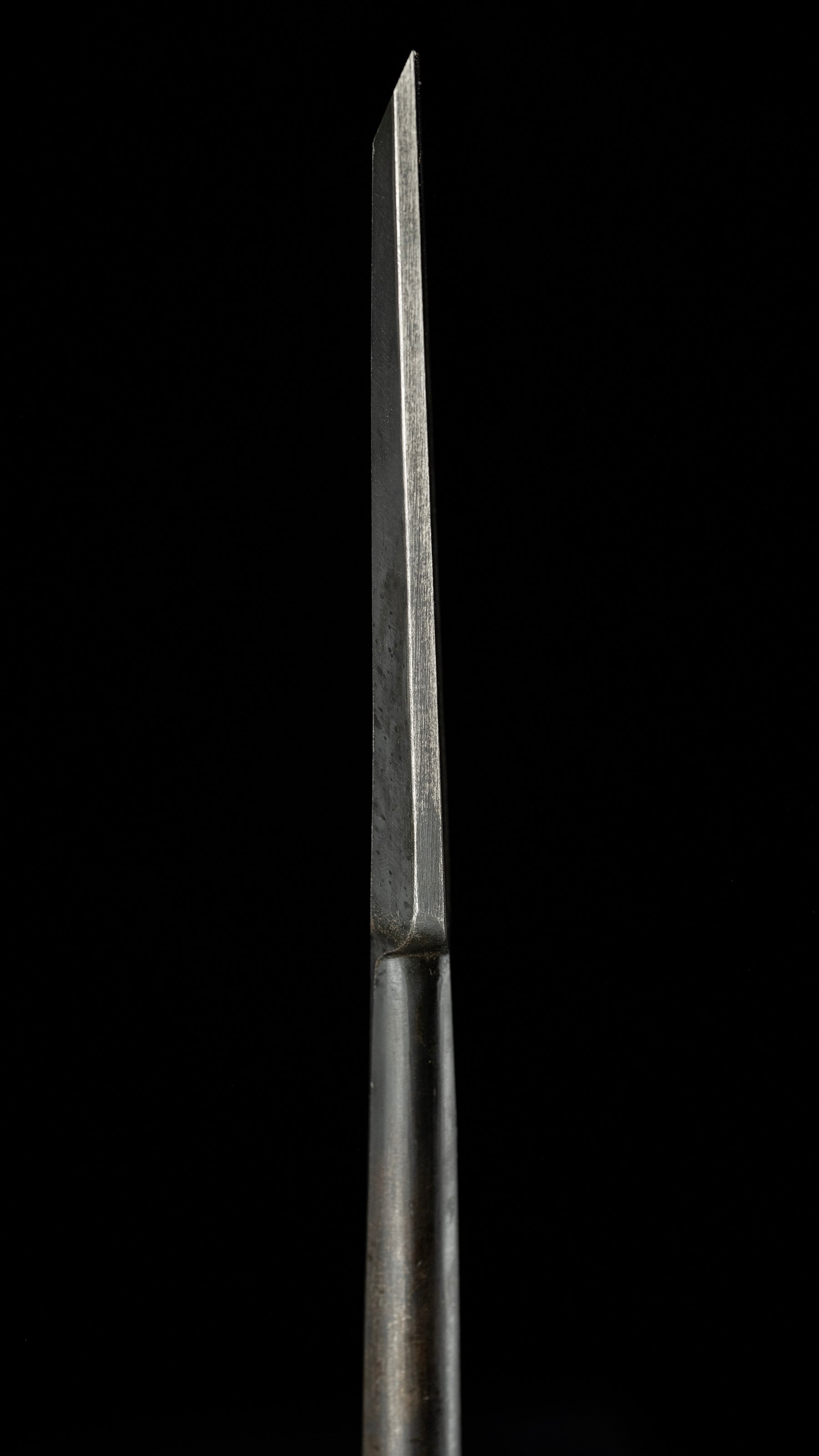
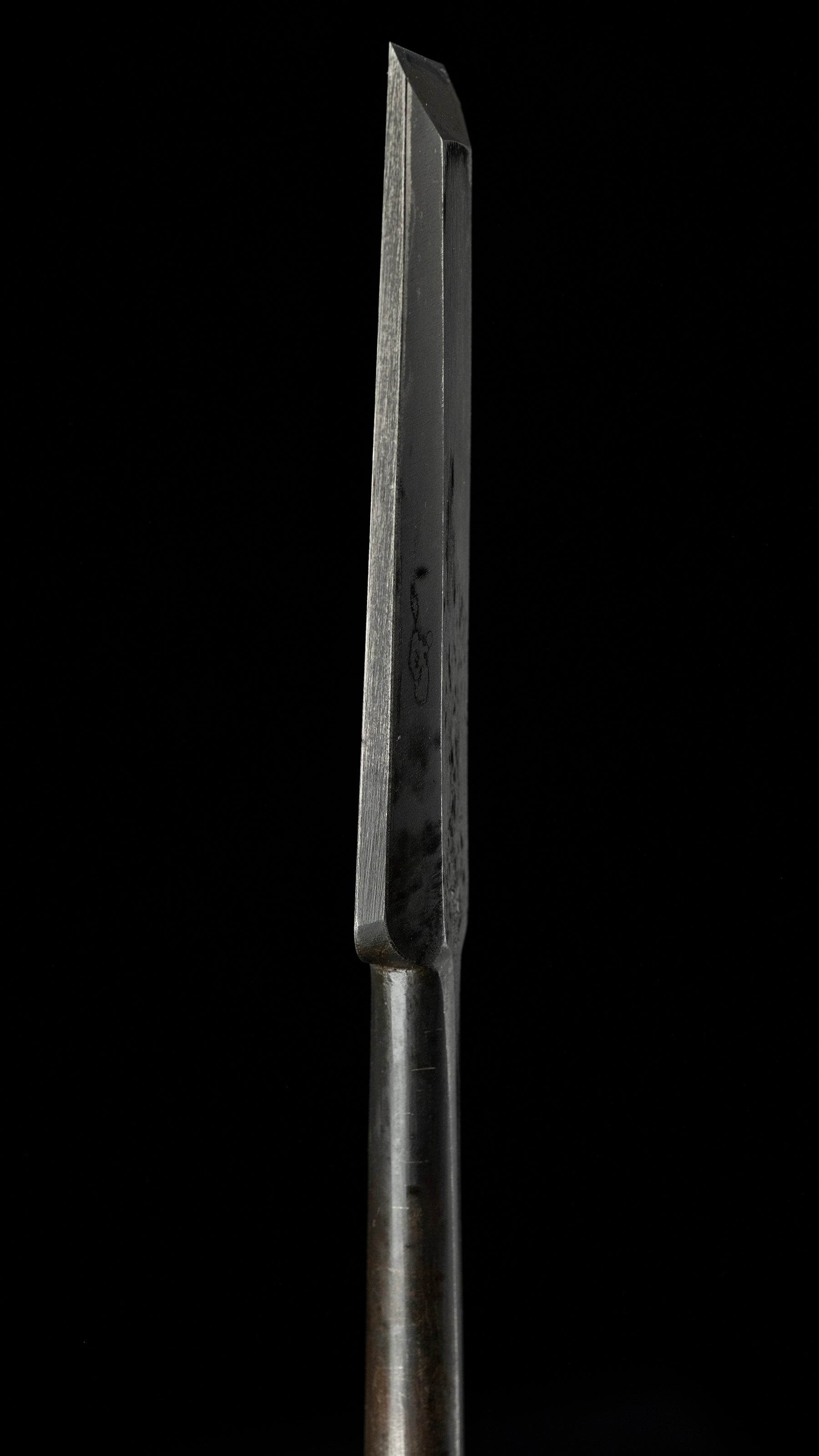
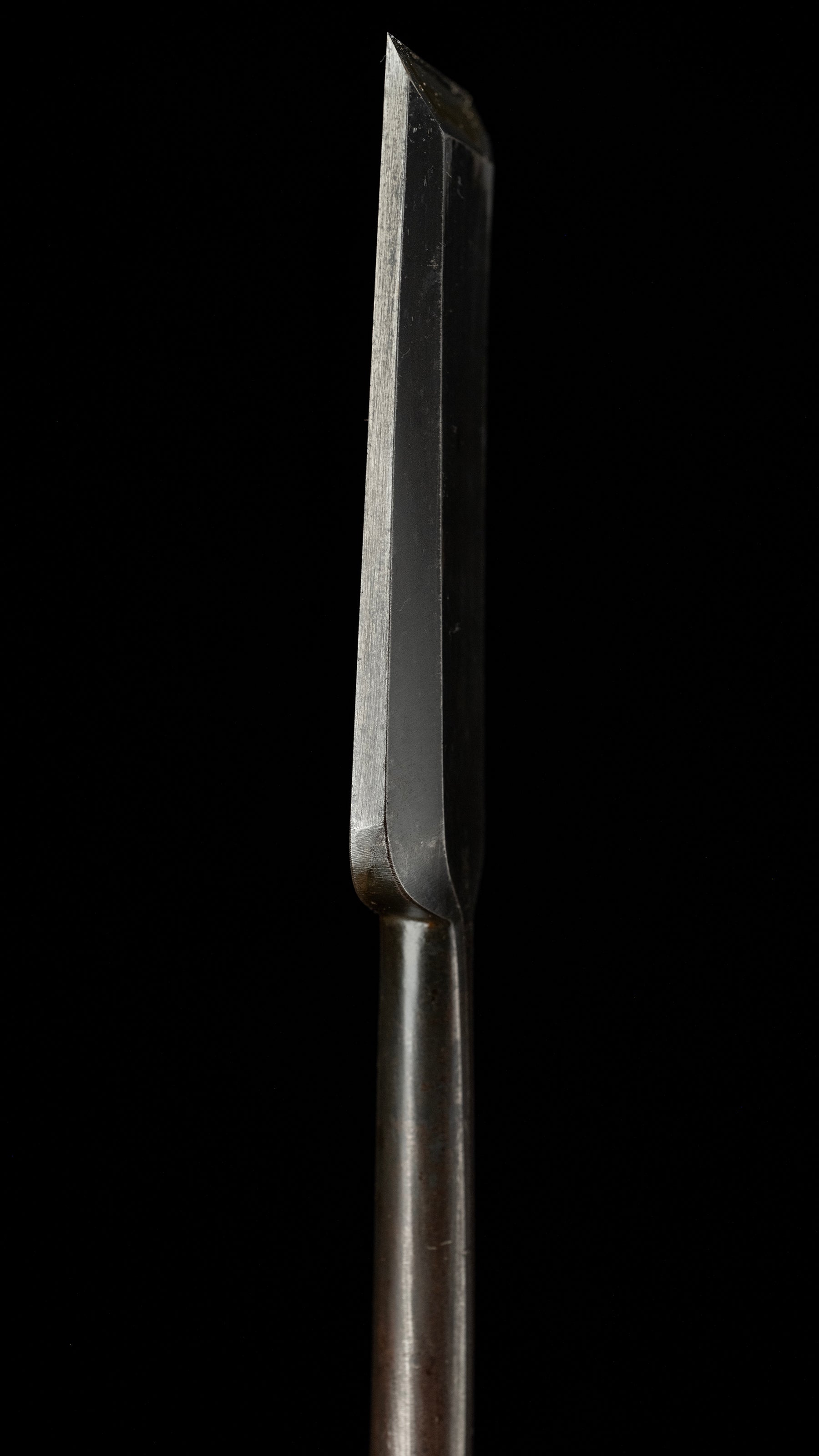
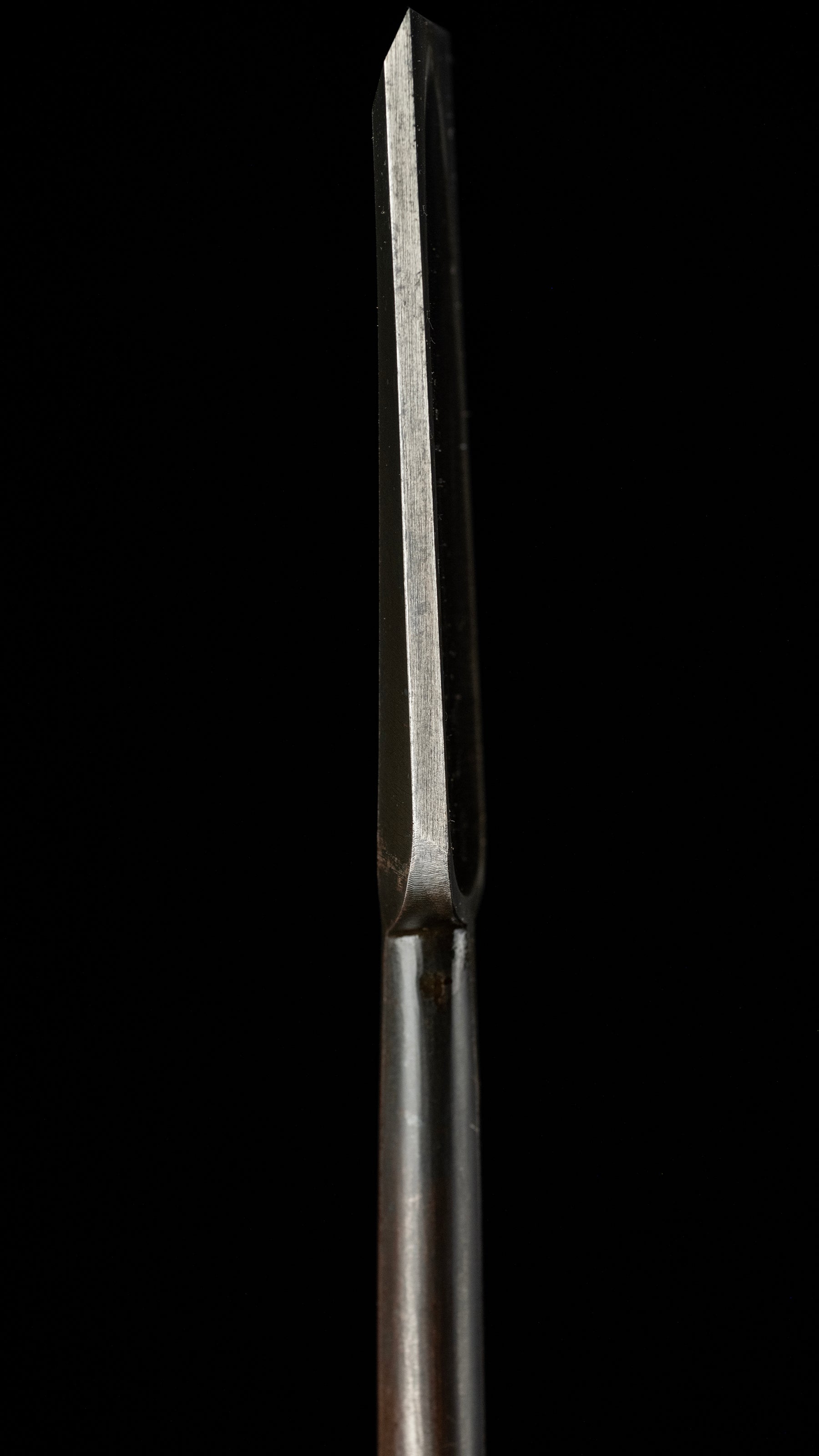
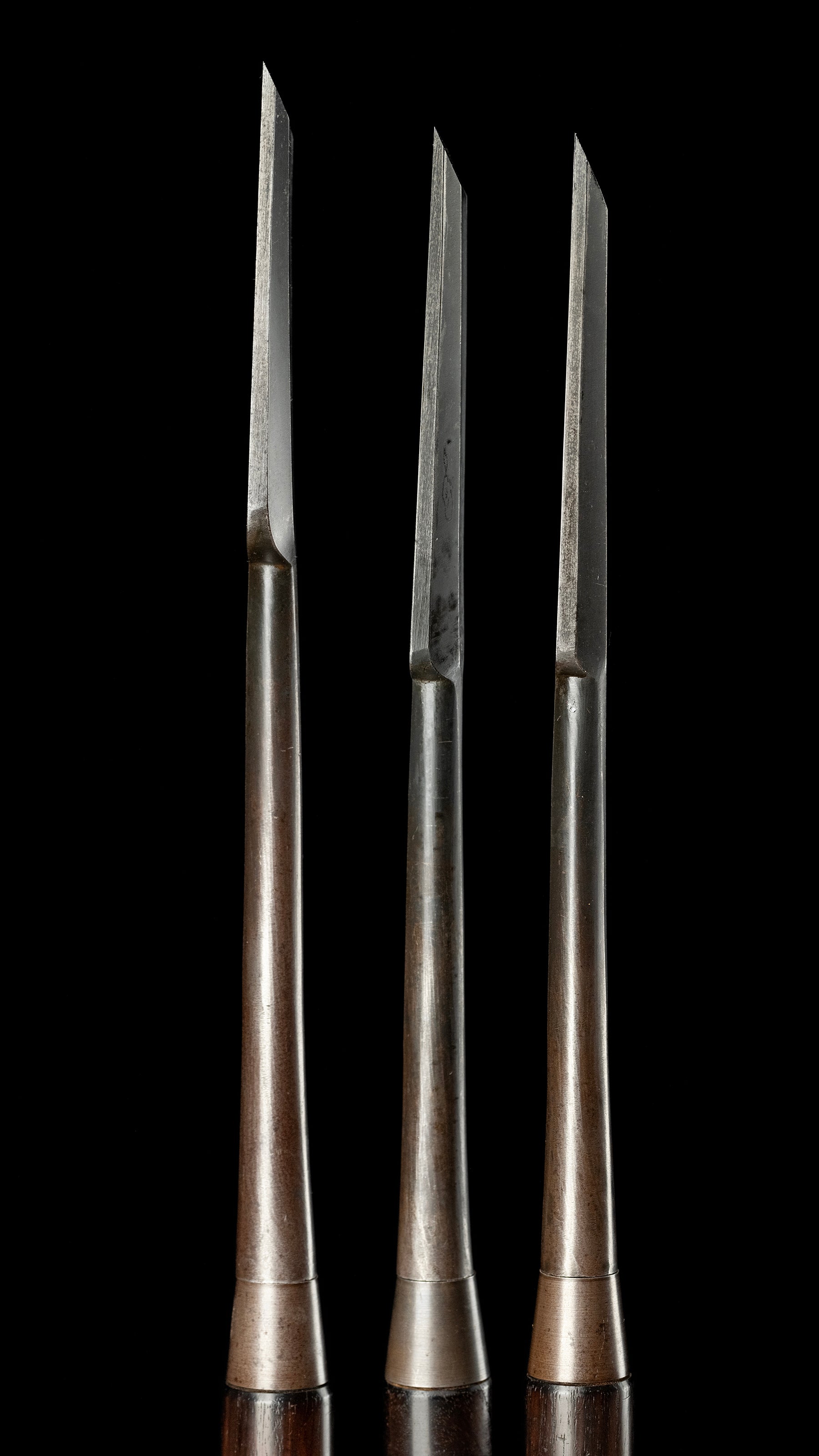
Ootsuki-Nomi Japanese Hand Made Slick Chisel Set By Kiyotada Ⅱ - 24,36,54mm
Smith name: Shimamura Kouzaburo
Steel: White Steel
Blade width: 24mm, 36mm, 54mm
Blade thickness(Blade Bottom/the blade near the bevel):
24mm: about( 12.90mm/9.00mm)
36mm: about( 12.80mm/ 7.10mm)
48mm: about( 12.50mm/ 7.10mm)
Production date: around 1980-1990 (The judgment was made by comparing it with another set of chisels of the same type.)
Weight(24mm/36mm/48mm): 823g, 910g, 1091g
Blade Angles(24mm/36mm/48mm): 27°, 25°, 27°
Total length(24mm/36mm/48mm): 685mm, 689mm, 710mm
Neck length(24mm/36mm/48mm): 105mm, 159mm, 188mm
Blade length(24mm/36mm/48mm): 133mm, 138mm, 124mm
Types of wooden handles: Ebony
Accessories:—
Additional Information: Used, in good condition. They came from a retired "Miyadaiku"( Japanese shrine and temple carpenters) in Saitama. The first seller of this set of chisels was Suiheiya Shop in Asakusa (closed down 2024.). The shoulders of this set of chisels is in the Ichihiro style.
After being meticulously sharpened by their original owner, these chisels were coated with a layer of anti-rust paint on the blades. It was as if the owner knew they would never be used again and carefully sealed them away one day—until I was fortunate enough to acquire them.
This is a rare Ootsuki chisel set—or more accurately, a deluxe edition.
First, it is a three-piece set, whereas most common versions only include two.
Second, the largest chisel is 54mm width, standing out from the standard Ootsuki sets which typically top out at 48mm.
A set like this commands a much higher price than the standard two-piece version. It makes me nostalgic for the era when Miyadaiku (Japanese shrine and temple carpenters) were in high demand. Only when they were busy enough could their earnings support the purchase of high-quality tools, which in turn kept the blacksmiths thriving.
The high intensity and rigorous demands of Miyadaiku work pushed tools to their limits, driving blacksmiths to innovate and create even better implements to meet those needs. In that era, the carpenter and the blacksmith perfected each other's craft. The carpenter cherished and took pride in using superior tools, while the blacksmith found true fulfillment in the mastery recognized by their clients. It was a symbiotic ecosystem where the carpenter’s passion and the blacksmith’s pride fueled one another.
Choose options