
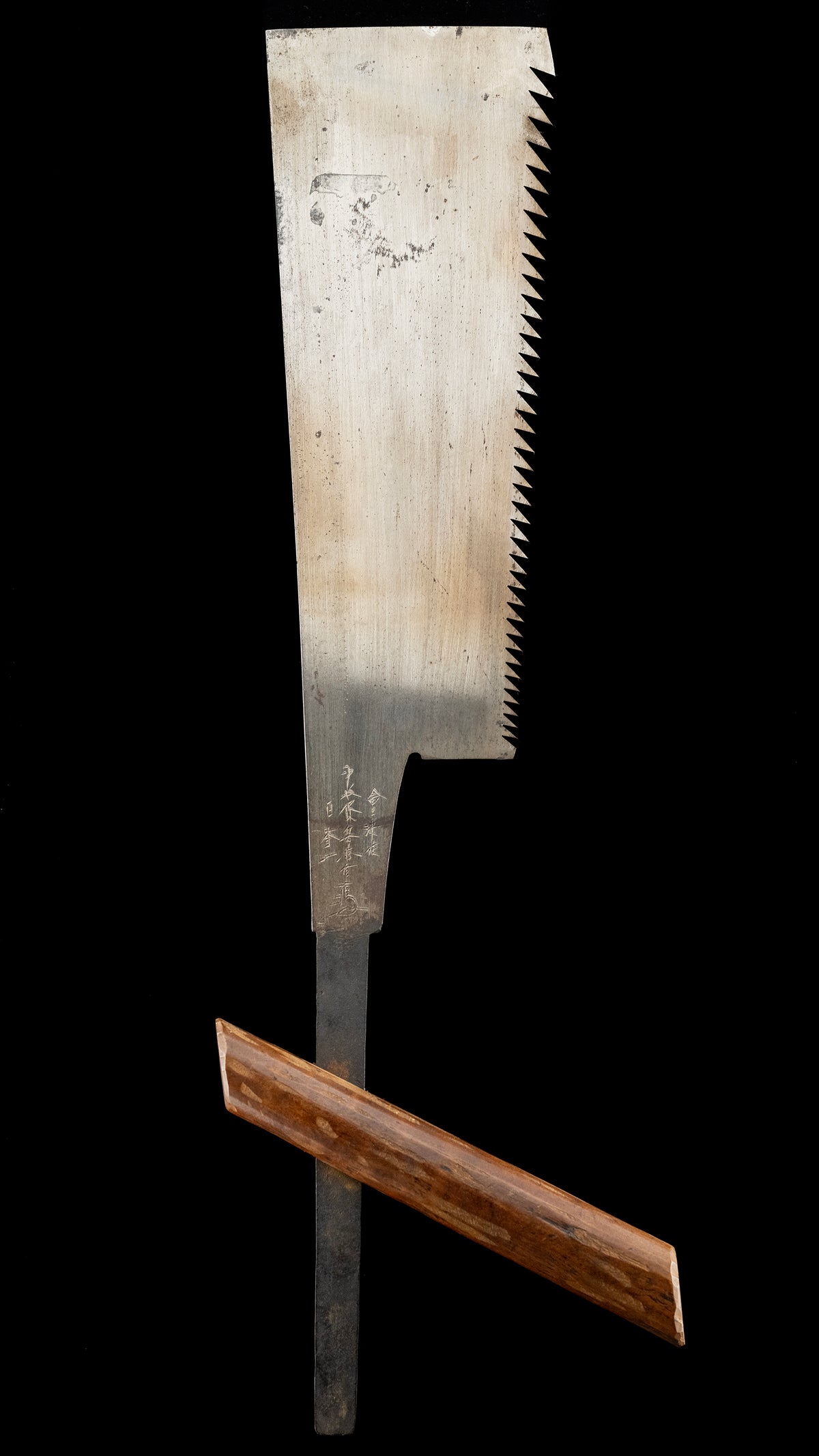
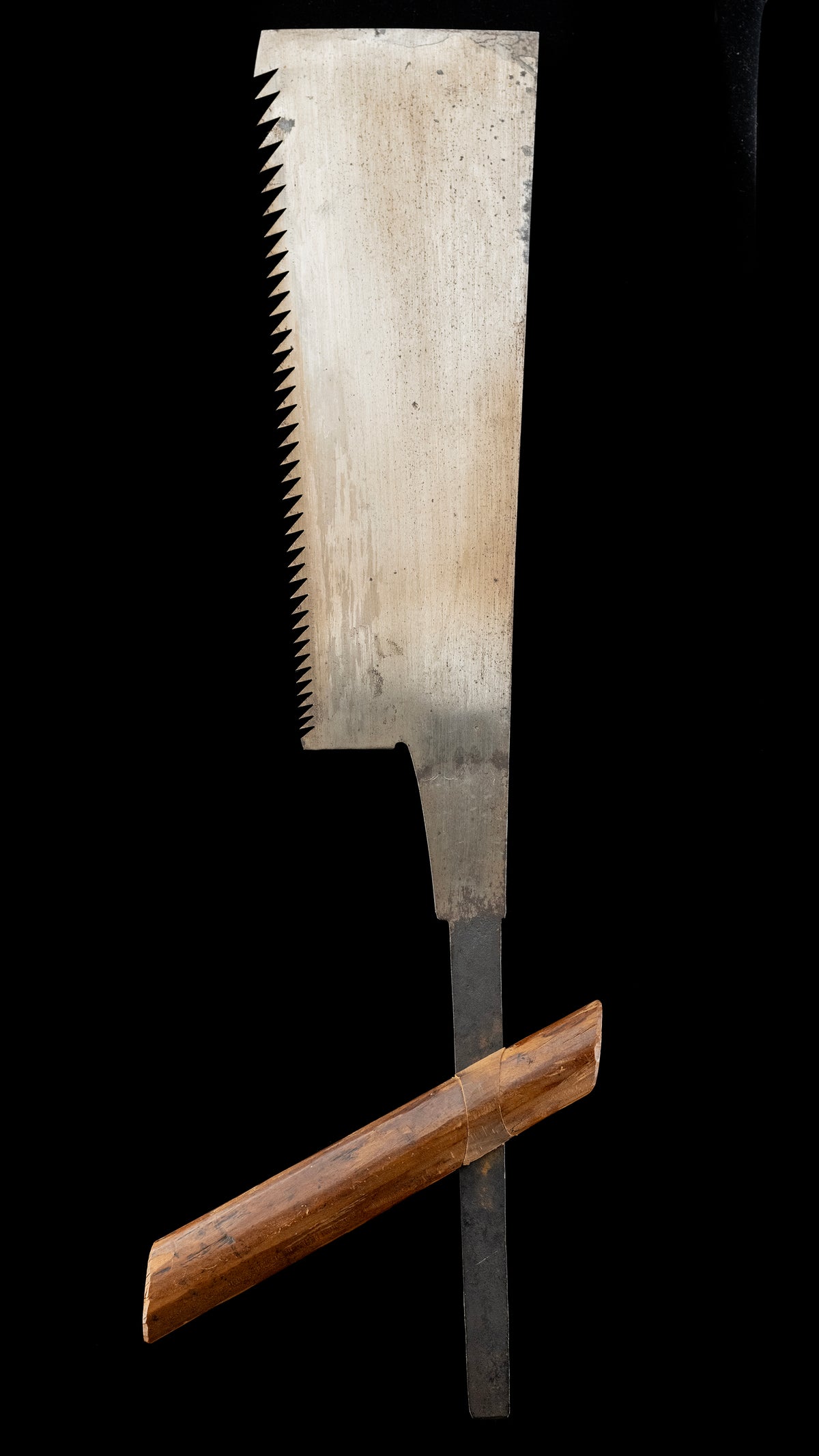
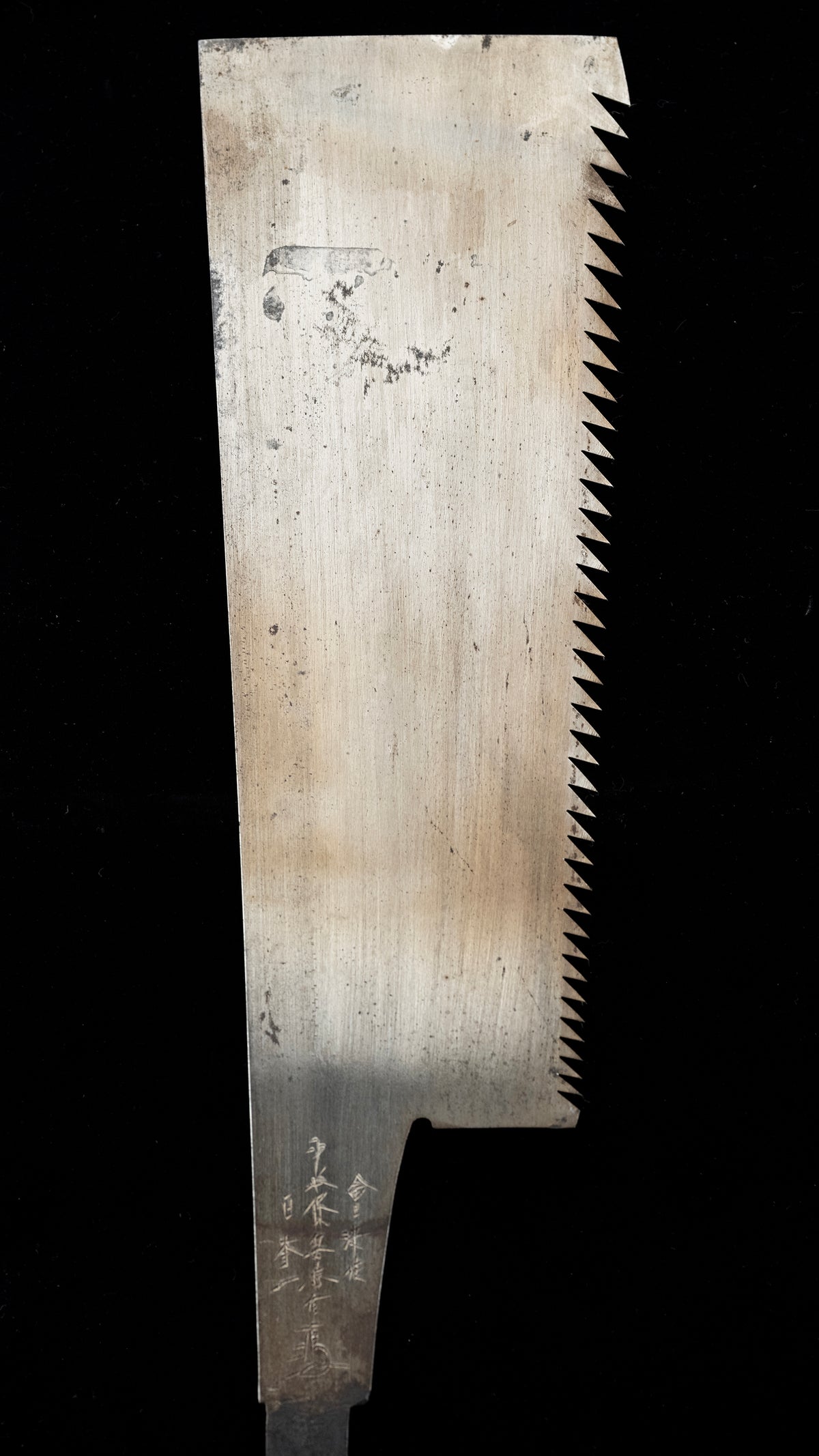
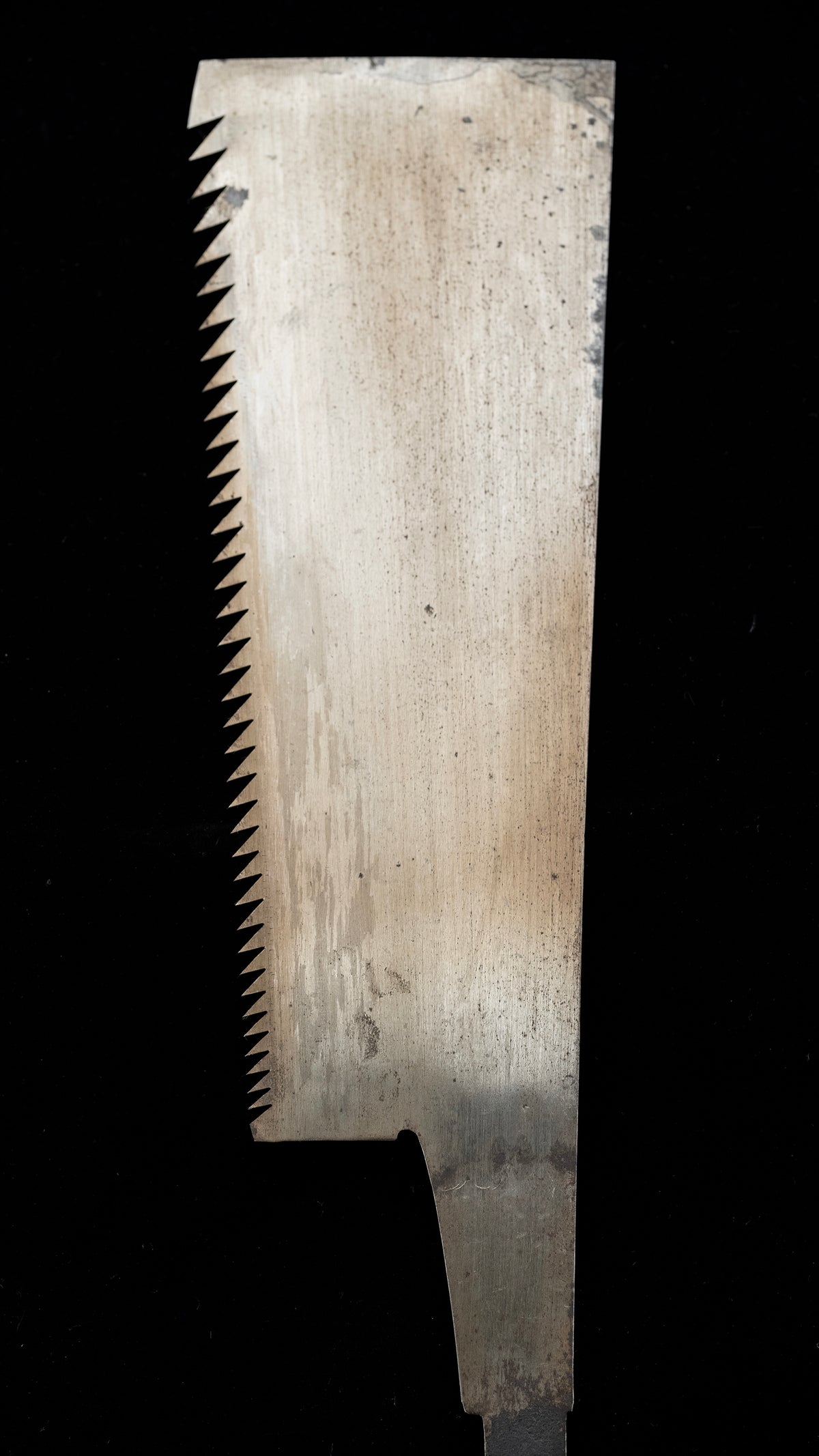
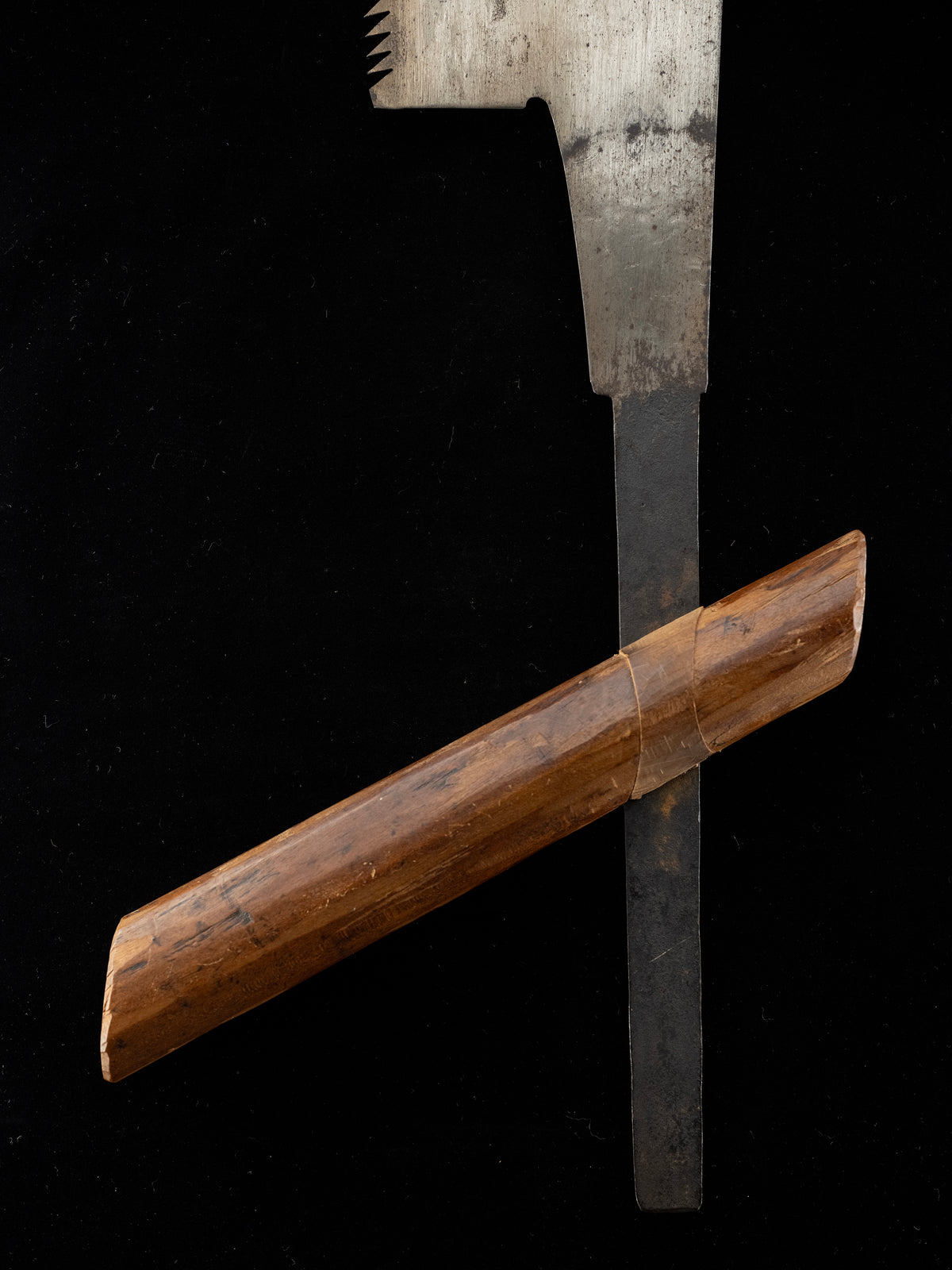
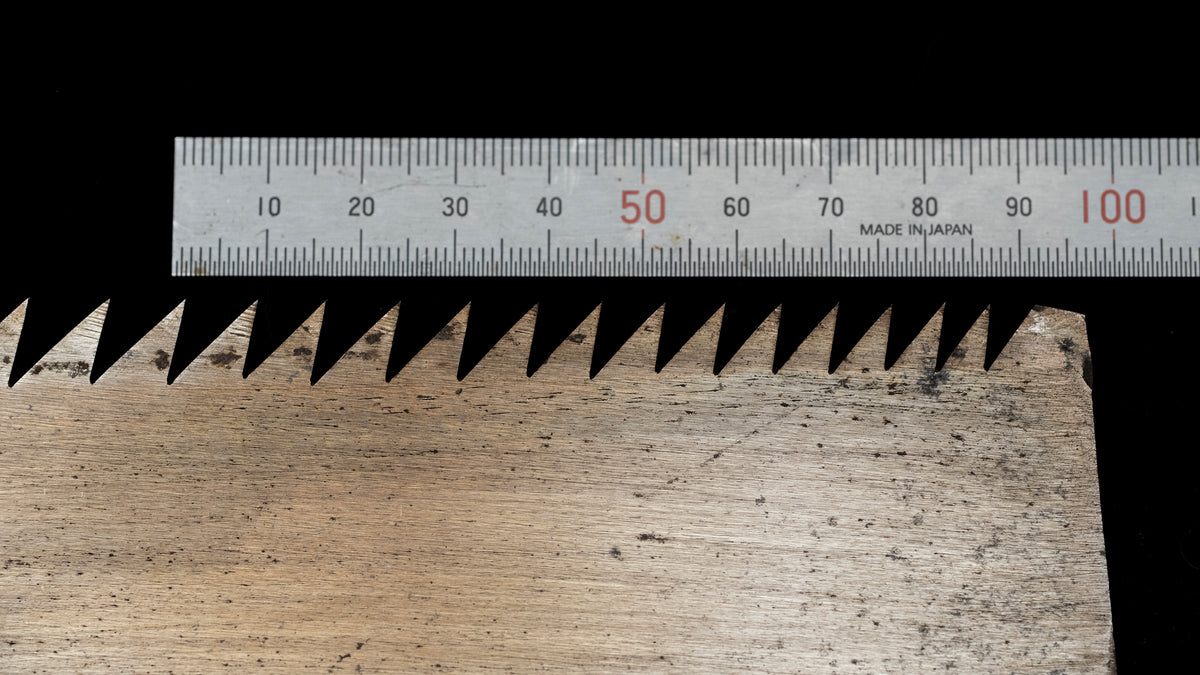
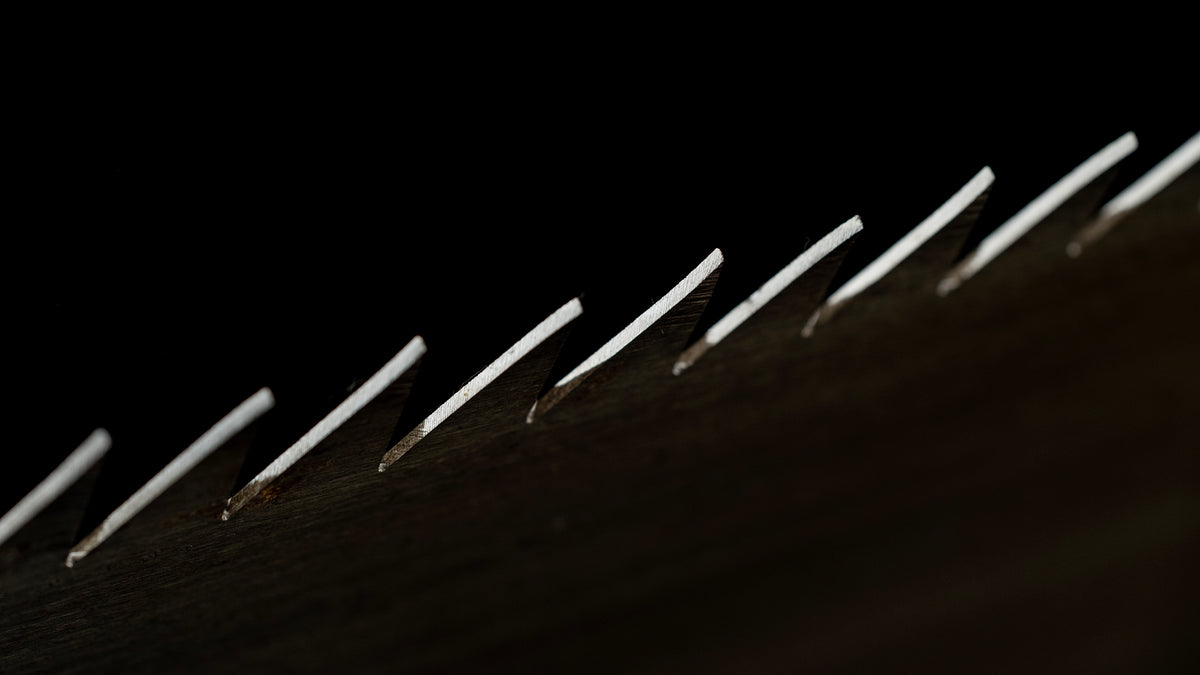
Gagari Noko Japanese Large Ripping Hand Saw by Nakaya Yasubei - 330mm
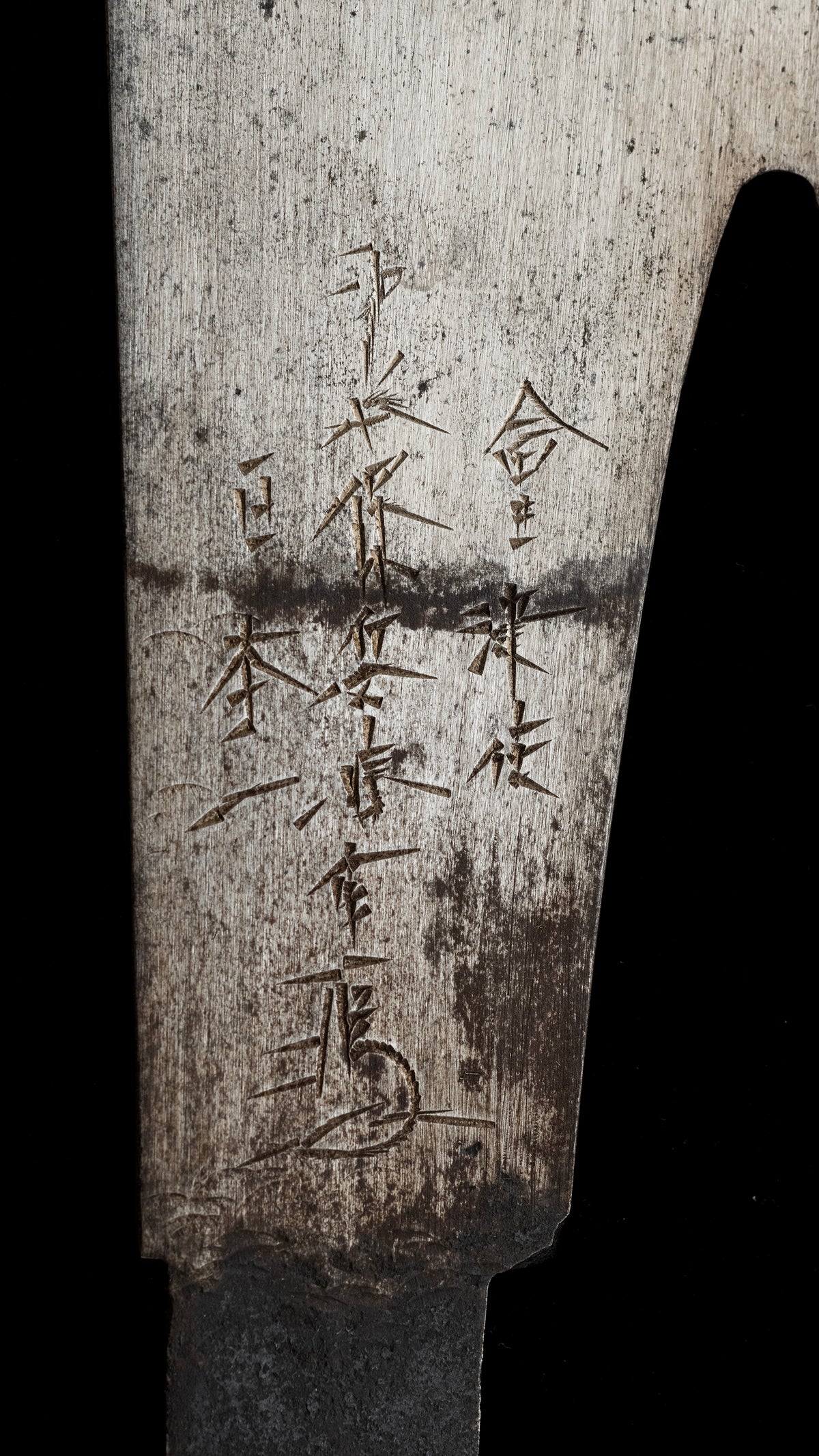
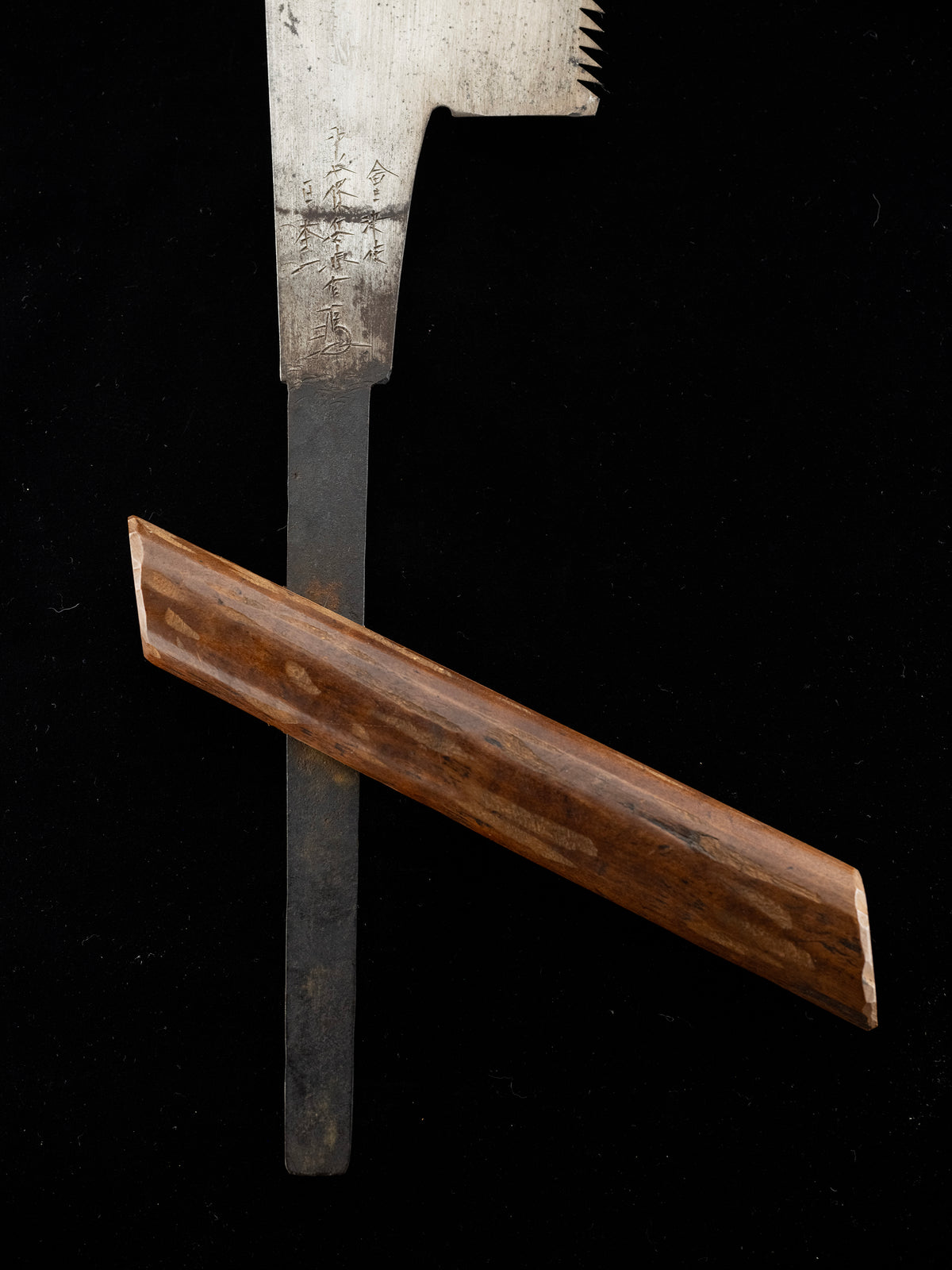
Smith name: Nakaya Yasubei Ⅱ or Ⅲ (中屋保兵衛)
Steel: Carbon Steel
Cutting edge length: 330mm
Total length: 660mm
Blade thickness: about 0.85mm
Weight: 556g
Manufacture Era: Before 1969
Blade sharpening and adjusting: Tsuchida Noboru
Accessories: -
Additional Information: This saw is unused and in great overall condition. I discovered it at a secondhand shop in Aizuwakamatsu, acquired alongside the Zenbei dosuki (back saw) that I have also listed. The blade has been tuned and professionally sharpened (set and filed) by Mr. Tsuchida, so it is ready for immediate use upon arrival.
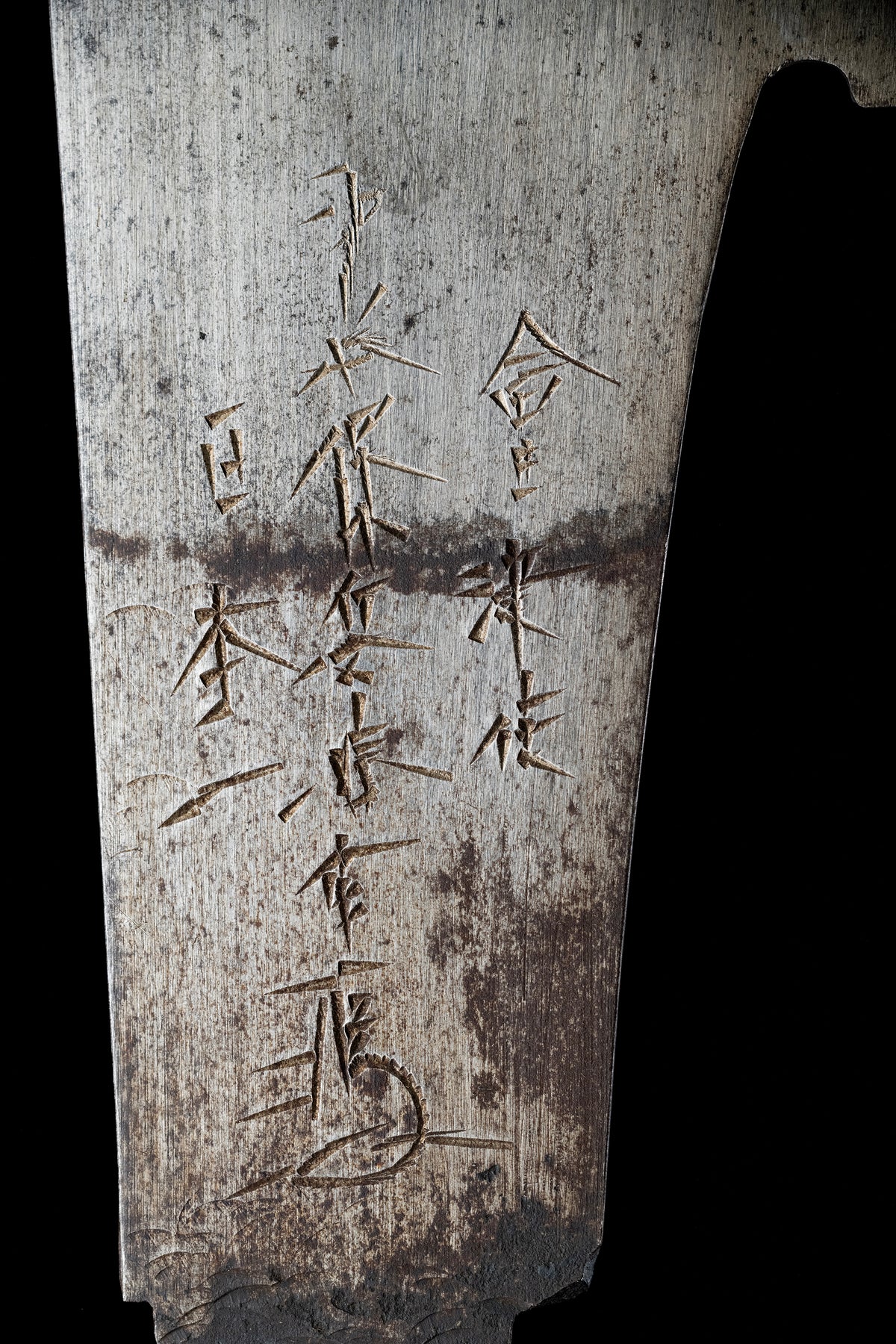
Pages 99–100 of the reference “The Saw Blacksmiths of Aizu: Modern Portraits and Their Genealogies” document the lineage of the blacksmith “Yasubei” (保兵衛). The mark on this blade is flanked on the left and right by the inscriptions "会津住" (Aizu-jū / Resident of Aizu) and "日本一" (Nihon-ichi / Best in Japan). According to Mr. Tsuchida, this style of inscription began appearing after the Meiji period.
-
1st-generation Yasuhei (1859 – May 24, 1918): Renowned for exceptional skill, his timber-felling saws forged from tamahagane were widely sought after, despite commanding very high prices.
-
2nd-generation Yasuhei (1895 – October 20, 1957): After completing his apprenticeship under the prestigious 9th-generation Nakaya Jūzaemon, he returned to succeed the family forge. During the postwar reconstruction boom in the early Showa era, he and his five apprentices experienced an extremely busy period, primarily forging forestry/timber saws.
-
3rd-generation Yasuhei (born December 6, 1926): The youngest son of the 2nd generation, he assumed leadership of the shop following the untimely passing of his eldest brother at age 34. From the mid-1950s through the late 1960s (mid-Showa 20s to late Showa 30s), demand was relentless; he focused first on timber-felling saws and later expanded into shipwright saws (funa-daiku-nokogiri). Eventually impacted by the widespread adoption of power tools, he closed the forge in May of Showa 44 (1969).
オプションを選択