
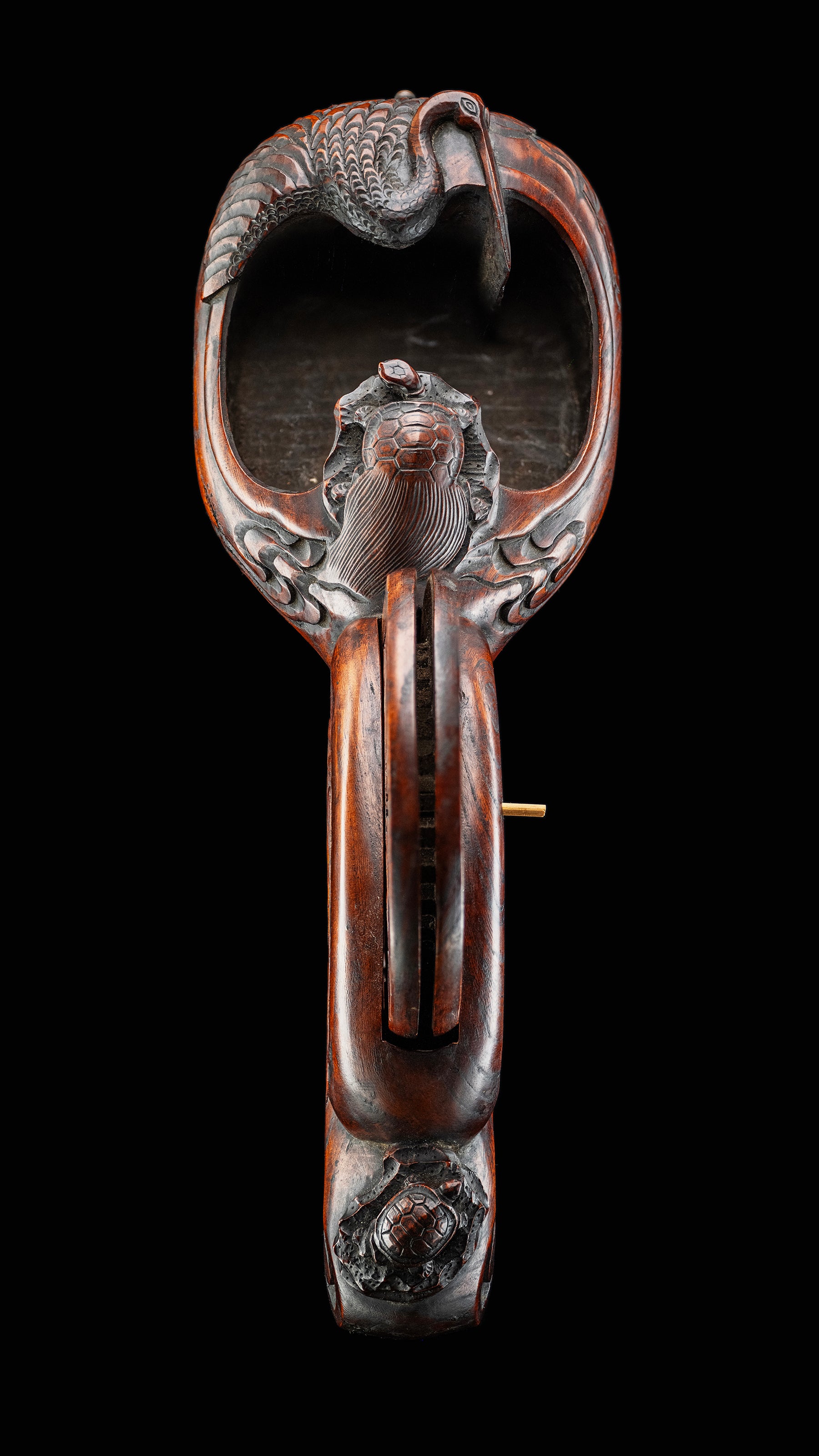
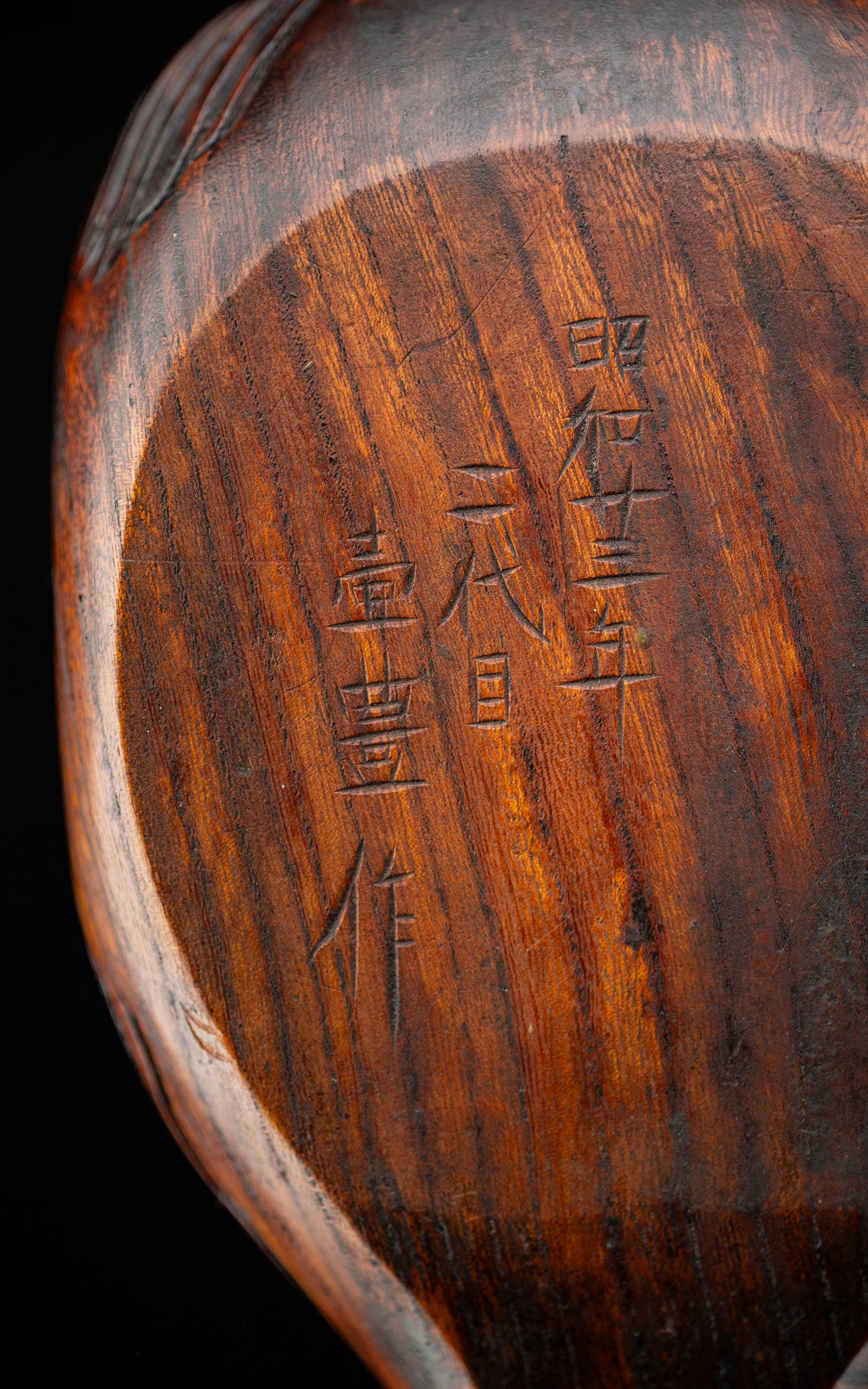
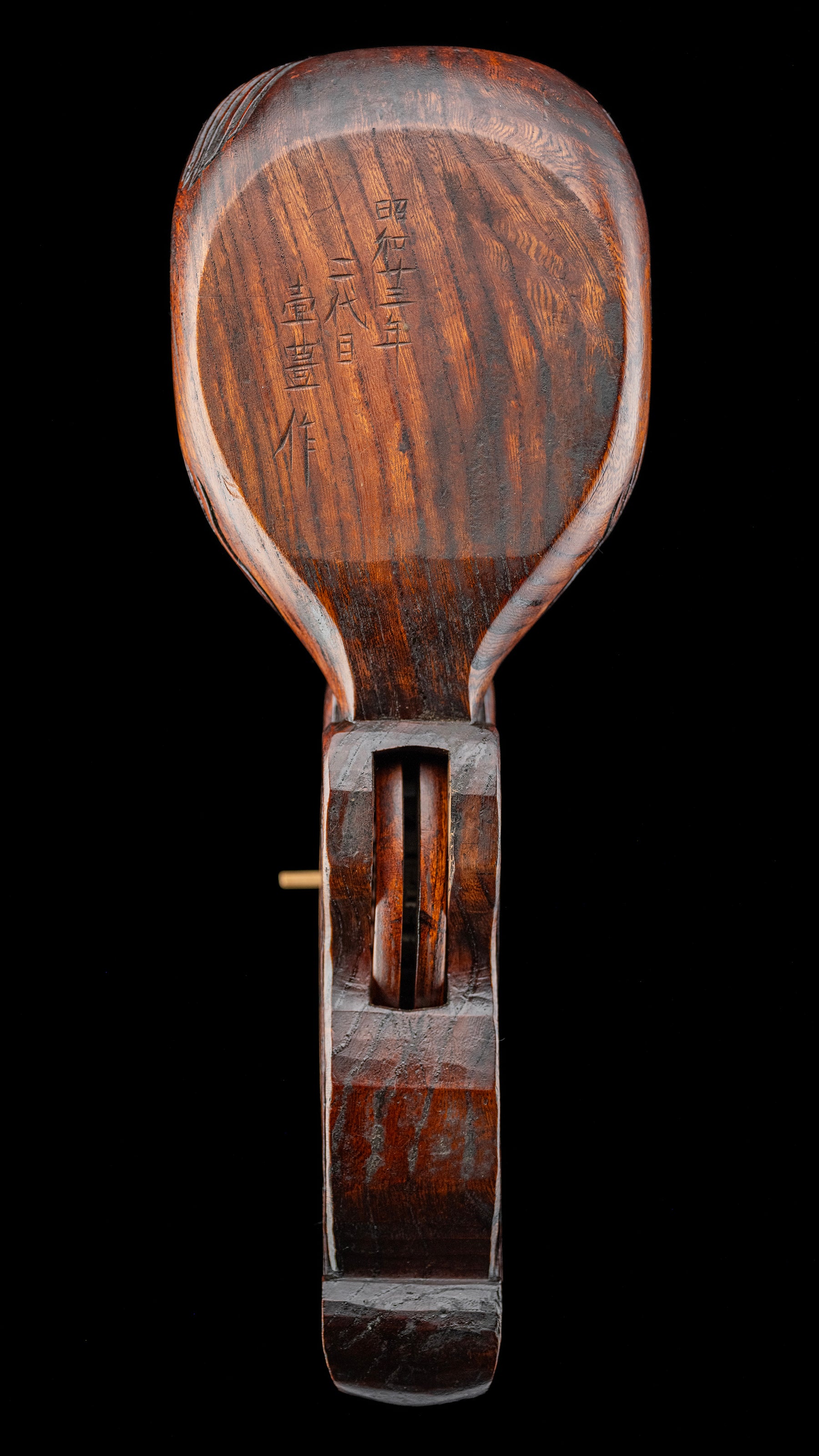
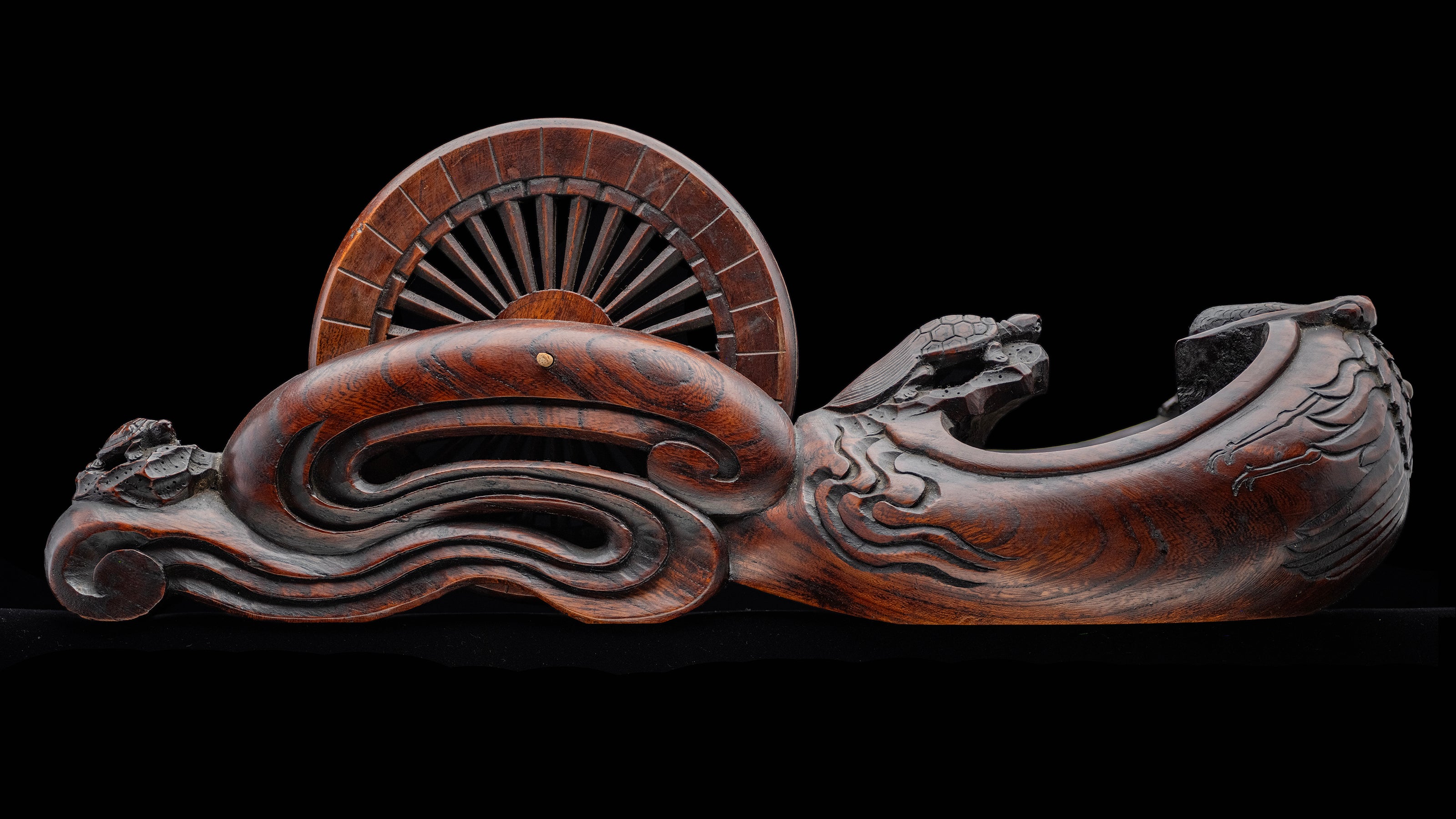
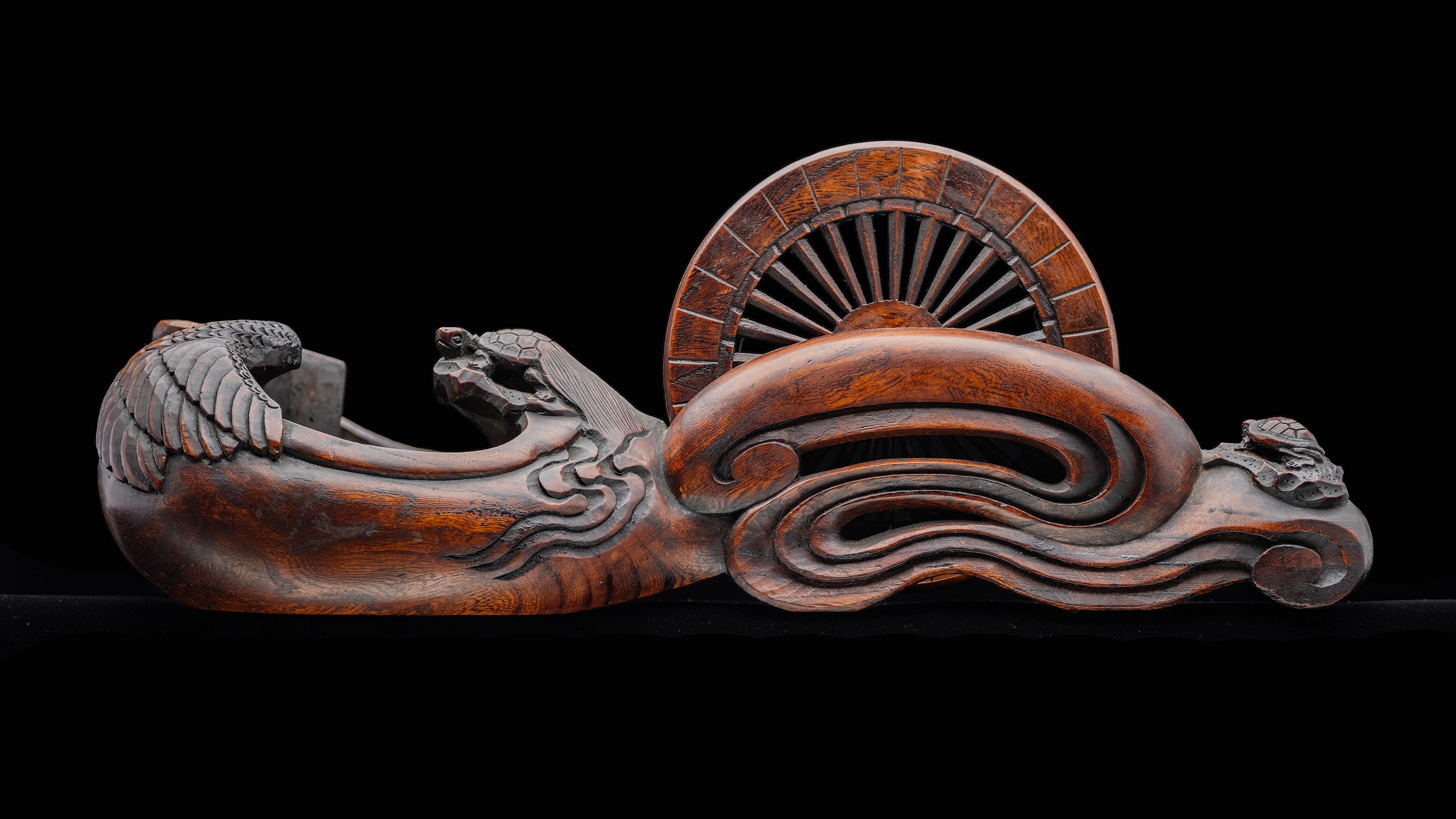
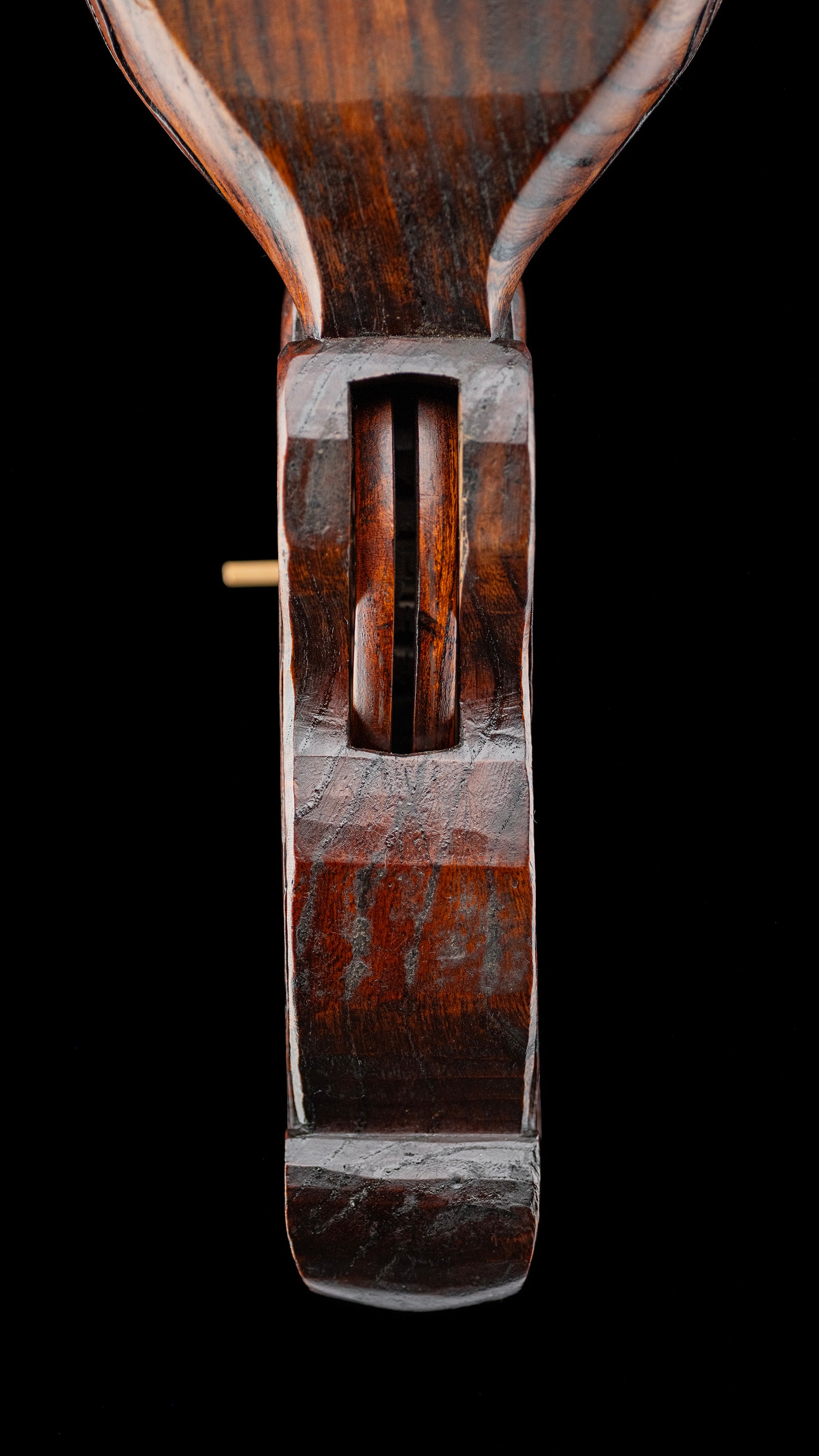
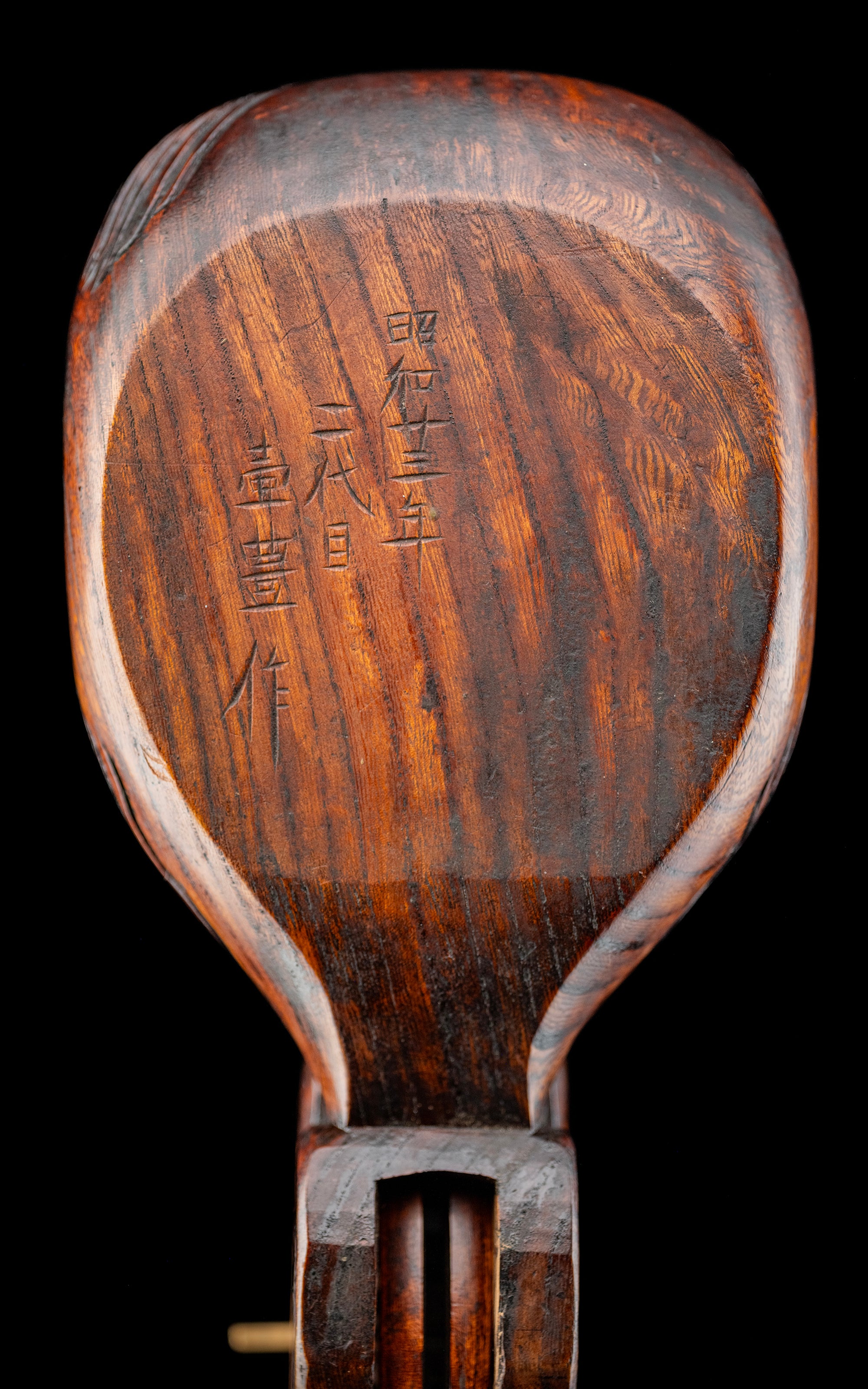
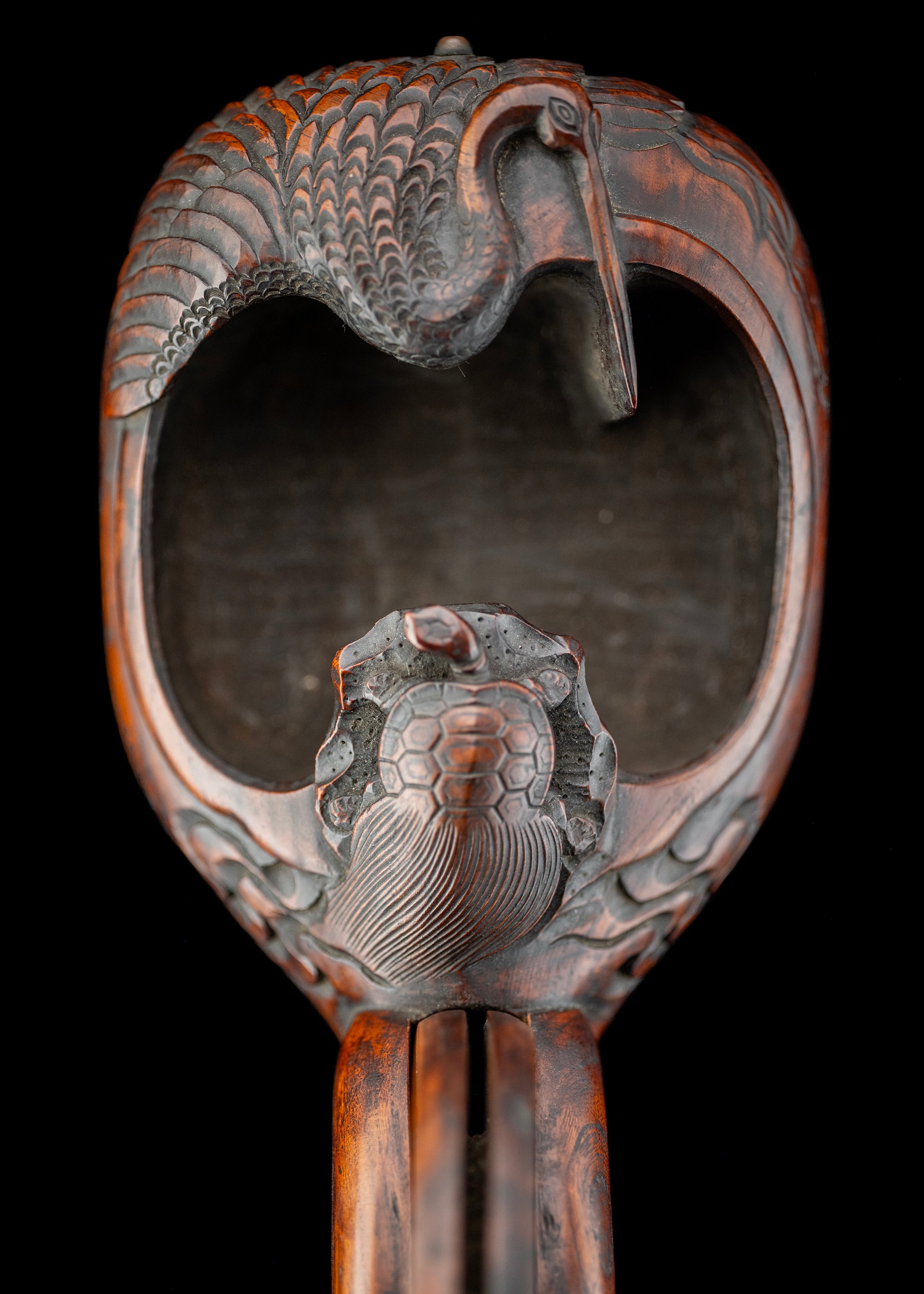
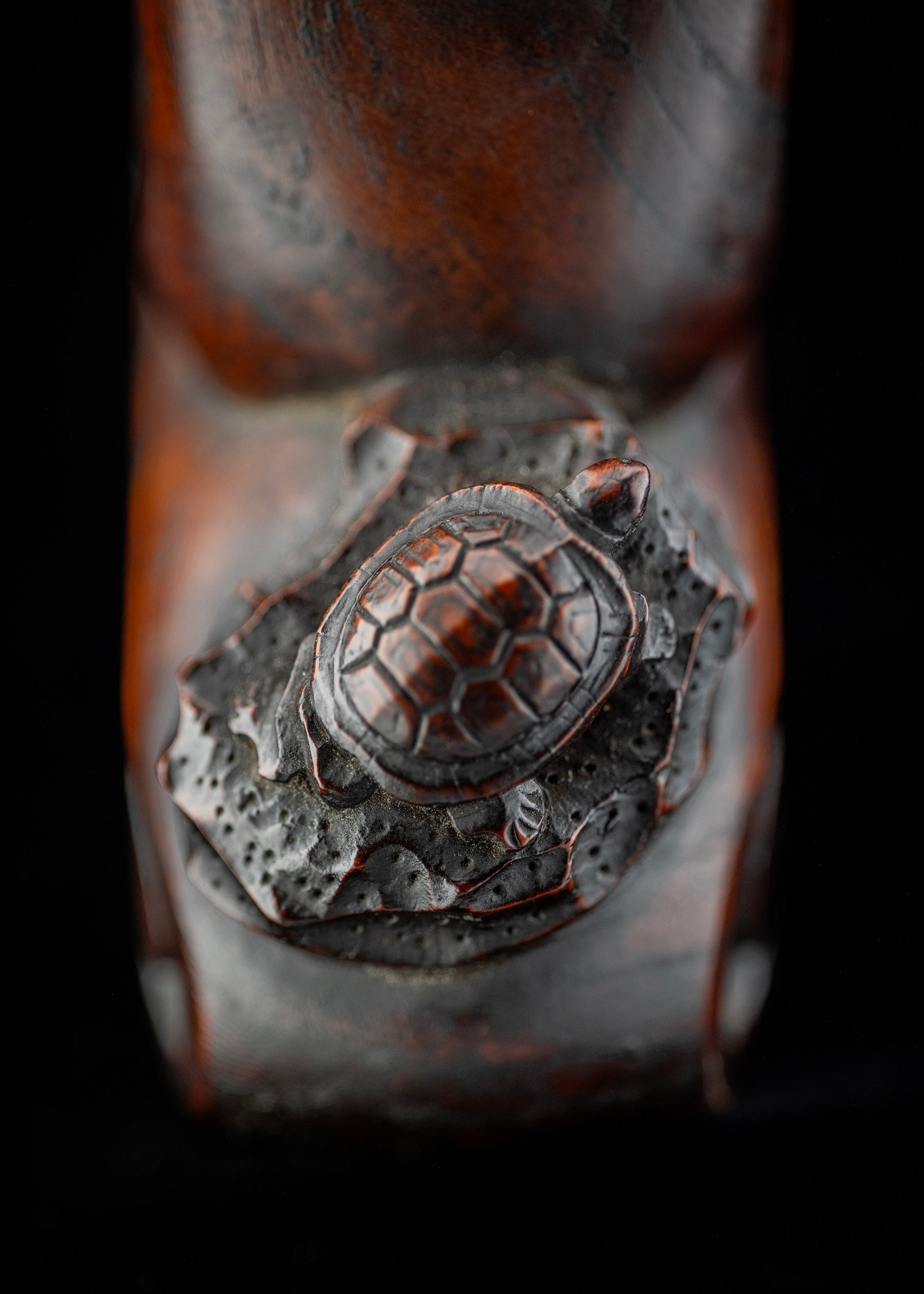
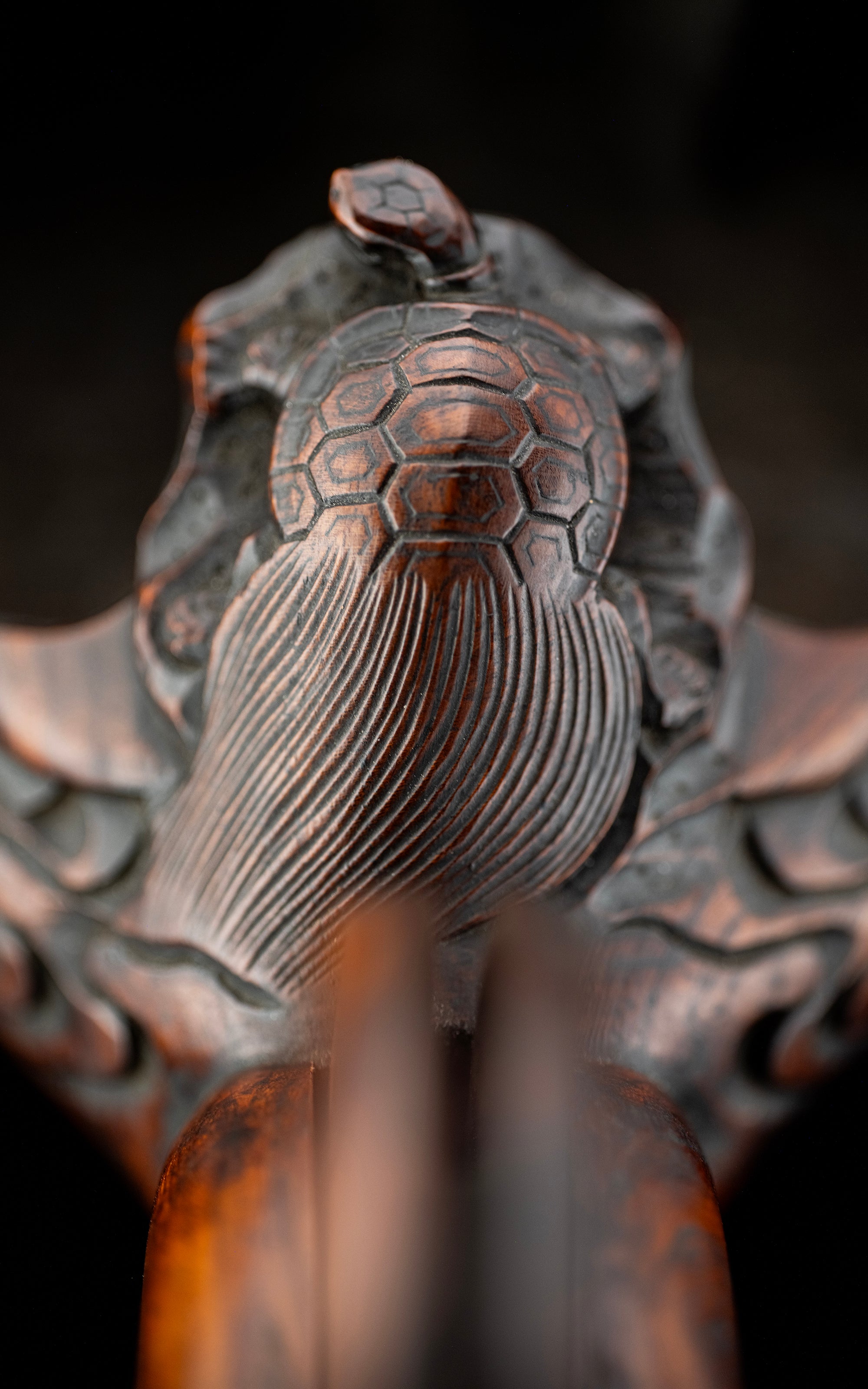
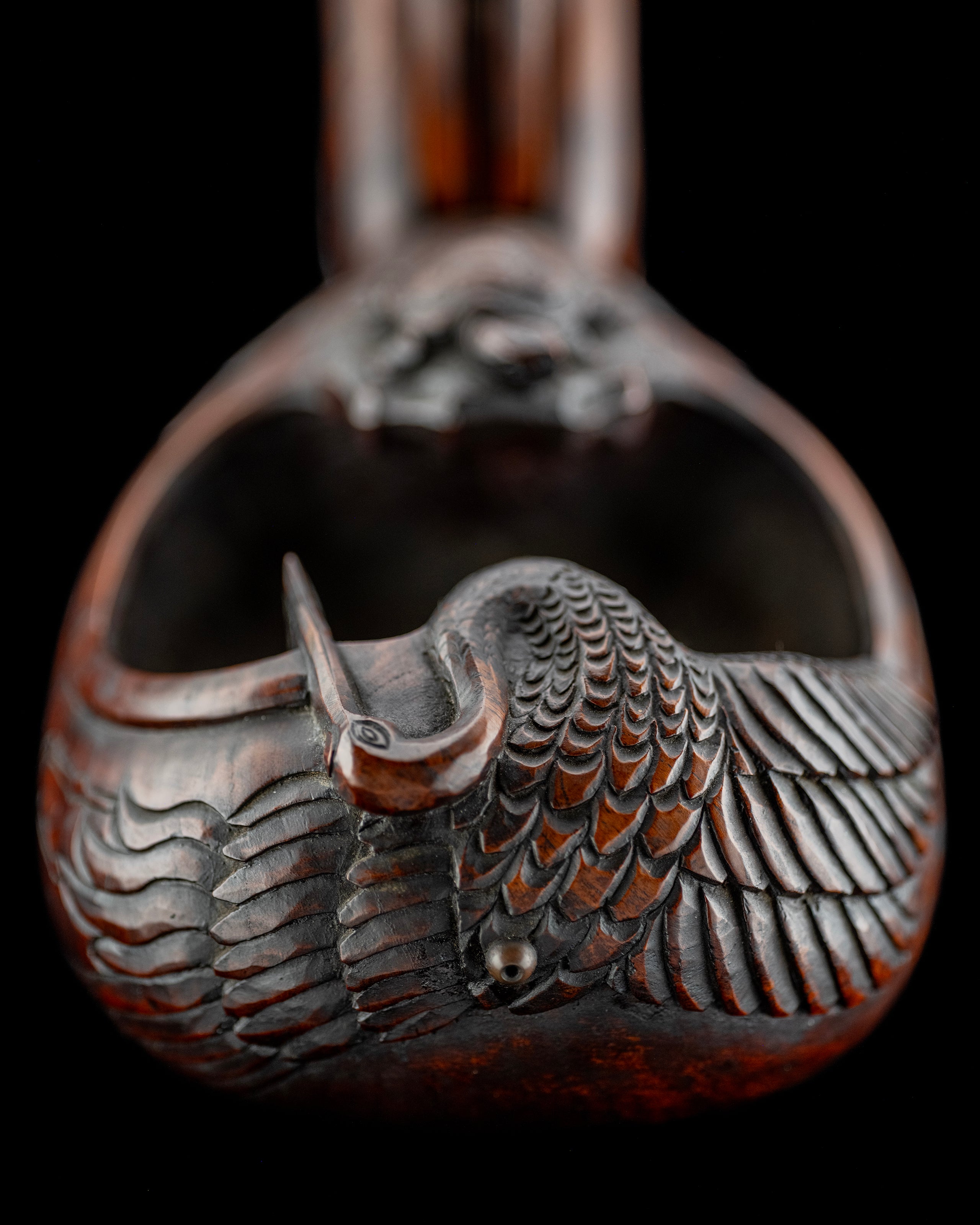
Sumitsubo Japanese Hand made Wooden Inkpot by Tsubotoyo Ⅱ
Brand name: Tsubotoyo Ⅱ (二代目壺豊)
Artist's name:Omi Shokichi (小見庄吉, 1904~?)
Wood: Japanese zelkova
Weight: 1133g
Total length: 390mm
Production date: The 23rd year of the Showa era (1948)
Accessories: -
Additional Information: Seventy-eight years have passed since it was crafted in 1948, during which it had been kept in the display window of a tool shop, remaining in excellent condition. The artisan behind this piece was the legendary Tokyo sumitsubo master, Tsubotoyo II, whose real name was Omi Shokichi (小見庄吉). His predecessor, Tsubotoyo I (real name Omi Tsubokichi/ 小見 壺吉), was born in 1875 and apprenticed in 1891 under Tsubosen( 壺仙)—who himself was a disciple of Tsubokin(坪金), the founder of Tokyo sumitsubo. The Tsubotoyo lineage spanned three generations: Tsubotoyo II retired due to illness in 1963, and Tsubotoyo III carried on the craft into the late Showa 40s—a period spanning from 1965 to 1974—meaning the business sustained until the early 1970s.
Before acquiring this sumitsubo, I had consulted Mr.Tsuchida about the primary differences between the Tokyo style (Tsubotoyo) and the Sanjo regional style. Mr. Tsuchida’s answer was concise: "katachi"—meaning the form or shape. At the time, I did not fully grasp the depth of his words. It wasn’t until I finally laid hands on this sumitsubo, crafted by Tsubotoyo II at the absolute zenith of his career, that I gained a profound and intuitive understanding. First and foremost, the overall silhouette of the sumitsubo is perfectly proportioned, with contours that are remarkably rounded, full, fluid, and elegant. When it comes to the details, the crane and tortoise are brought to life with clean, resolute, and masterful chisel strokes that waste no motion. For comparison, the link showcases one of his pieces from the final years(1960) before his retirement; one can easily see that the later craftsmanship simply cannot hold a candle to the work from his golden age.
Further Reading:
オプションを選択