
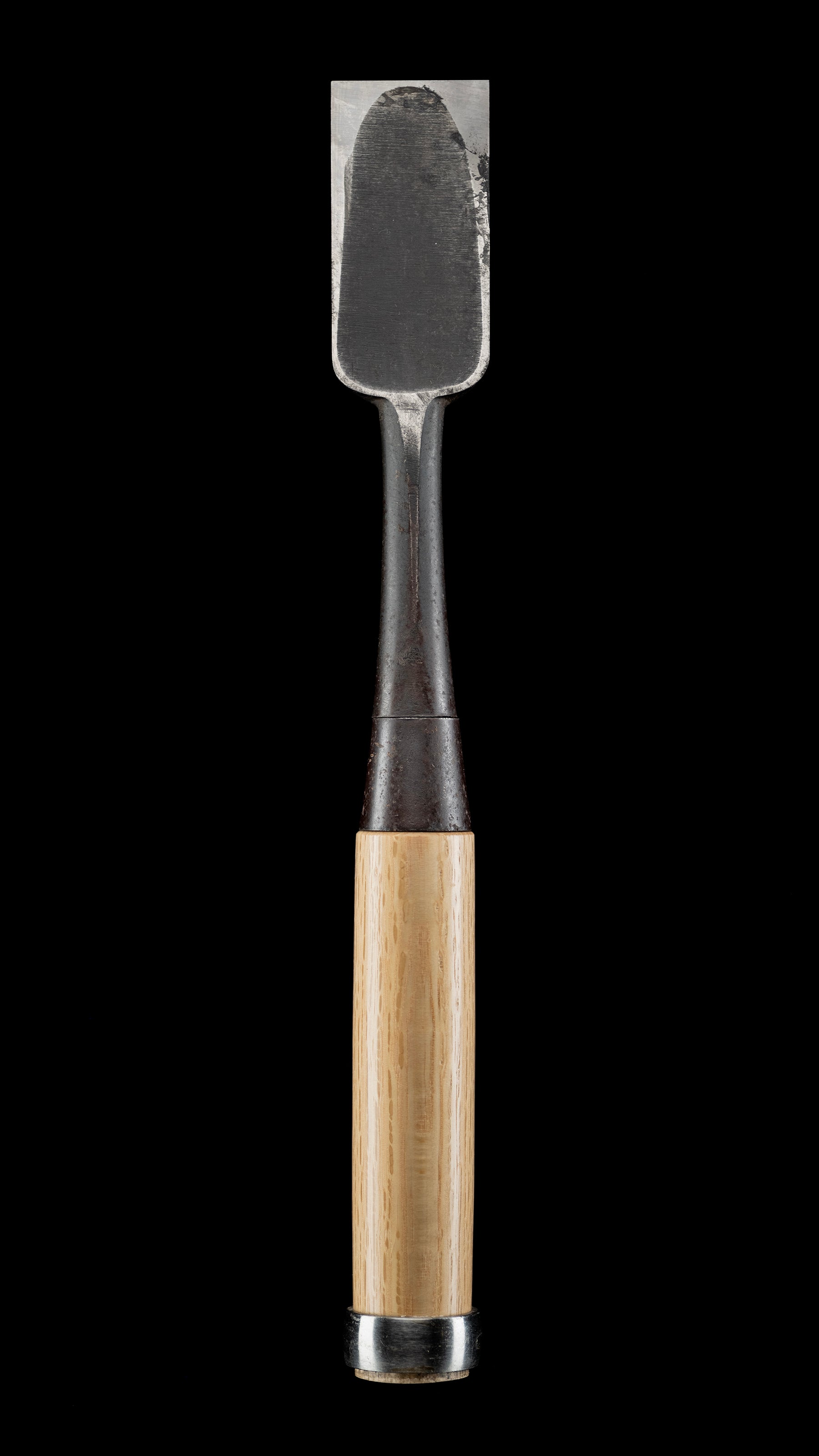
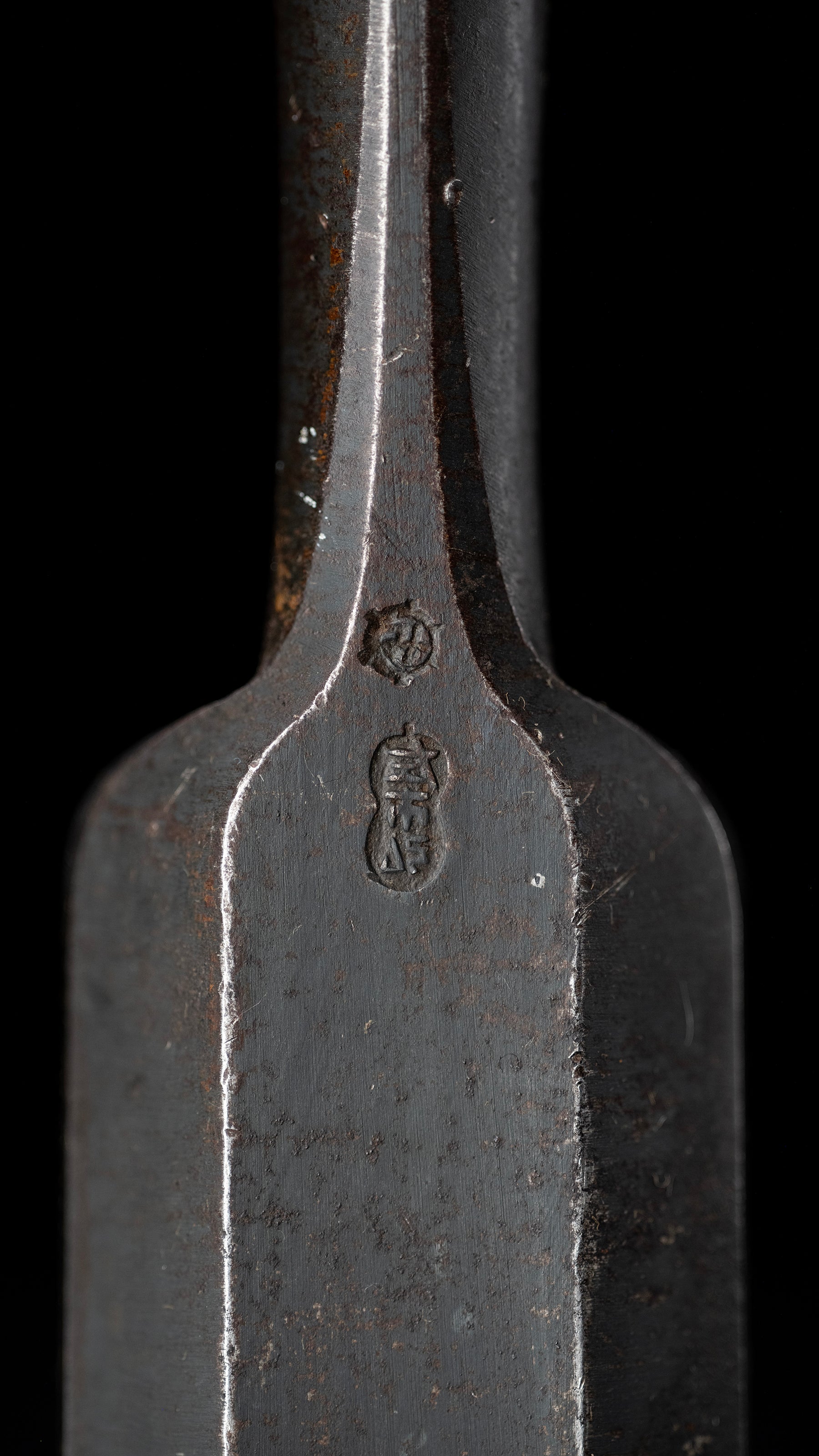
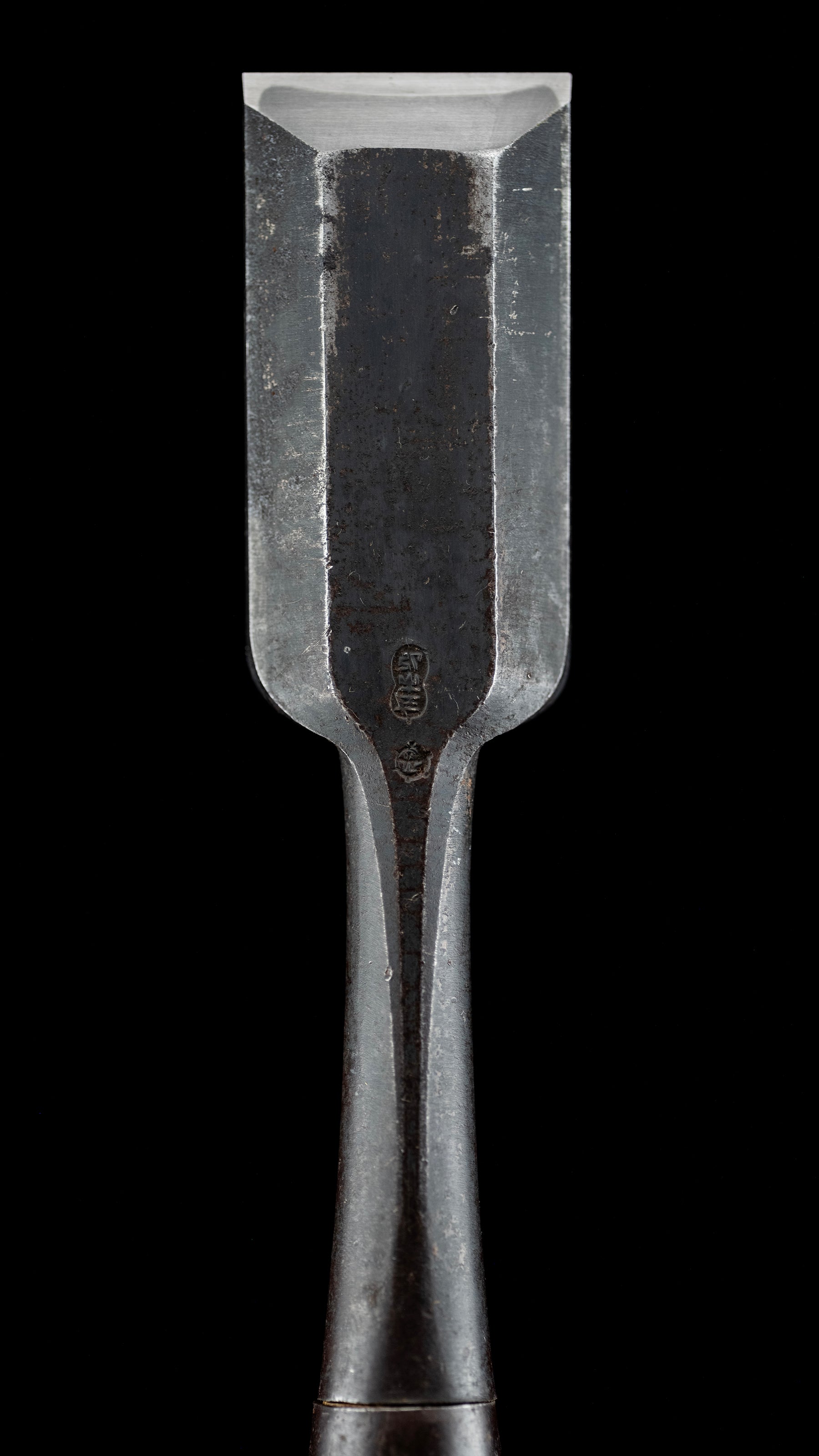
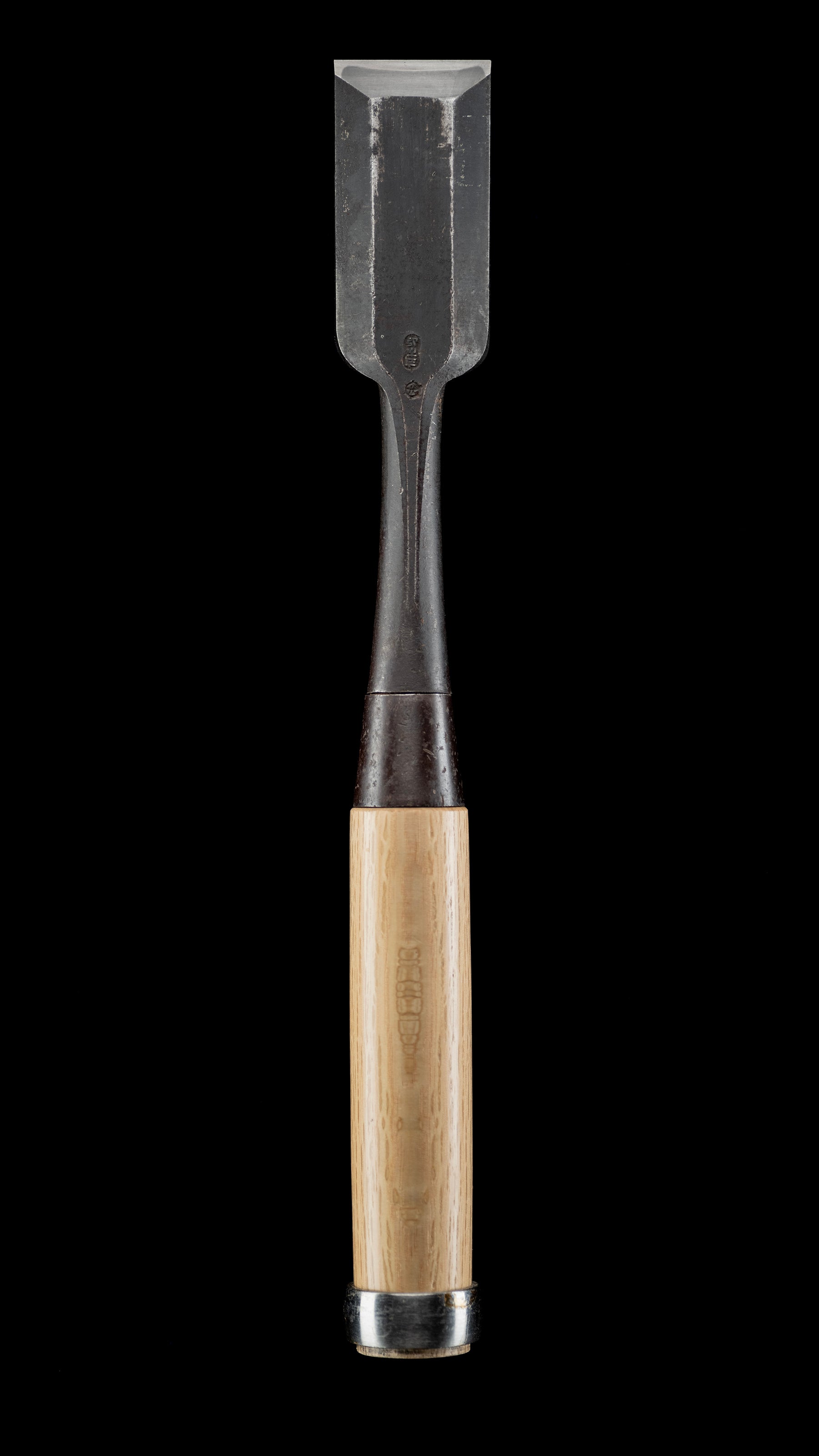
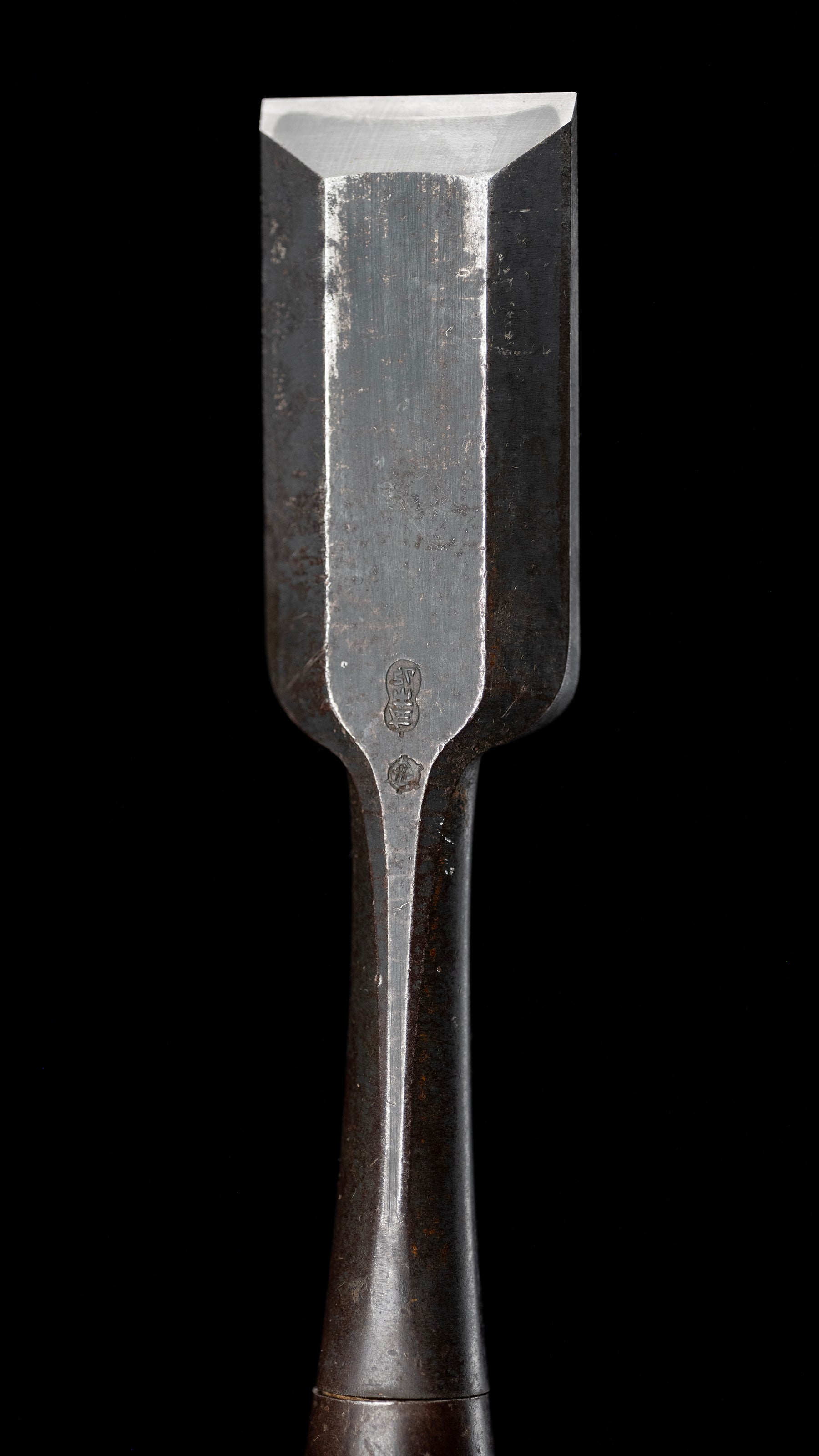
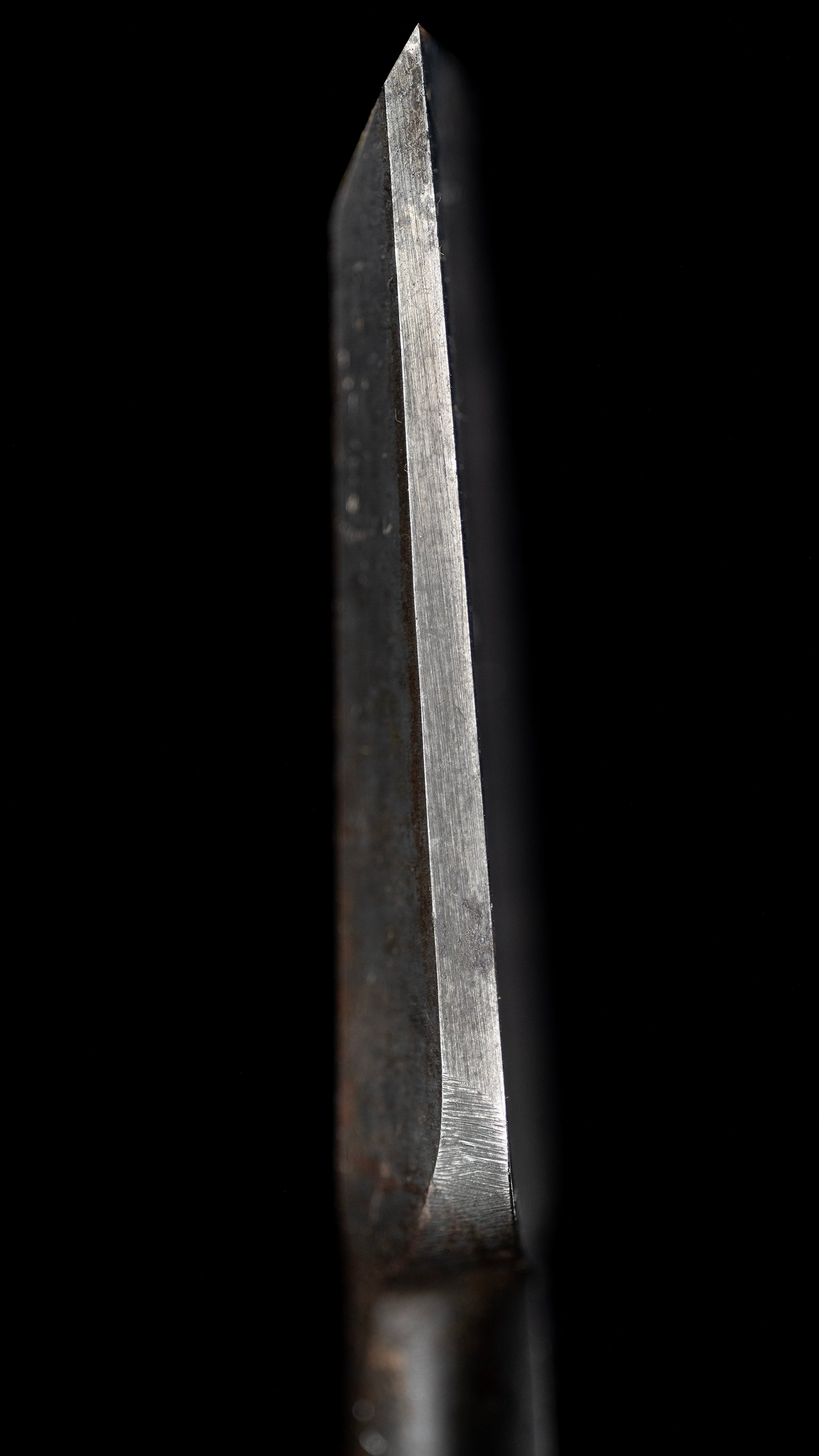
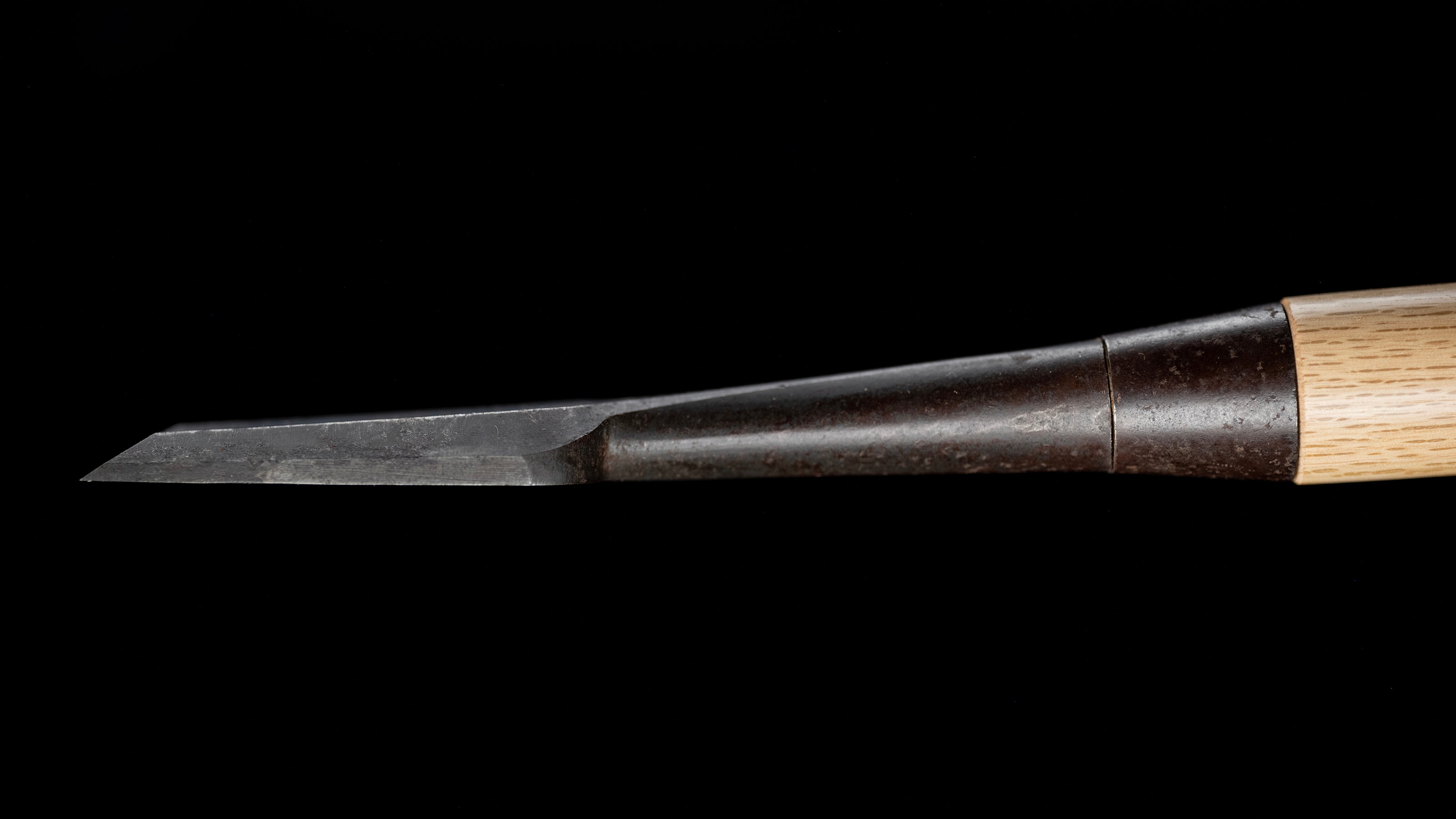
Tataki-Nomi Japanese Made Timber Chisel By Ichihiro Ⅲ - 36mm
Smith name: Yamazaki Shouzou (January 3, 1938~ March 11, 2006)
Steel: White Steel No.1
Blade width: 36mm
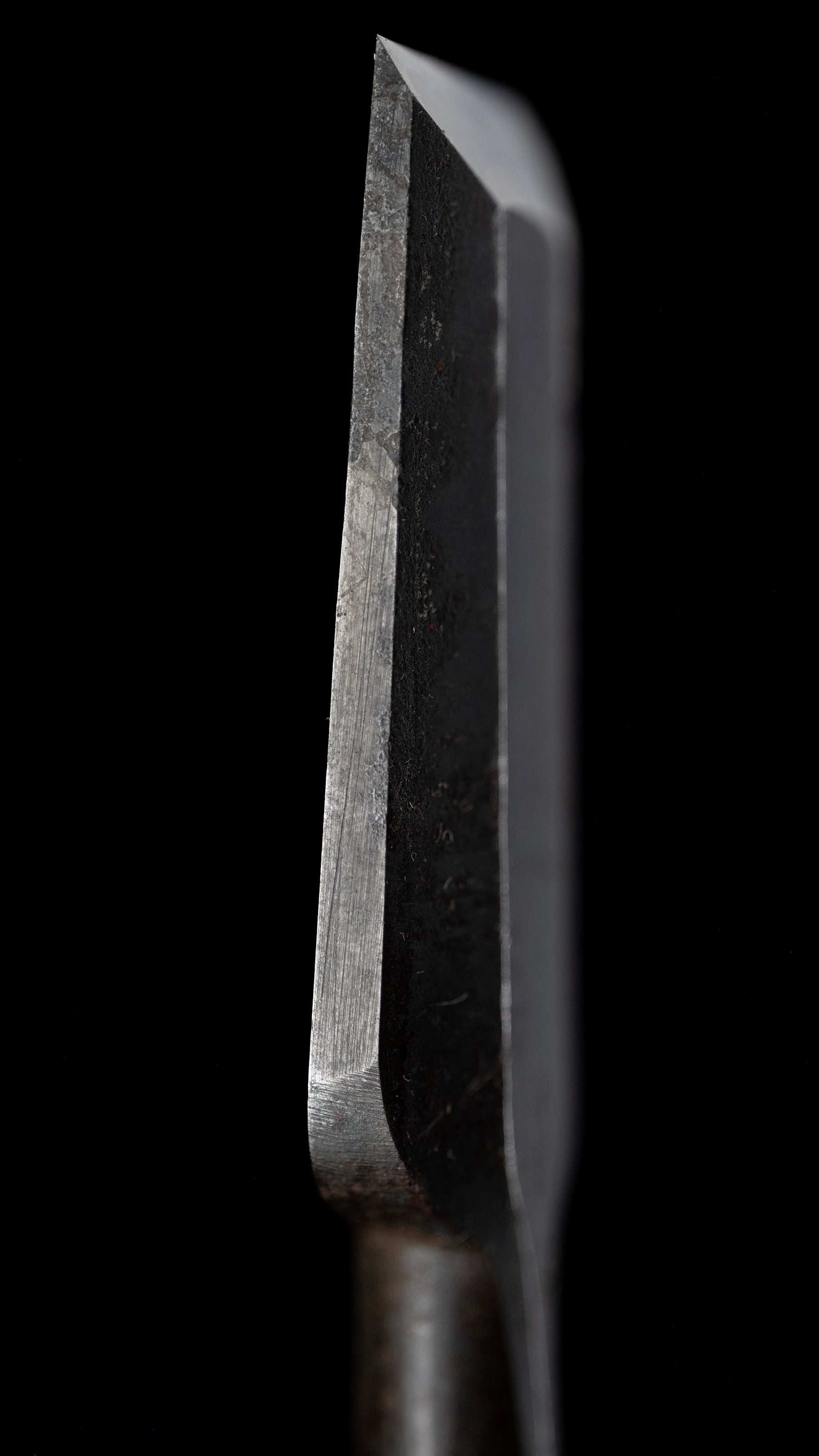
Blade thickness: Blade Bottom(about 11.50mm),The blade near the bevel (about 6.80mm)
Manufacture Era: Before 1980
Weight: 356g
Blade Angles: 30°
Total length: 293mm
Neck length: 70mm
Blade length: 70mm
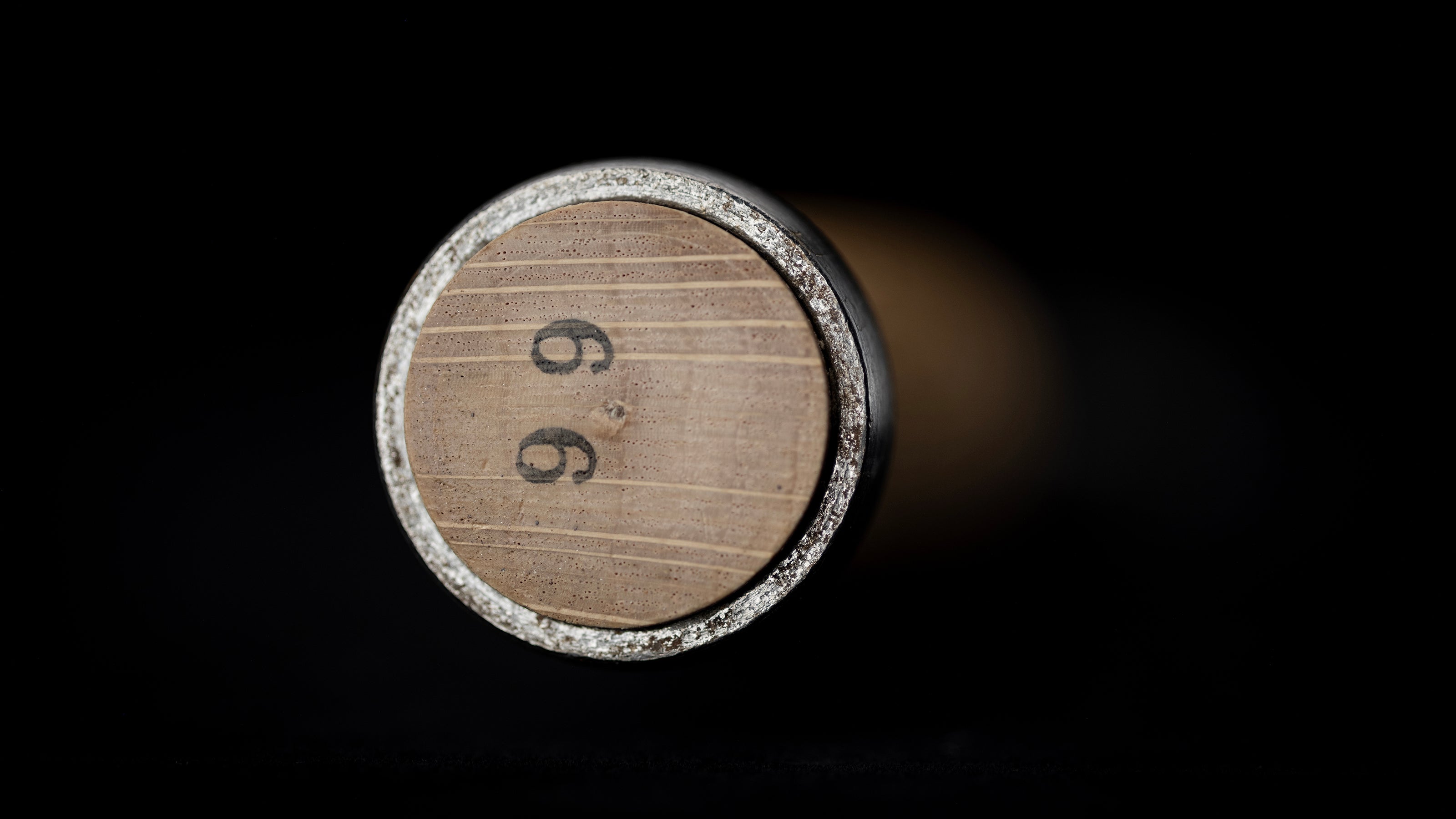
Wooden handles:Japanese White Oak(Shirakashi)
Accessories:—
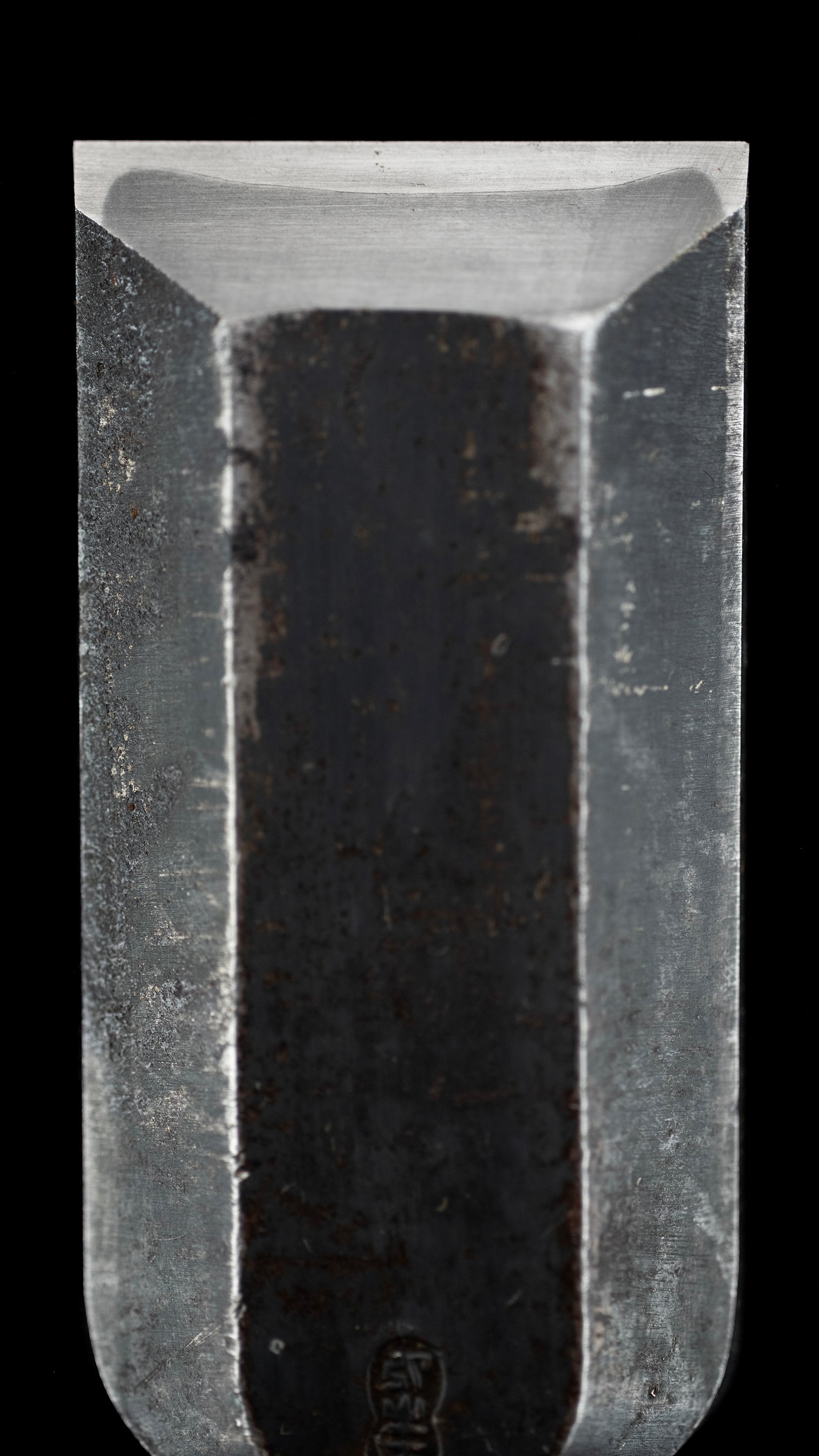
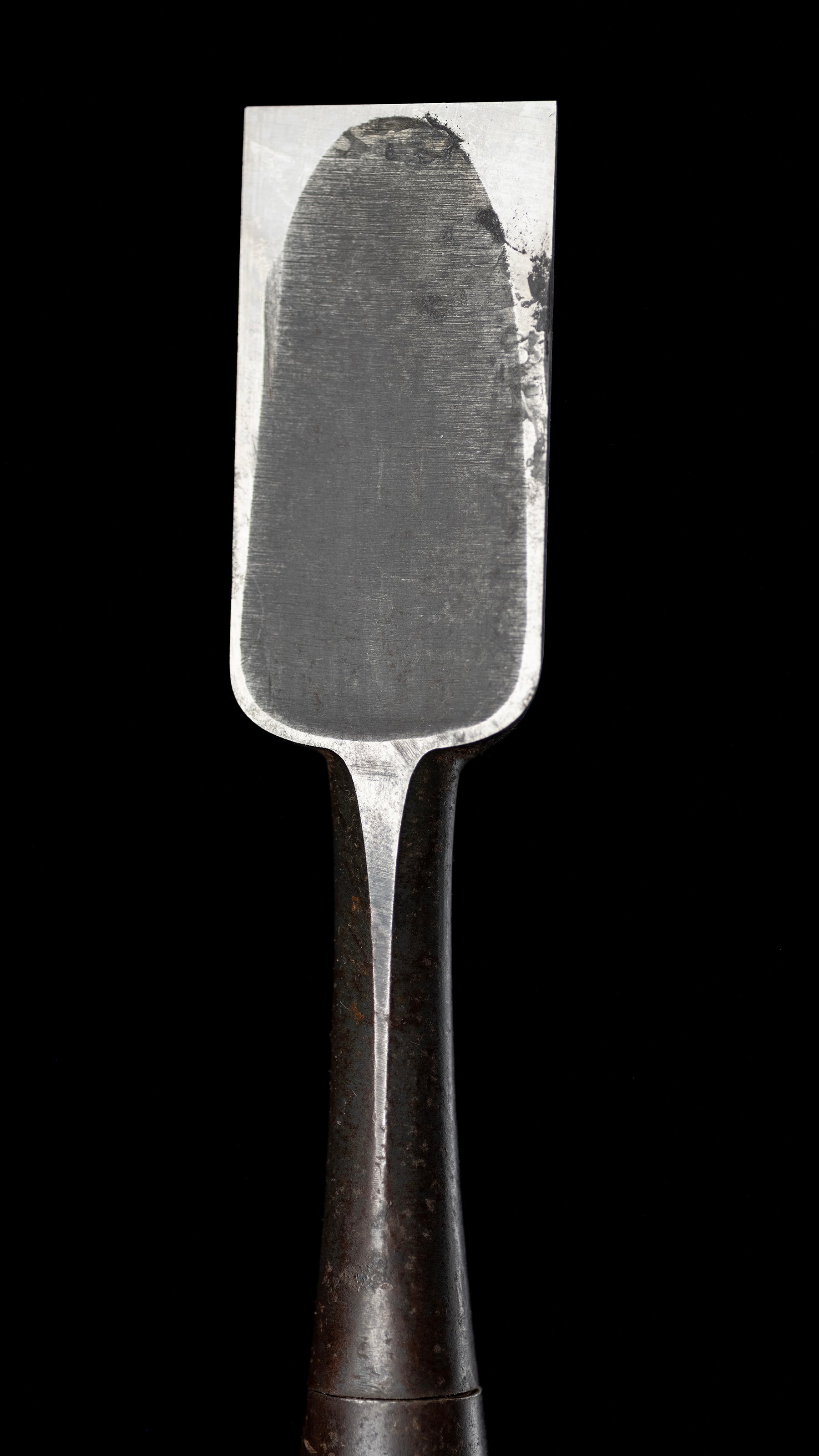
Additional Information: This is a used, early third-generation Ichihiro Tataki chisel, sourced from a retired carpenter in the Tokyo area. Despite long-term use by its previous owner, it remains in good condition with plenty of life left in it. I have performed a restorative sharpening, honing both the bevel and the back (ura) up to 1,000 grit. The wooden handle was replaced by Mr. Tsuchida.
Based on the feedback from the steel and the behavior of the burr during sharpening, the steel is quite hard—harder than the steel typically used in Kiyotada chisels. That being said, the heat treatment is outstanding, featuring a uniform grain structure and good toughness. However, because its toughness is slightly lower than that of most Kiyotada chisels, you may need to increase the bevel angle when working with dense hardwoods.
Another impressive feature of this batch of Ichihiro chisels is the komi (tang). The komi on these Hidari Ichihiro chisels is noticeably thicker and more robust than most others I have encountered. While a stouter komi is much more ideal for both the tool's structural integrity and the user, it demands a much higher level of skill from the craftsman fitting the handle. As a result, due to complaints from wholesalers and handle-fitters over time, the komi size on most Hidari Ichihiro chisels was eventually reduced.
For reference regarding the komi of this particular batch of Ichihiro chisels, you can check out this post by Mr. Tsuchida: [Link]. The chisel on the left is one from this exact batch.
Please note that there are some traces of residual rust on the ura (back), but it does not affect its current usability. There is no need to completely remove it by grinding down the ura right now. Those rust marks will naturally disappear over time with continuous use and regular sharpening. If you attempt to grind it away completely at this stage, it will only drastically reduce the thickness of the steel and shorten the overall lifespan of the chisel.
オプションを選択