


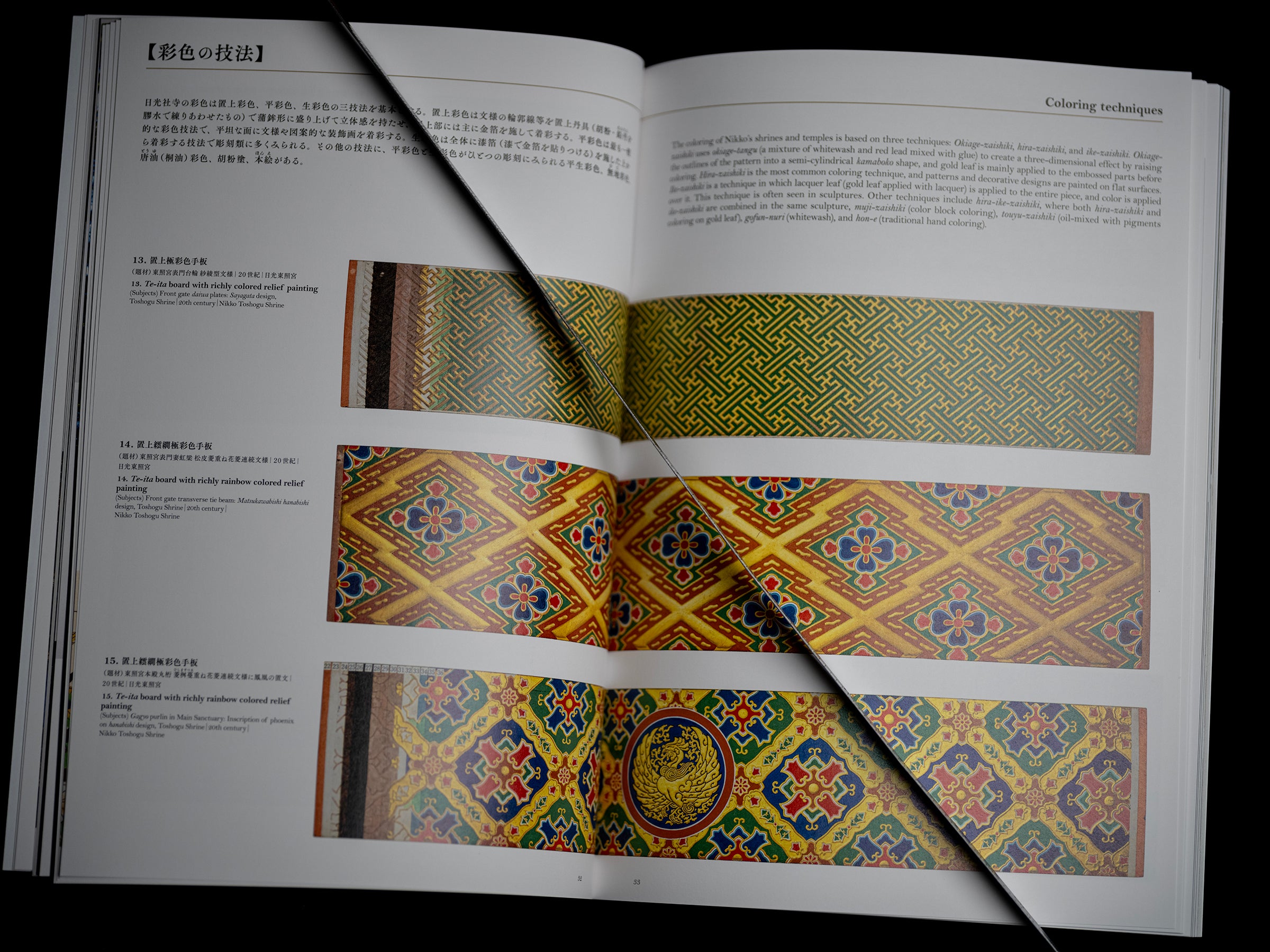
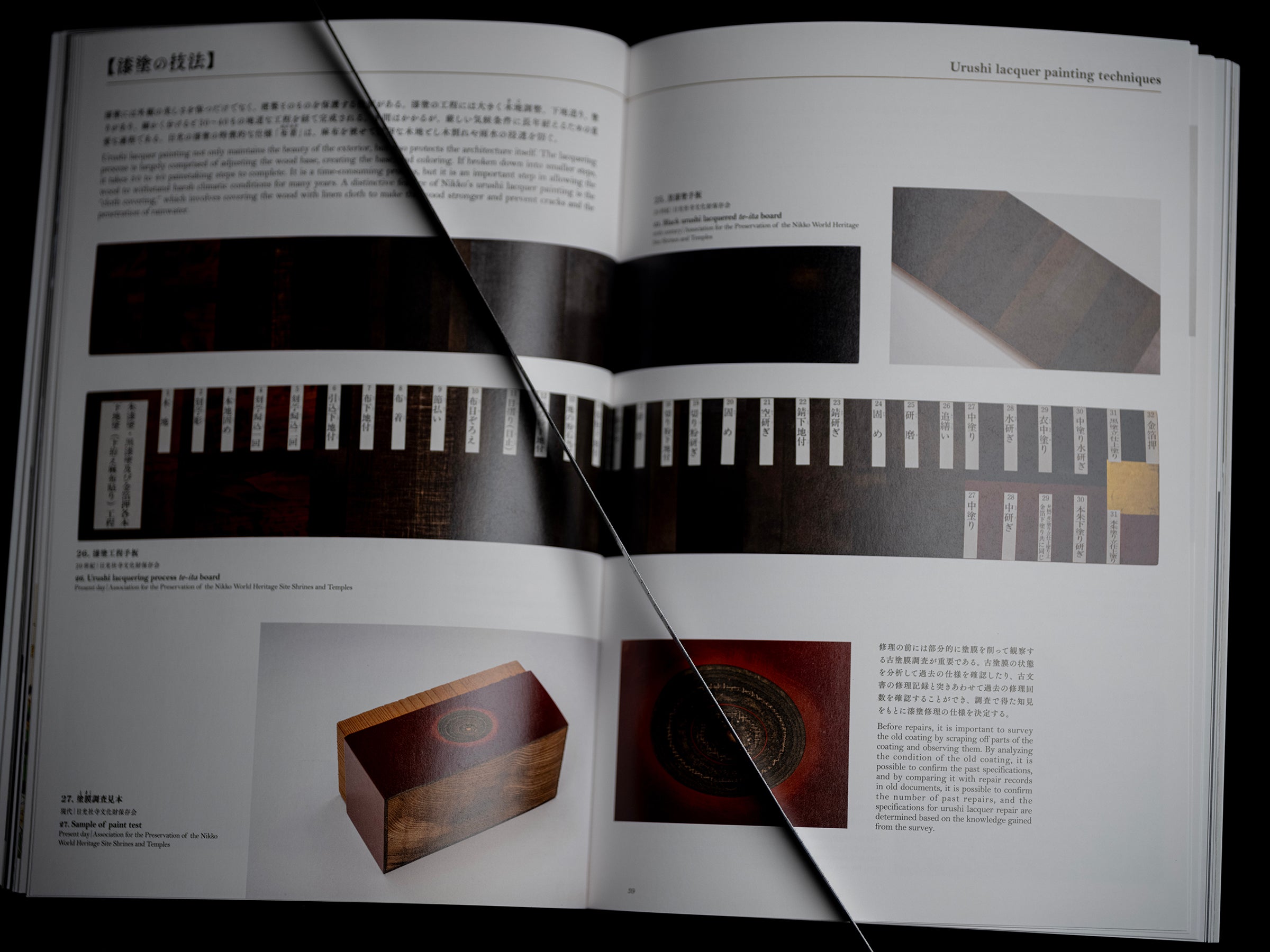
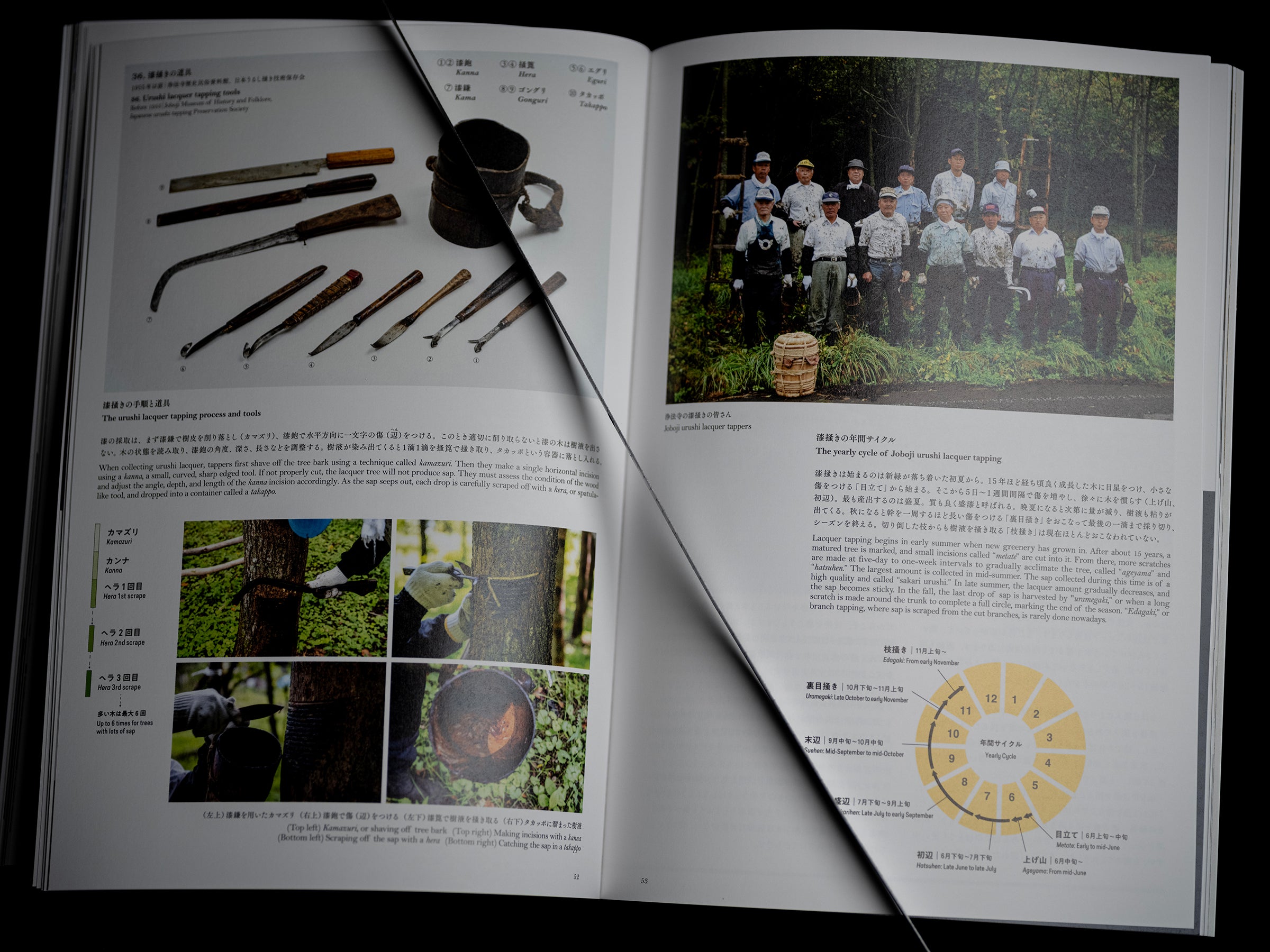
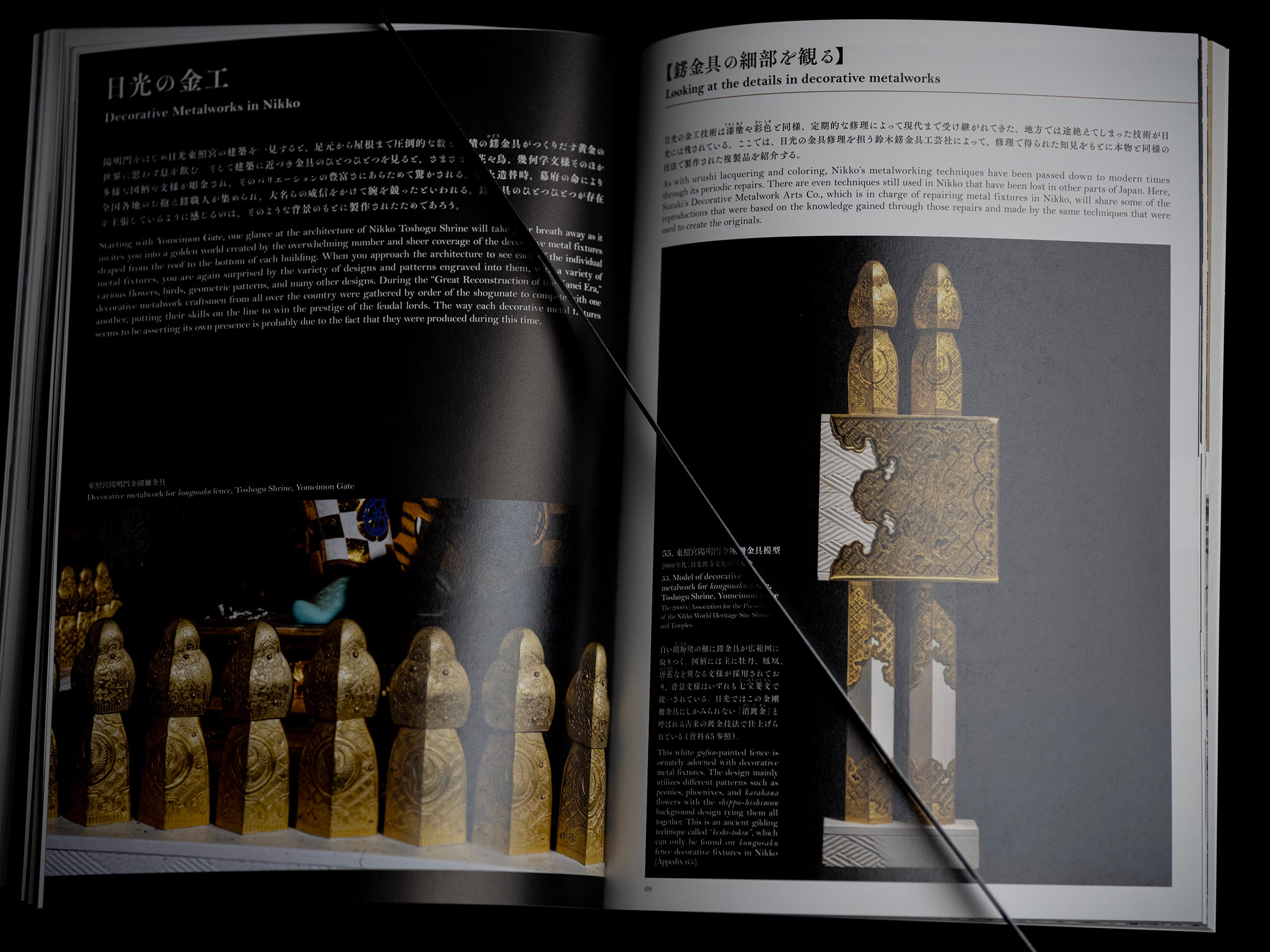
The Colors and Metalwork of Revealing the mystery behind the architectural beauty of its shrines and temples
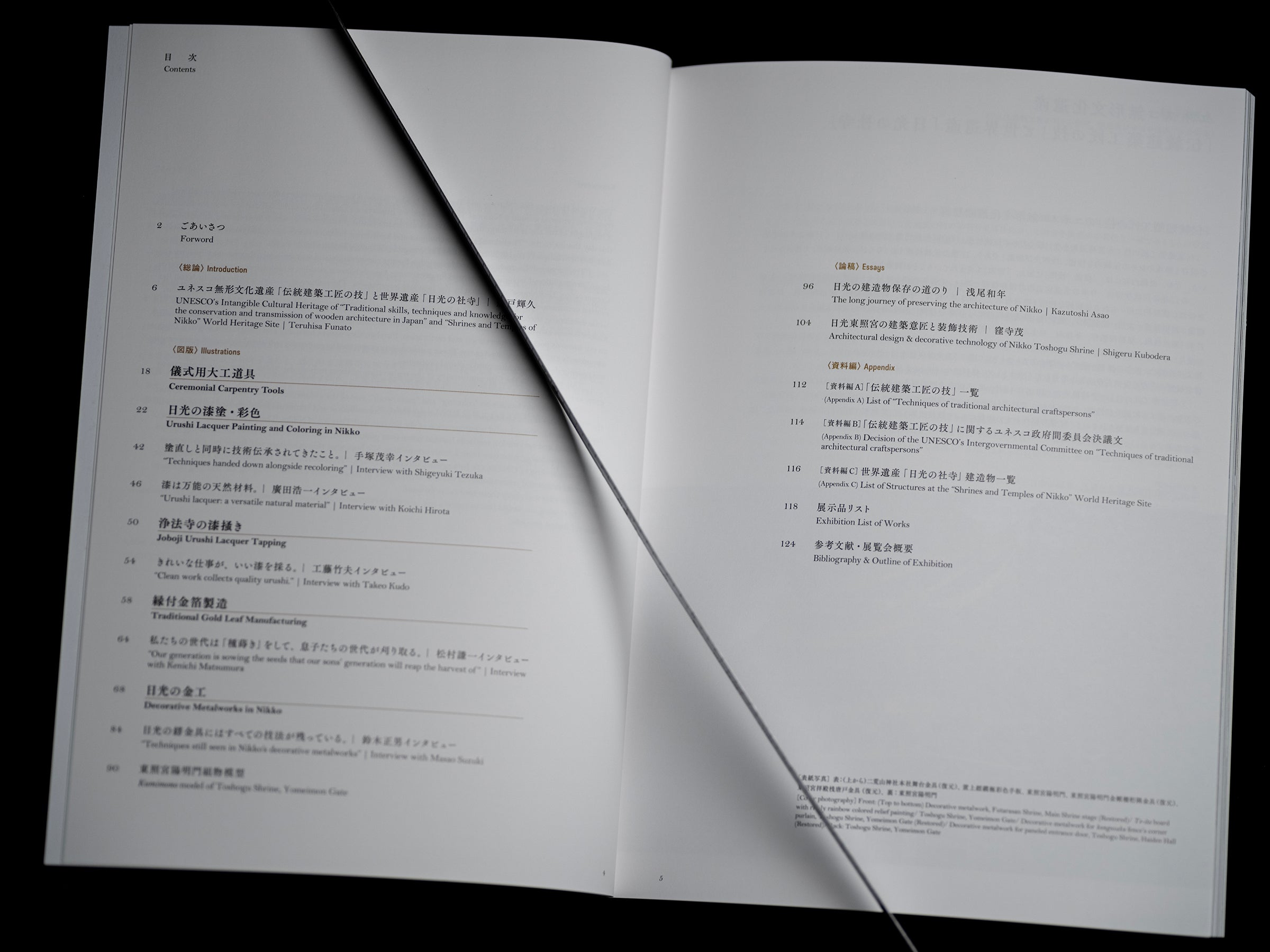
Contents
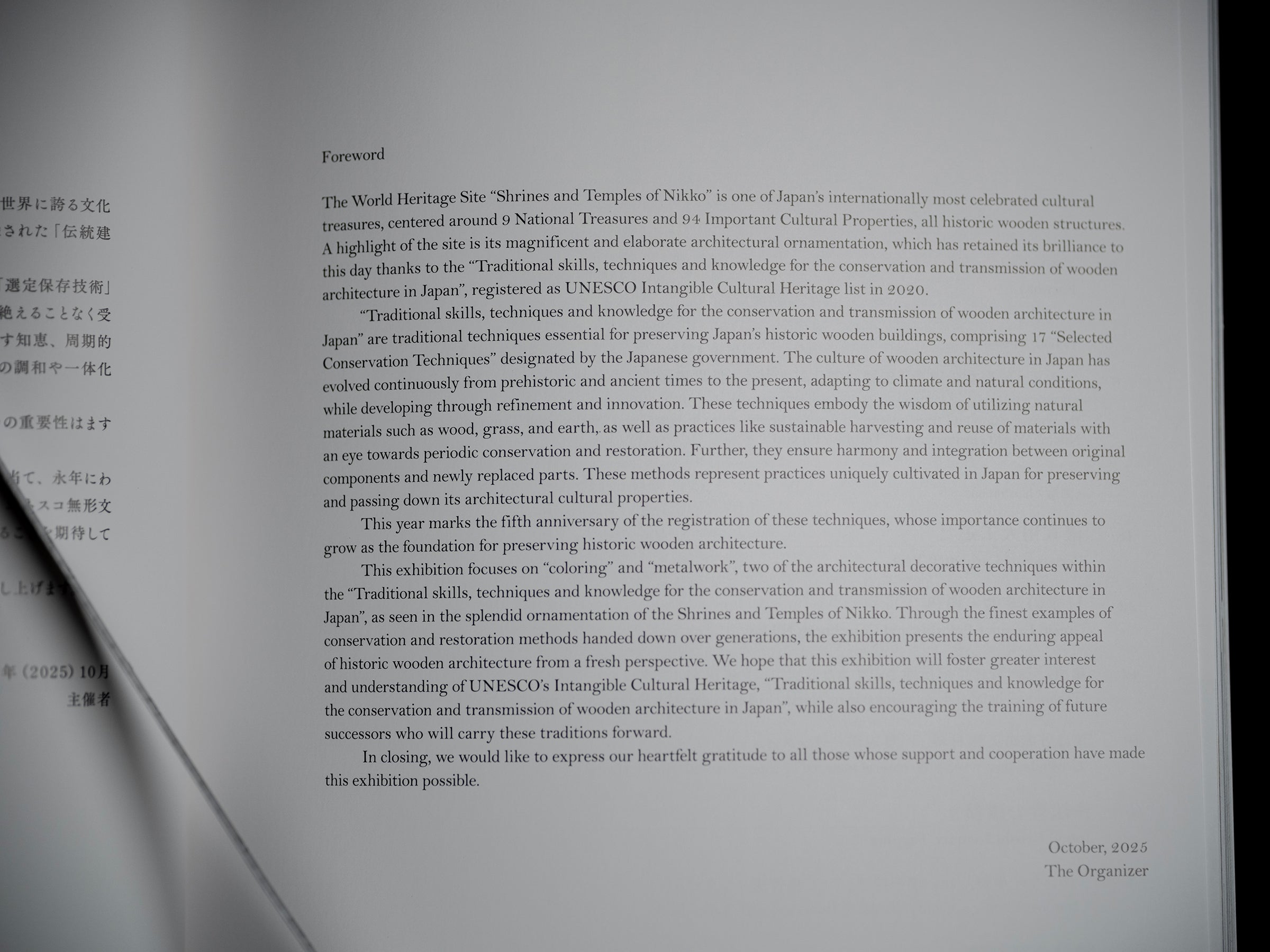
2 Forword
4 Exhibition Prologue
〈Introduction〉
8 UNESCO’s Intangible Cultural Heritage of “Traditional skills, techniques and knowledge for the conservation and transmission of wooden architecture in Japan” and “Shrines and Temples of Nikko” World Heritage Site | Teruhisa Funato
〈Illustrations〉
20 Urushi Lacquer Painting and Coloring in Nikko
40 “Techniques handed down alongside recoloring” | Interview with Shigeyuki Tezuka
44 “Urushi lacquer: a versatile natural material” | Interview with Koichi Hirota
48 Joboji Urushi Lacquer Tapping
52 “Clean work collects quality urushi.” | Interview with Takeo Kudo
56 Traditional Gold Leaf Manufacturing
62 “Our generation is sowing the seeds that our sons’ generation will reap the harvest of ” | Interview with Kenichi Matsumura
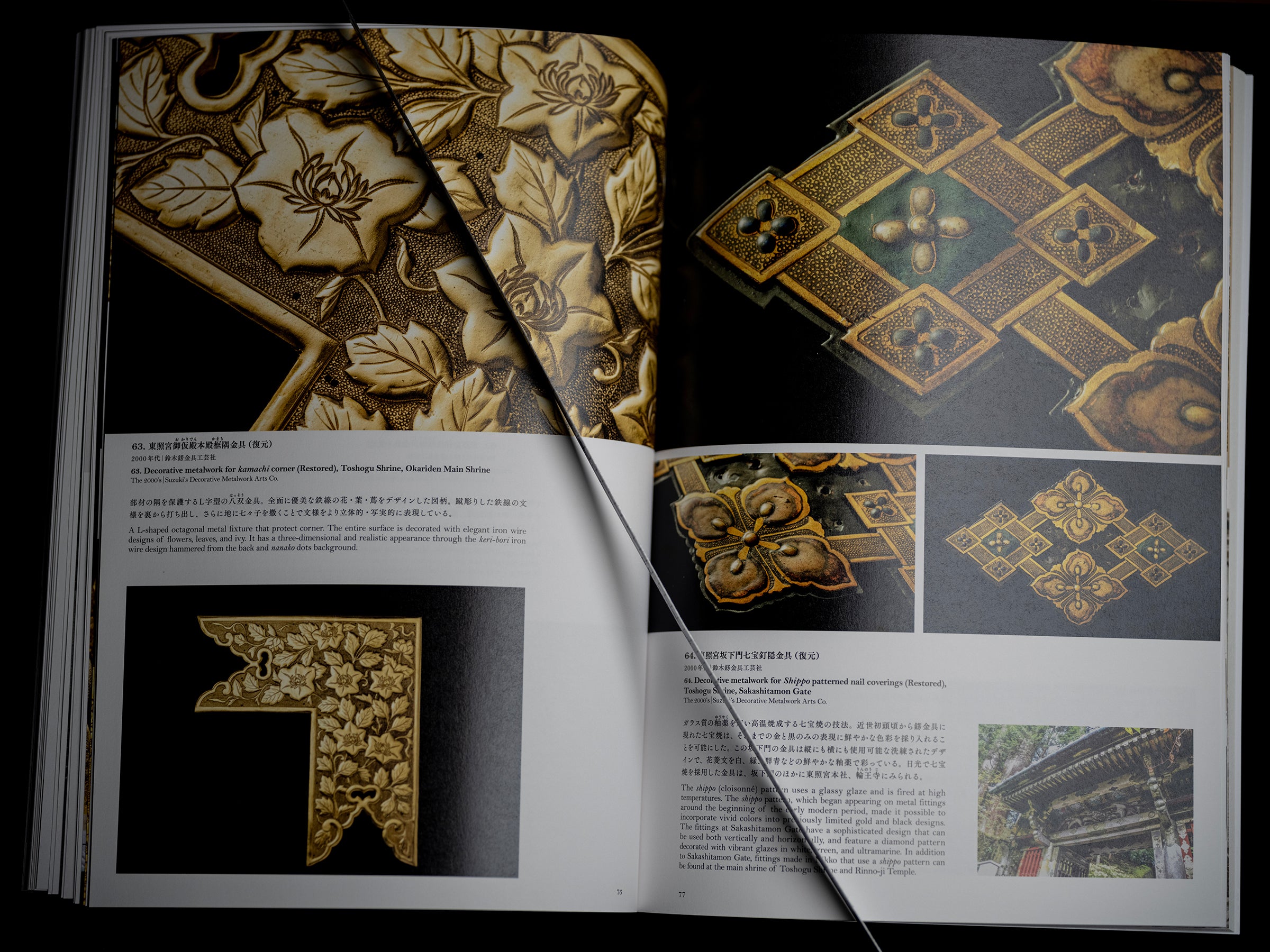
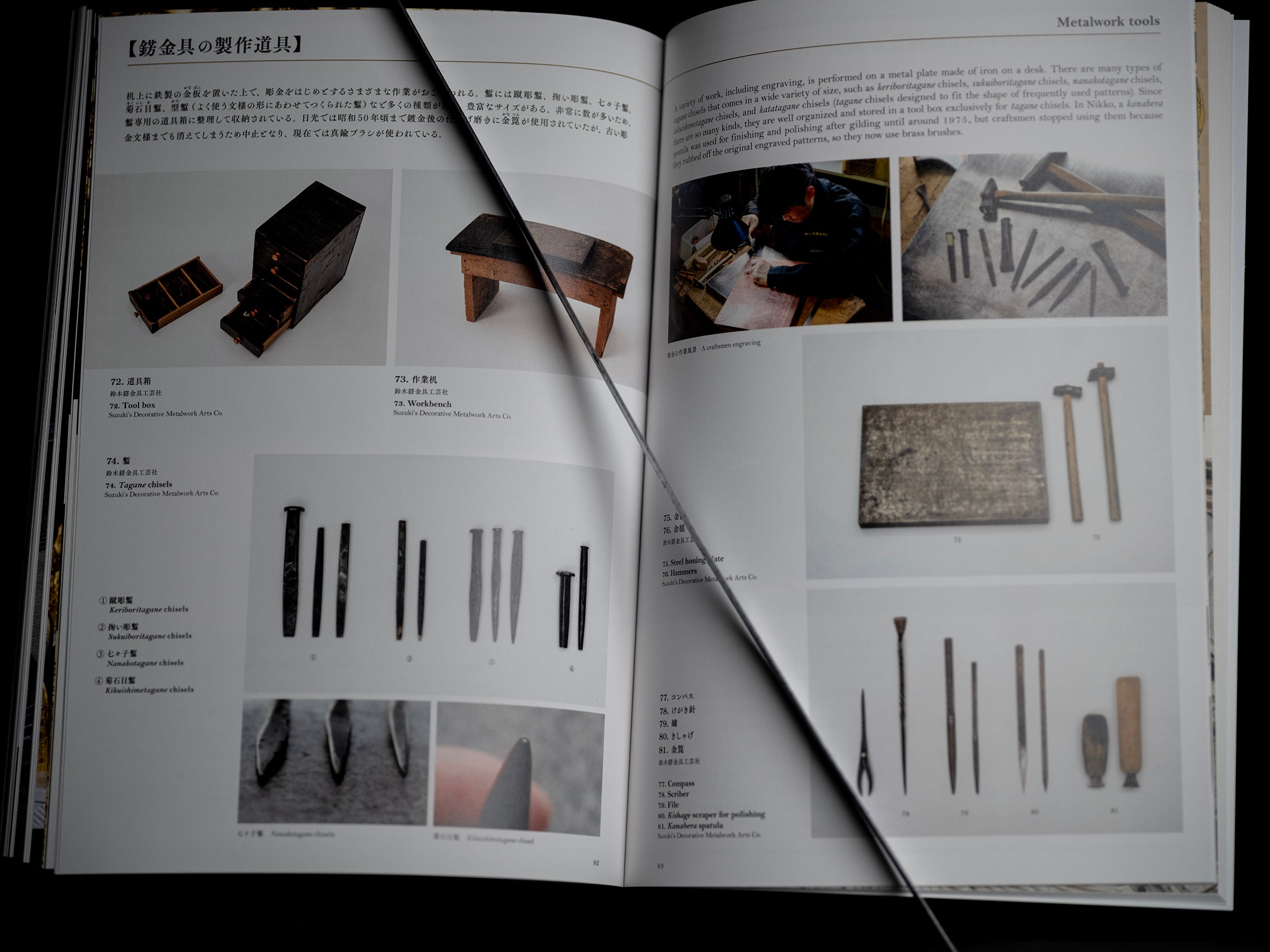
66 Decorative Metalworks in Nikko
82 “Techniques still seen in Nikko’s decorative metalworks” | Interview with Masao Suzuki
89 Kumimono model of Toshogu Shrine, Yomeimon Gate
94 The long journey of preserving the architecture of Nikko | Kazutoshi Asao
102 Architectural design & decorative technology of Nikko Toshogu Shrine | Shigeru Kubodera
〈Appendix〉
110 [Appendix A] List of “Techniques of traditional architectural craftspersons”
112 [Appendix B] Decision of the UNESCO’s Intergovernmental Committee on “Techniques of traditional architectural craftspersons”
114 [Appendix C] List of Structures at the “Shrines and Temples of Nikko” World Heritage Site
116 Exhibition List of Works
122 Bibliography & Outline of Exhibition
Weight: 479g
Size (length, width, thickness): 297mm, 210mm, 18mm
# of Pages: 128
Additional Information: This book is a great resource with lots of pictures and English translations.
※ Because the Takenaka Woodworking Tool Museum's book series cannot be sent overseas, I will charge a handling fee of 1,100 yen per book.
The Colors and Metalwork of Revealing the mystery behind the architectural beauty of its shrines and temples
セール価格¥3,600 JPY
オプションを選択