
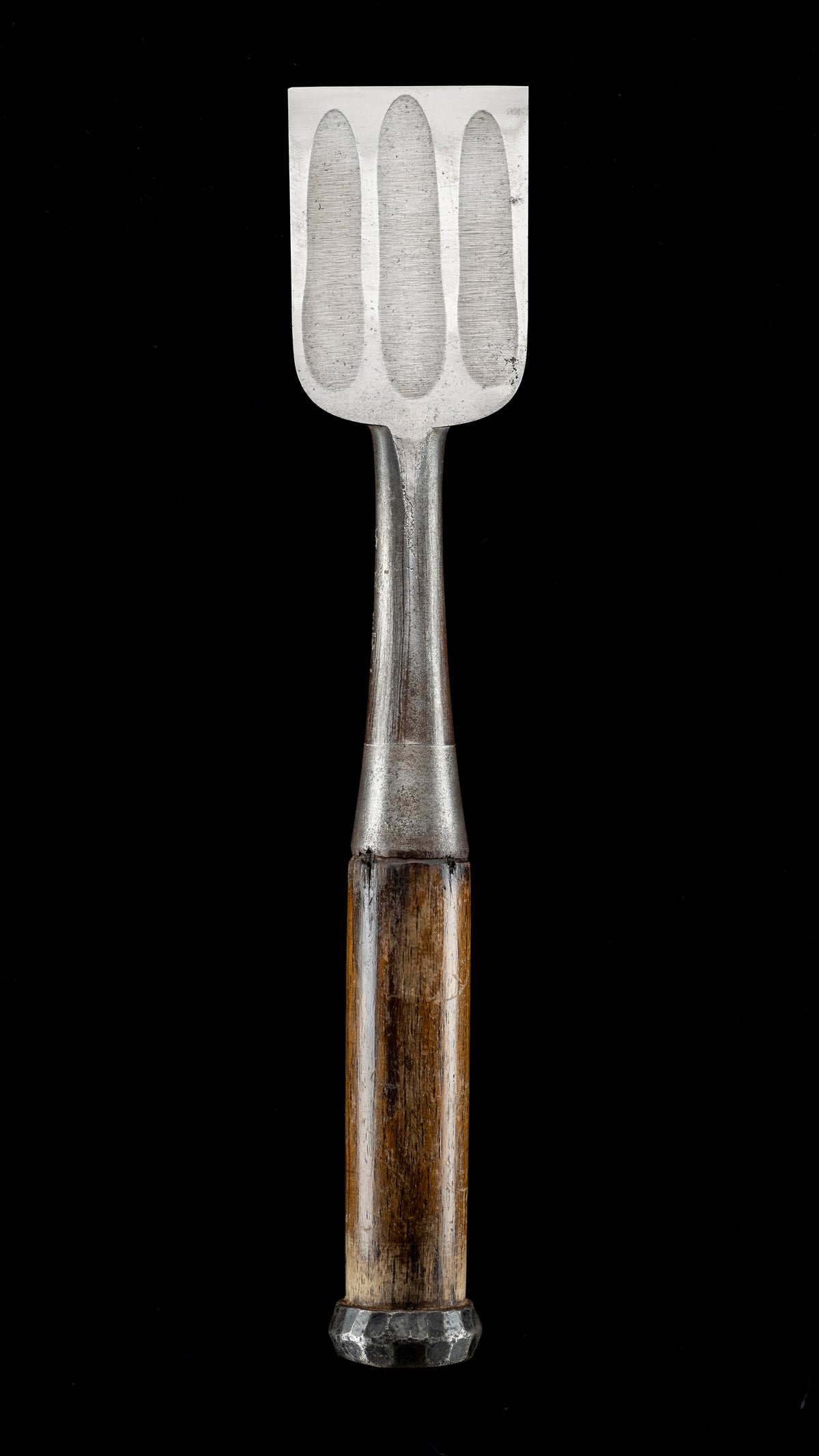
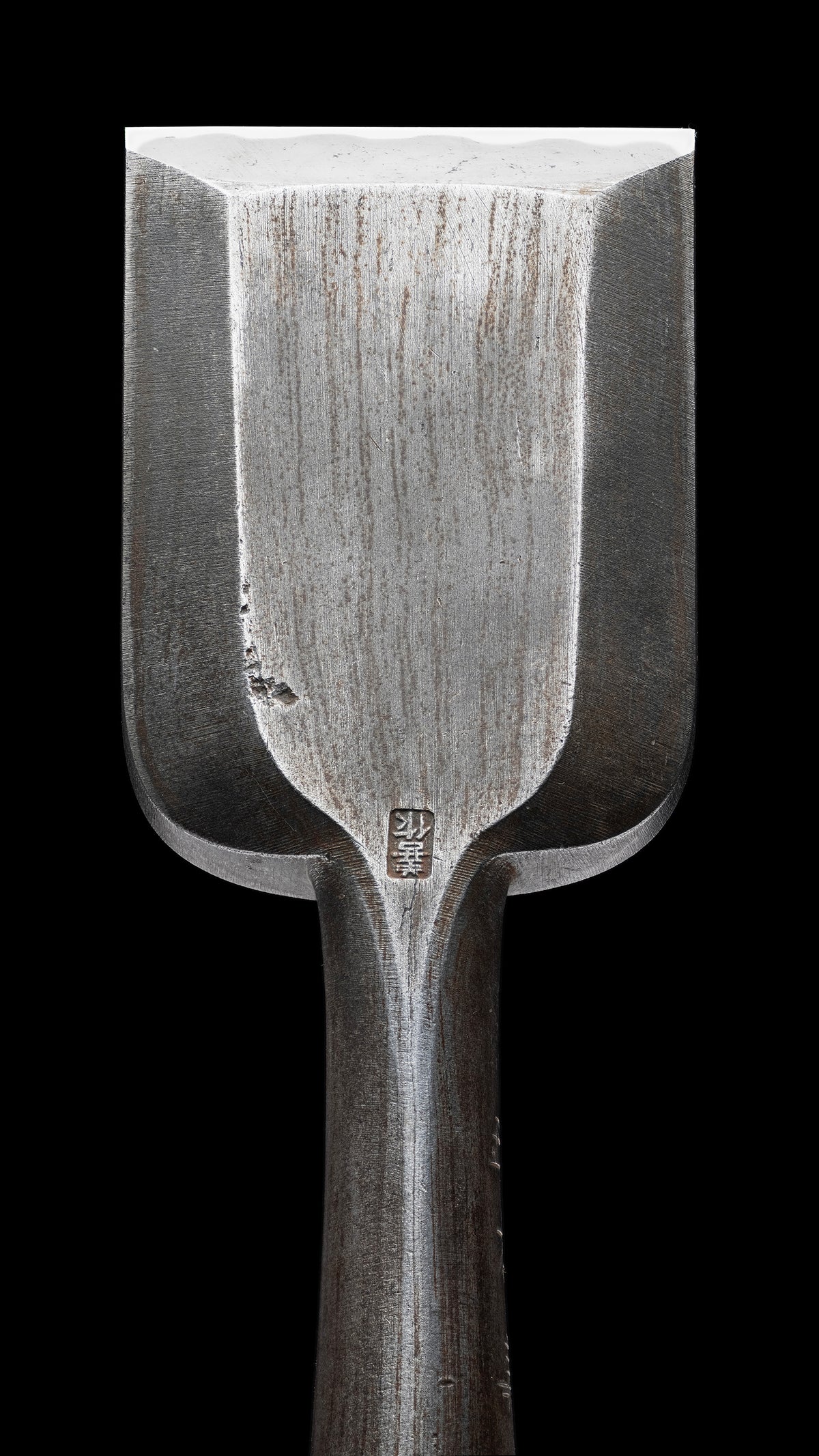
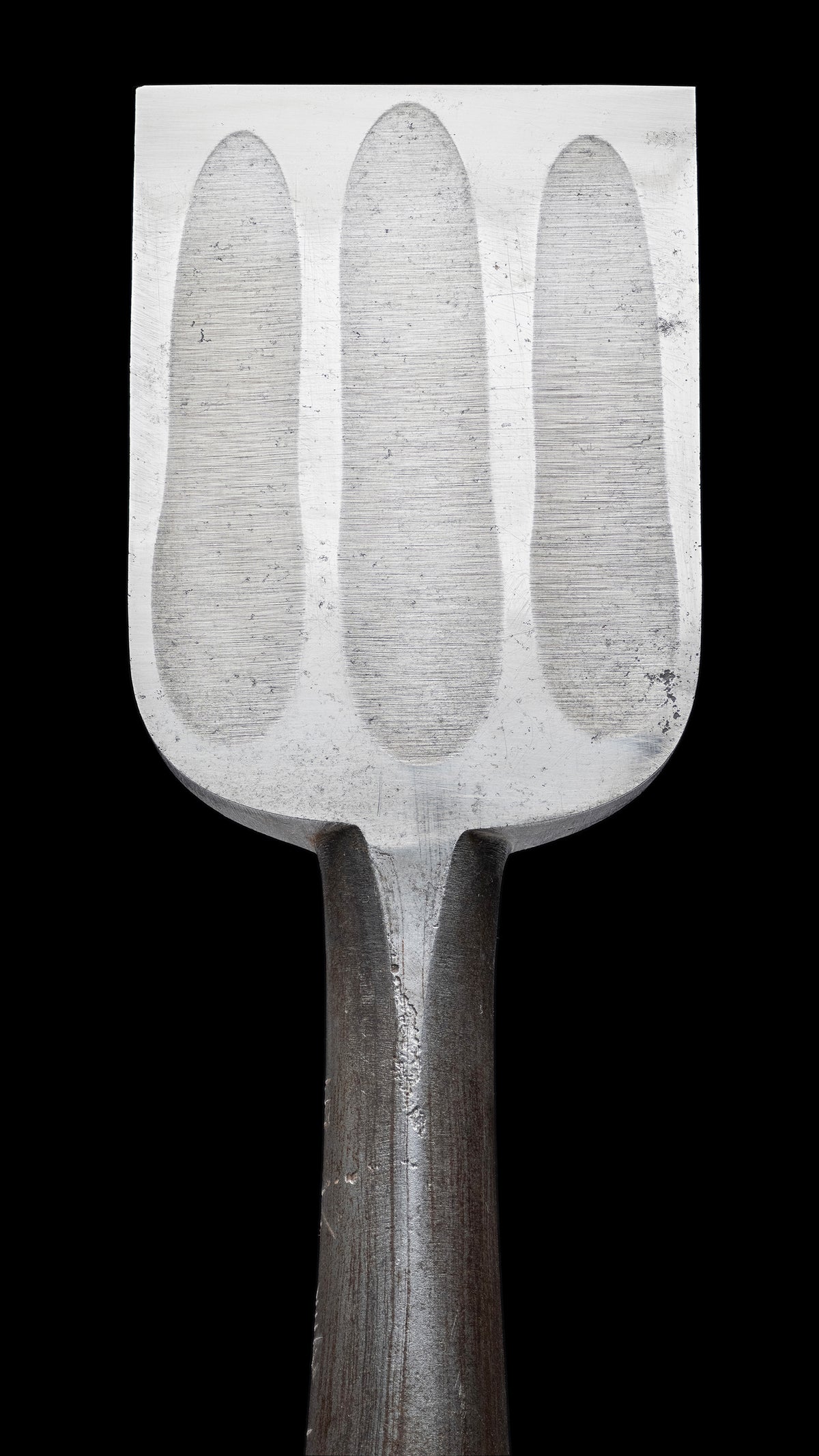
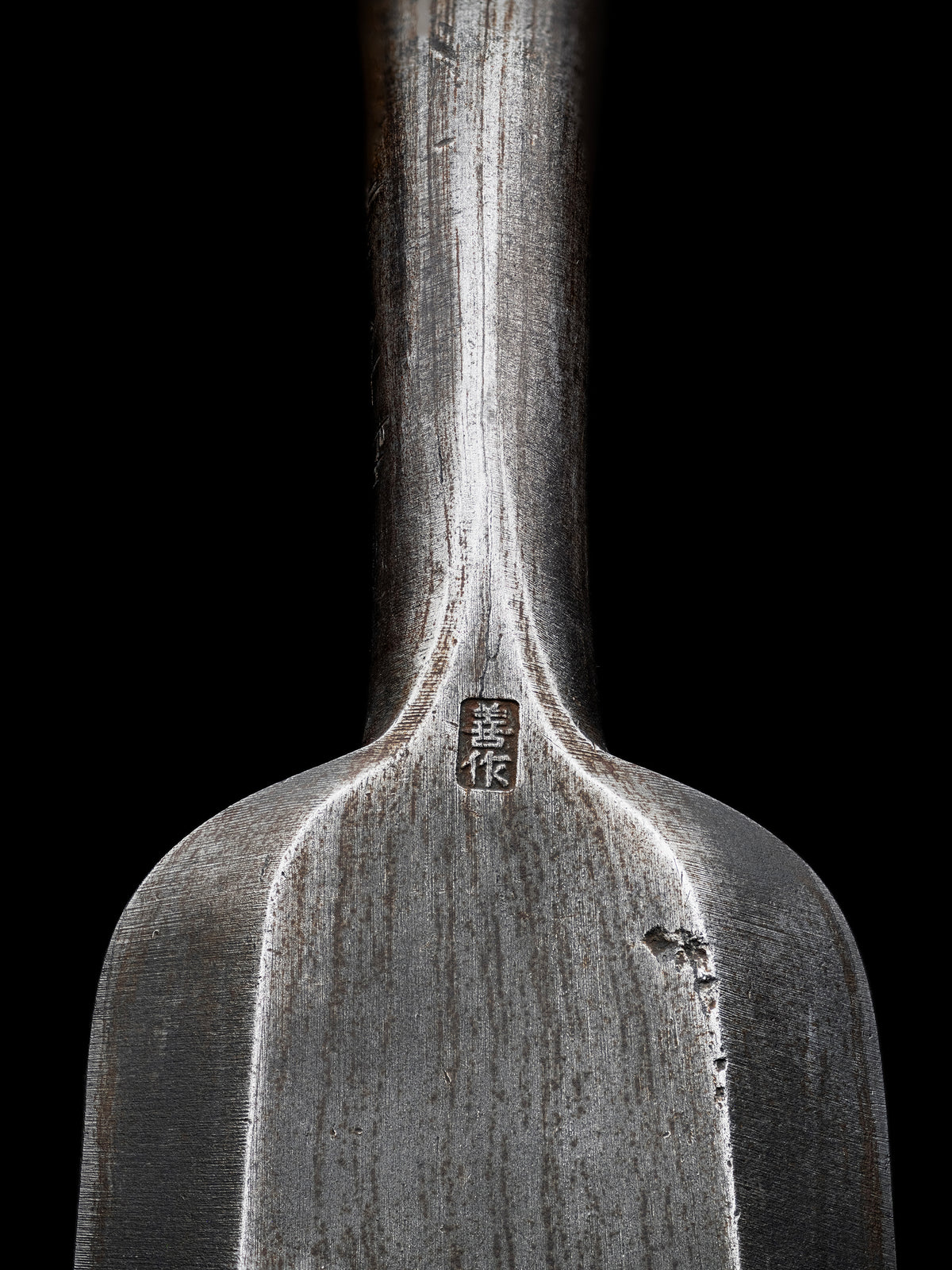
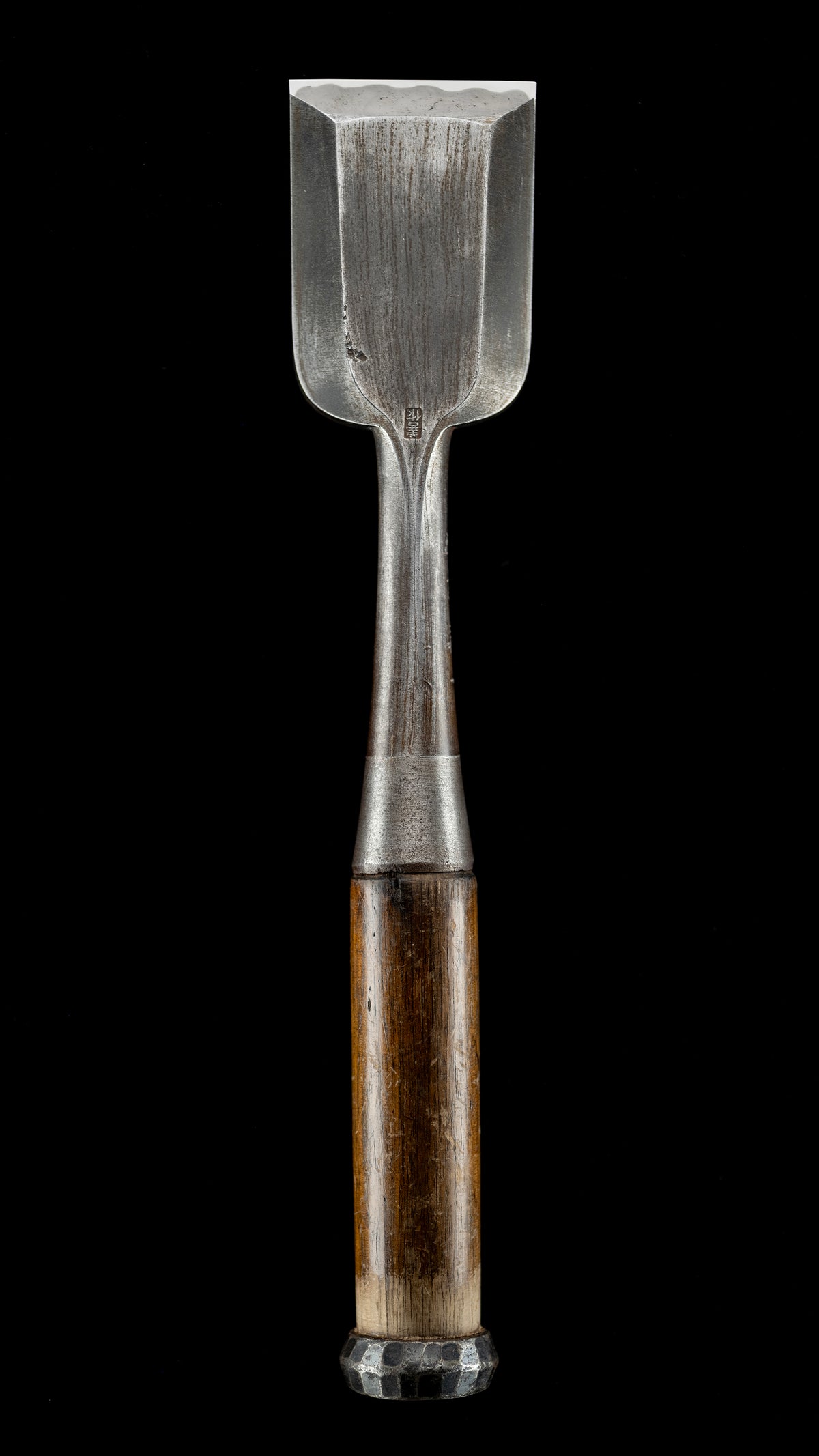
Tataki-Nomi Japanese Custom Made Timber Chisel By Zensaku Ⅱ - 54mm
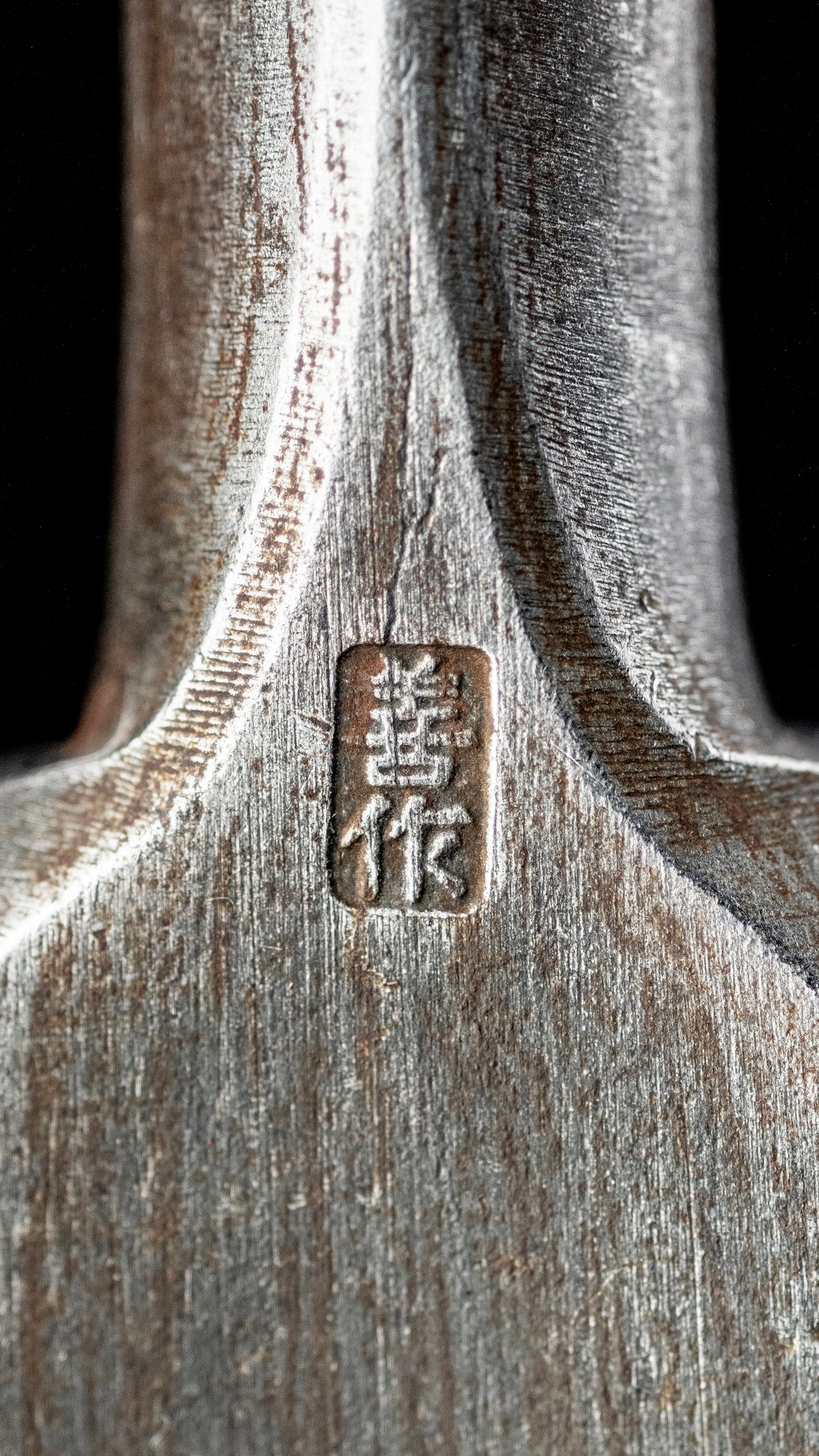
Brand name: Zensaku(善作)
Smith name: Matsubara Tokutaro(松原徳太郎, 1887~1944)
Commissioned by (Carpenter): Nishimoto Giichi (西本義一)
Steel: Carbon steel
Jiganae: Watetsu
Blade width: 54mm
Blade thickness: Blade Bottom(about 12.70mm), The blade near the bevel(about 6.20mm)
Manufacture Era: The estimated production period is from the Taishō era (大正, 1912–1926) to the early Shōwa era (昭和初期, late 1920s–1930s).
Weight: 456g
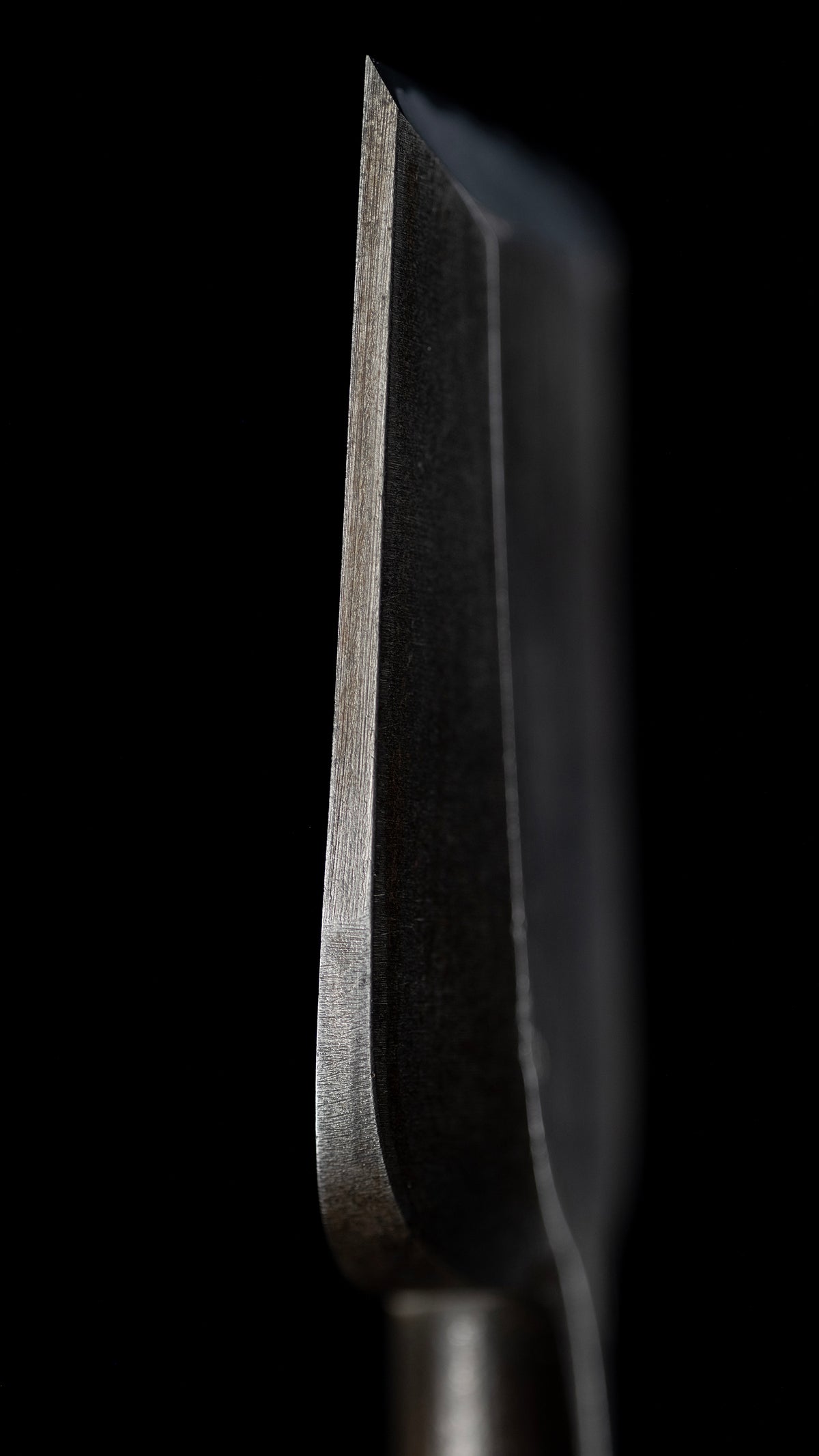
Blade Angles: 31°
Total length: 287mm
Neck length: 72mm
Blade length:75mm
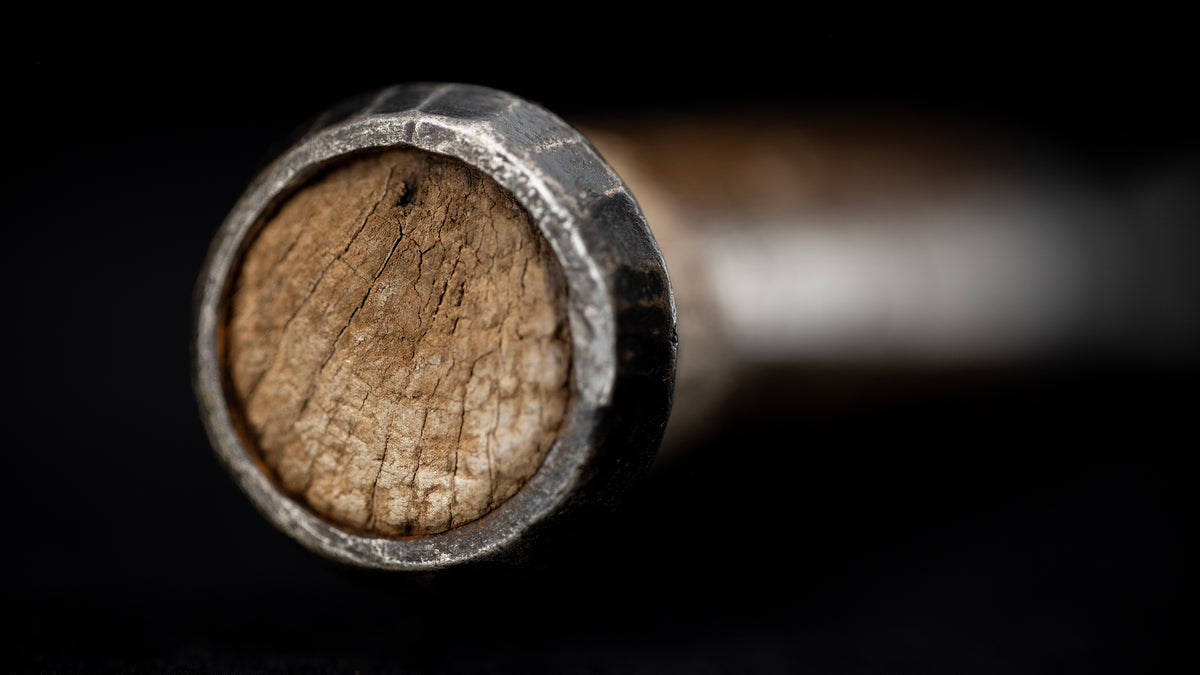
Types of wooden handles: Japanese White Oak(Shirakashi)
Accessories:—
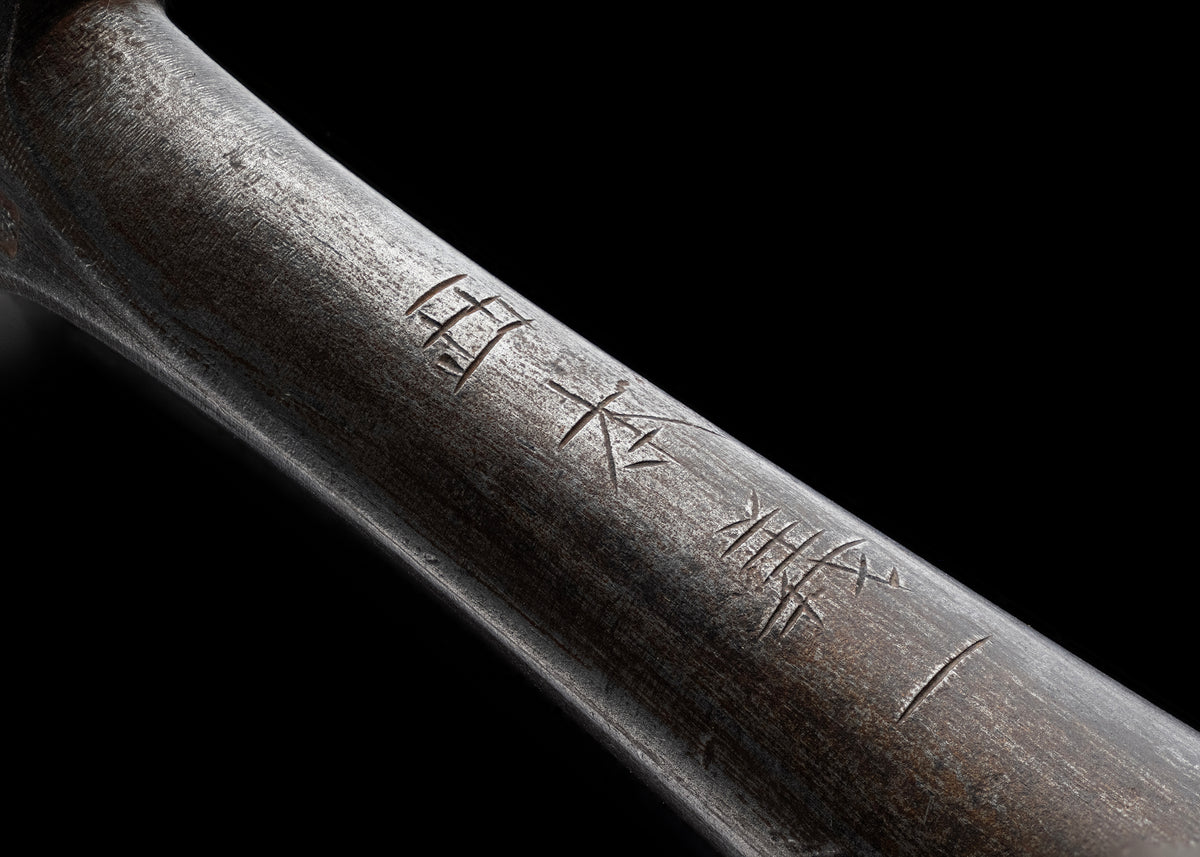
Additional Information: This rare, fully preserved chisel by the 2nd-generation Zensaku has been carefully used and remains in good condition. It comes from a tool collector in Tokyo; however, its original owner appears to have been a carpenter named Giichi Nishimoto (西本義一), whose name is engraved on the side of the chisel's neck.
Among the tools forged by this renowned Osaka master blacksmith Zensaku, the most widely recognized piece is a suminagashi (pattern-welded) oire nomi (bench chisel, 48mm wide) crafted by the 3rd-generation Zensaku (Matsubara Jūjirō / 松原重次郎, 1892–?), currently on display on the B2F of the Takenaka Carpentry Tools Museum.
Its original owner was Nomura Sadao (野村貞夫, 1911–1983), a prominent carpenter from the Tokyo area. When Mr. Nomura traveled to Osaka for work in the early Shōwa era (around 1930–1931), he commissioned Zensaku through a local tool shop to forge numerous tools. Three of those chisels are now housed in the collection of the Takenaka Carpentry Tools Museum: the aforementioned oire-nomi by the 3rd-generation Zensaku, along with two unexhibited ō-tsuki-nomi (slick chisels) forged by the 2nd-generation Zensaku (confirmed to have been custom-ordered between 1930 and 1931).
All three of these chisels are also featured on pages 142~145 and 187~189 of Dōgu Mandara (道具曼荼羅, "Tool Mandala") by Teijirō Muramatsu (村松貞次郎). Of course, if you do not own this book, there is no need to worry—the research article I have shared below includes further photographs and detailed information on these three chisels.
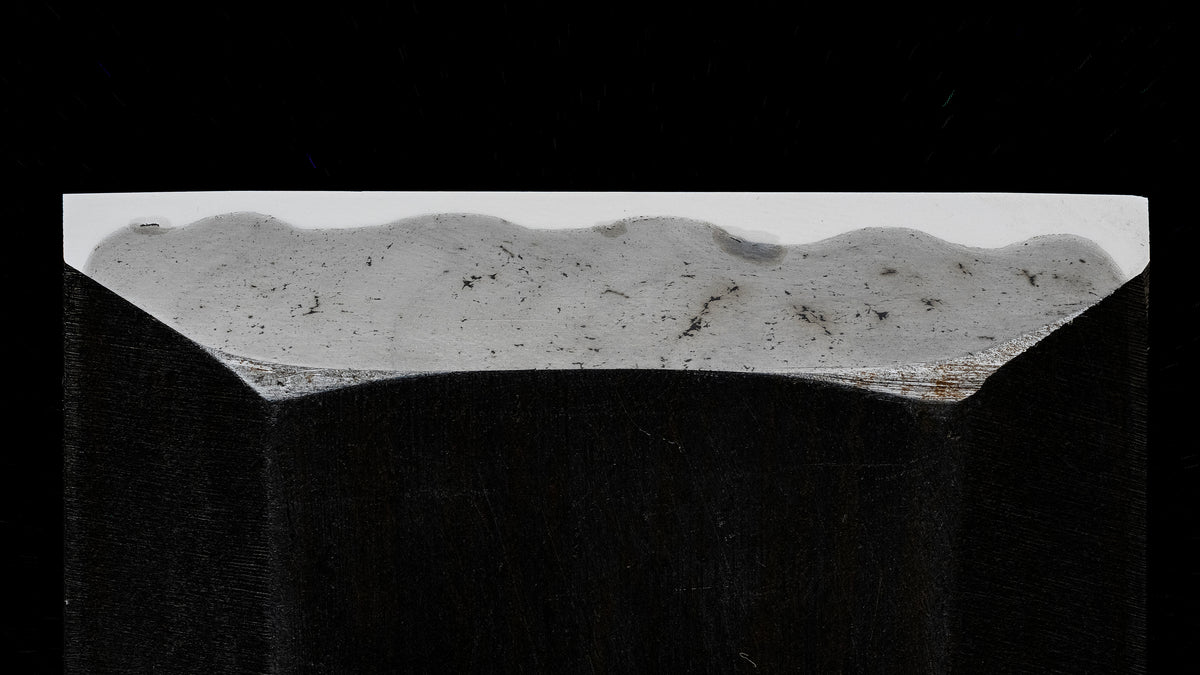
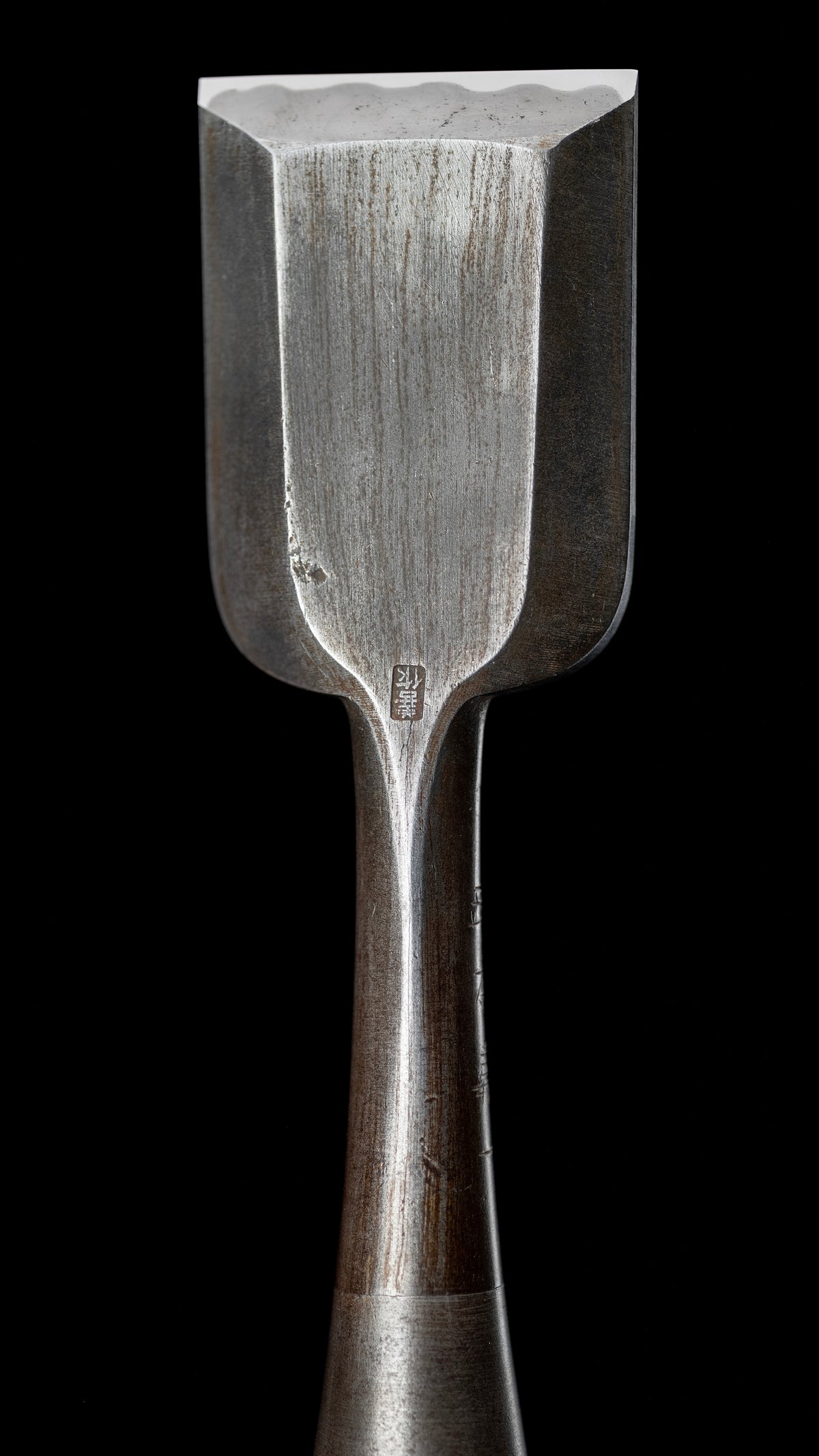
In addition, the Takenaka Carpentry Tools Museum (竹中大工道具館) also exhibits an 8-bu (approx. 24mm) tataki-nomi (striking chisel) by the 2nd-generation Zensaku. Further photographs of this chisel are likewise included in the research article I have shared below. Notably, all three chisels made by the 2nd-generation Zensaku in the museum's collection—as well as the one listed here—feature a wavy lamination pattern resembling the hamon (temper line) of a Japanese sword.
However, what truly draws me to this chisel is not this immediately obvious visual effect, but rather an unpretentious, understated, highly distilled, and seamless presence—a quality attainable only through rigorous training, years or even decades of single-minded devotion, and a profound understanding of the chisel as a practical working tool. To borrow Teijirō Muramatsu's (村松貞次郎) words describing the aforementioned ō-tsuki-nomi:
"It is settled into an almost eerie stillness, unified as a whole. There is no doubt it was forged with razor-sharp focus and immense spiritual energy."(「不気味なほど静まり返ってまとまっている。よほど鋭い神経で気力を込めて鍛えたものに間違いない。」)”
Beyond its obvious features, here are some notable details of this chisel:
1:The faint, subtle grain pattern on the chisel body, a characteristic of the watetsu used.
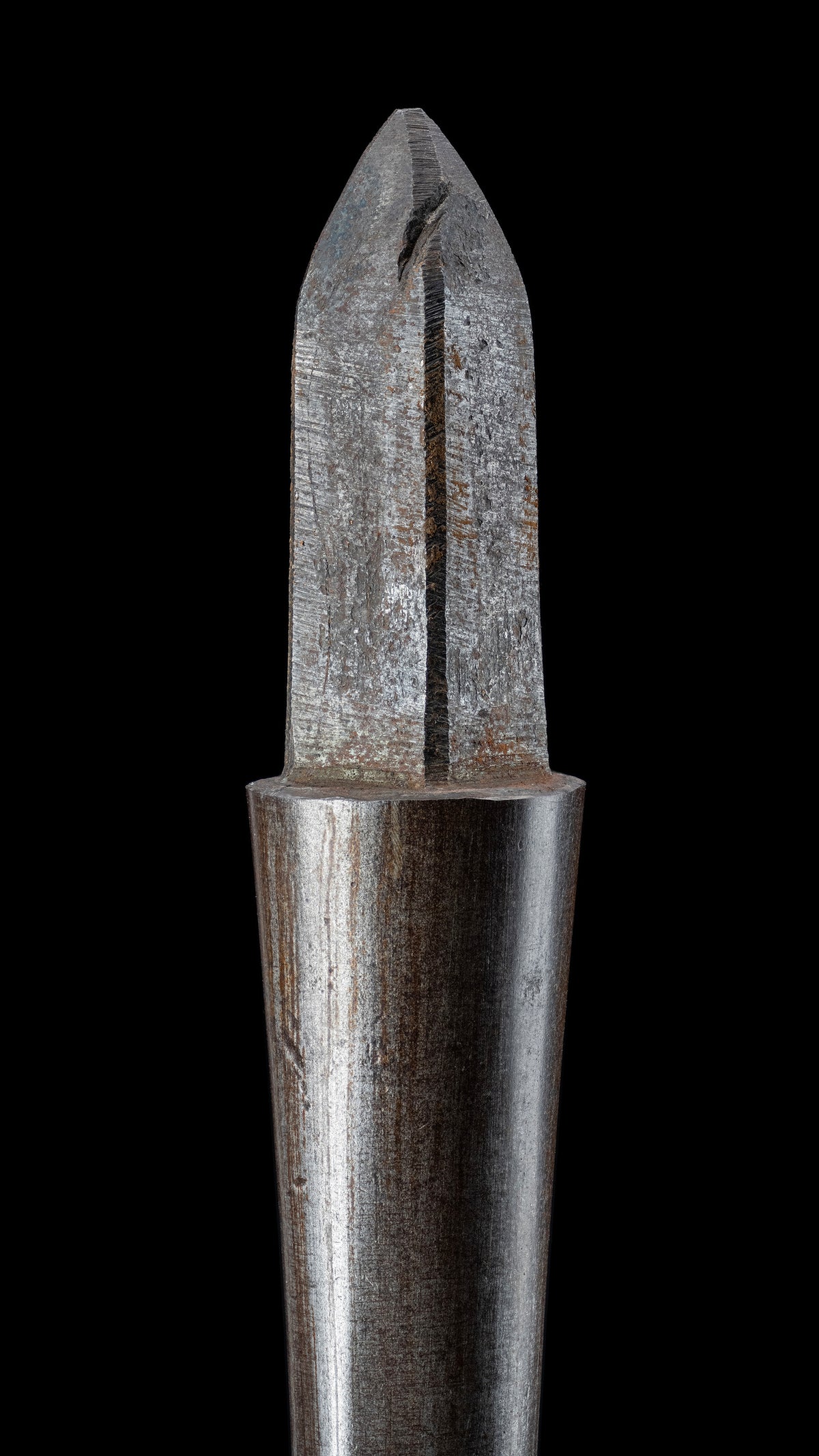
2: The robust and precisely crafted komi (the tang). (Photo 5)
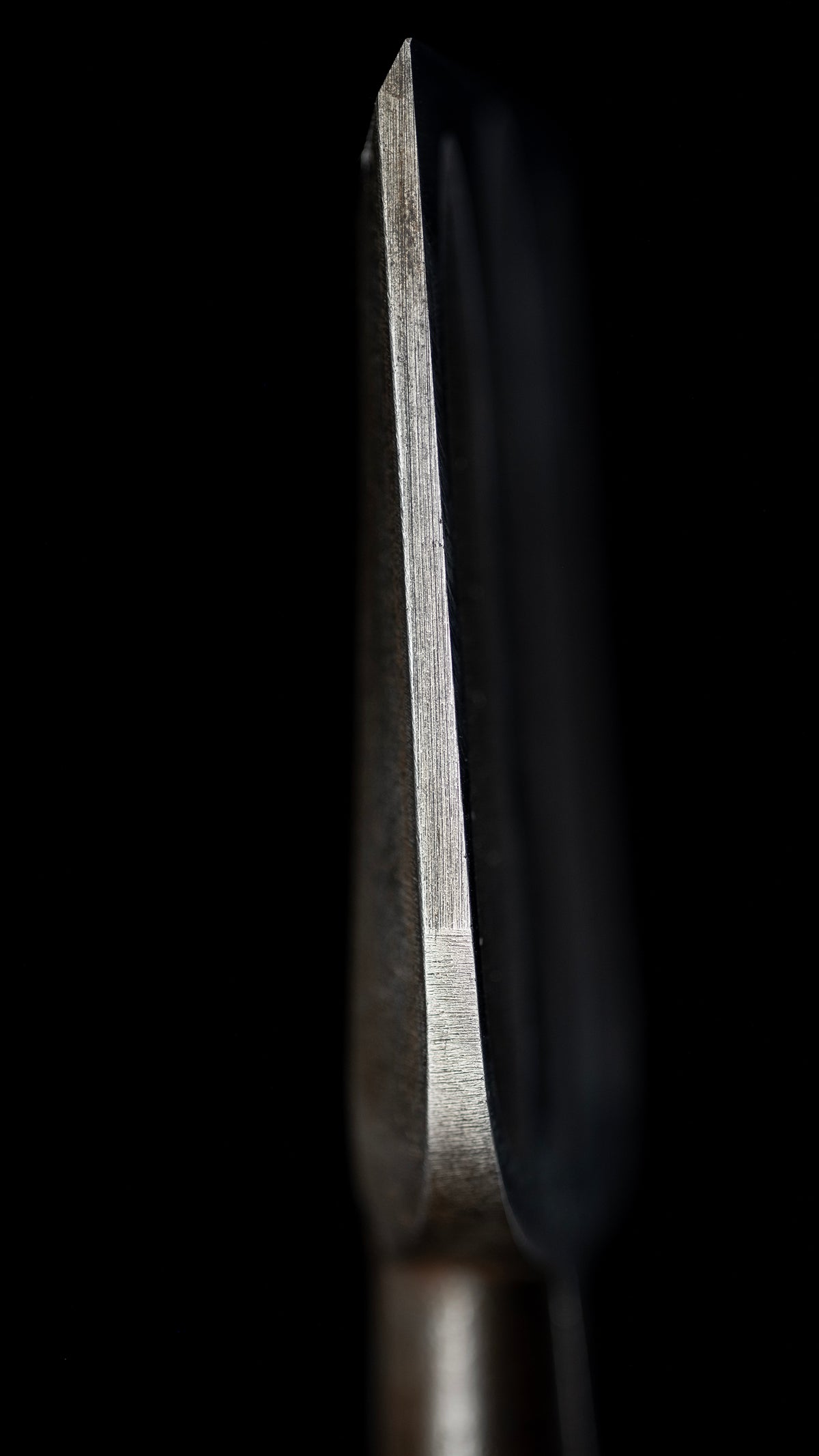
3: The refined and precise hand-filed finish (yasuri-me). In particular, the file work on the chamfered surfaces employs the Ichimonji (straight across) method—a technique identical to that used by legendary master blacksmiths like Chiyotsuru Korehide (千代鶴是秀). (Photo 4)
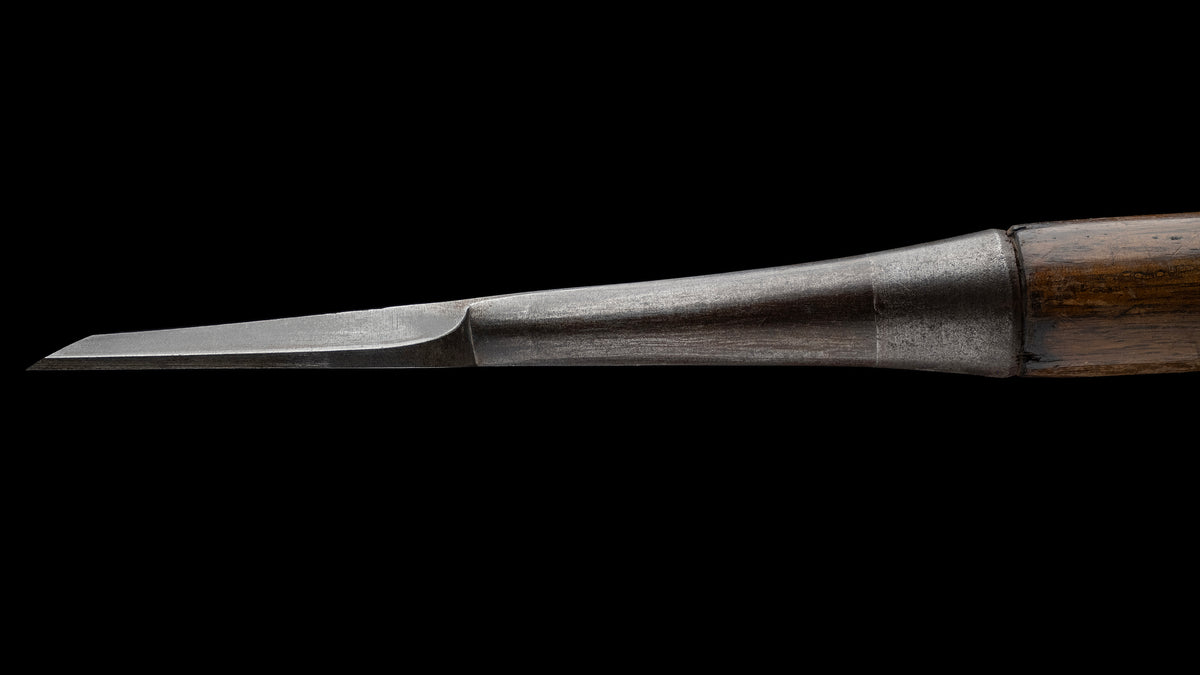
4: The gentle, smooth taper extending from the neck (kubi) down to the cutting edge. (Photo 7)
Other reference websites about this blacksmith:
For a research on this blacksmith, click the blue text below to download:
Choose options