
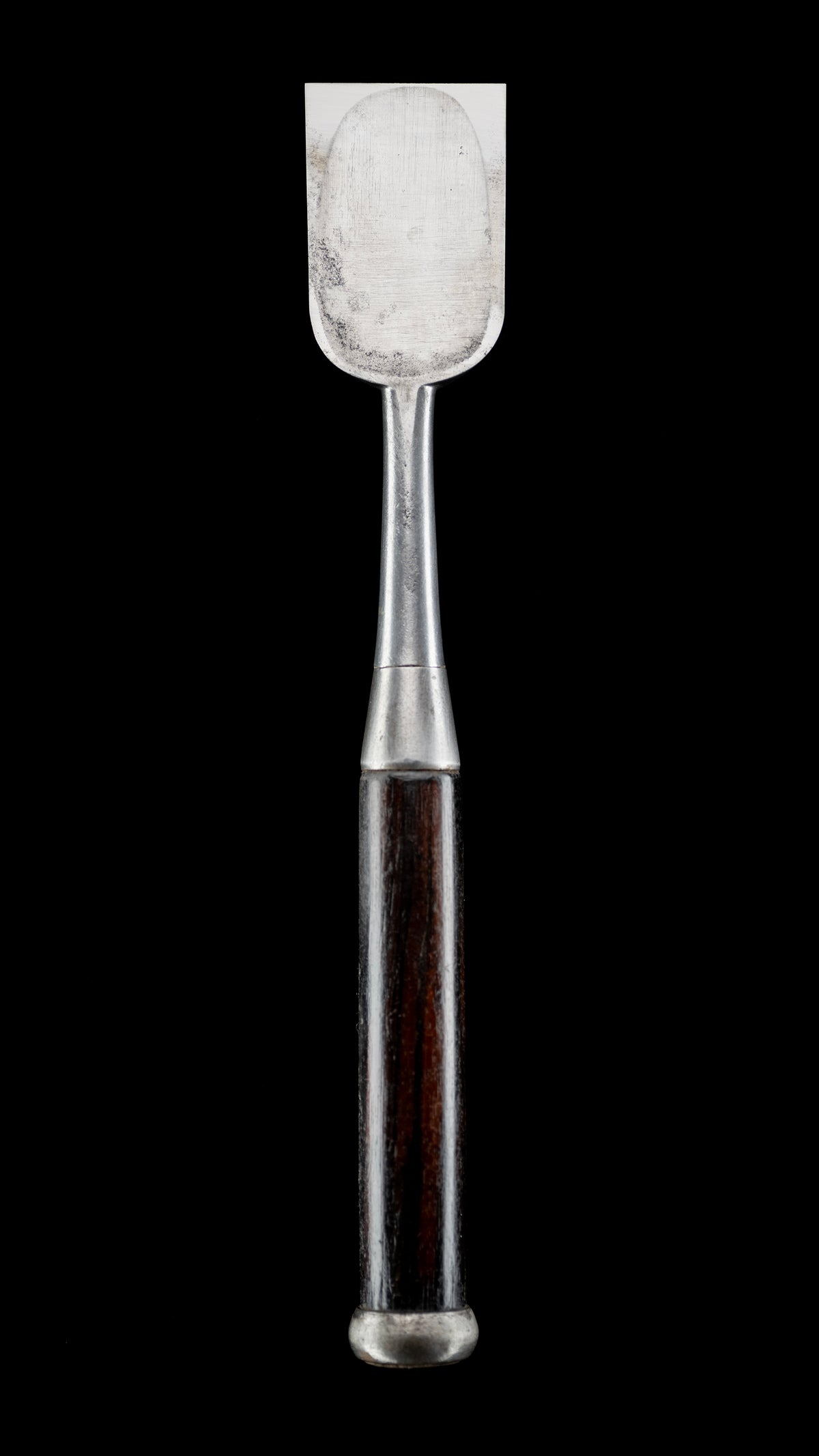
Tataki-Nomi Japanese Made Timber Chisel By Hidari Hisasaku Ⅰ - 53mm
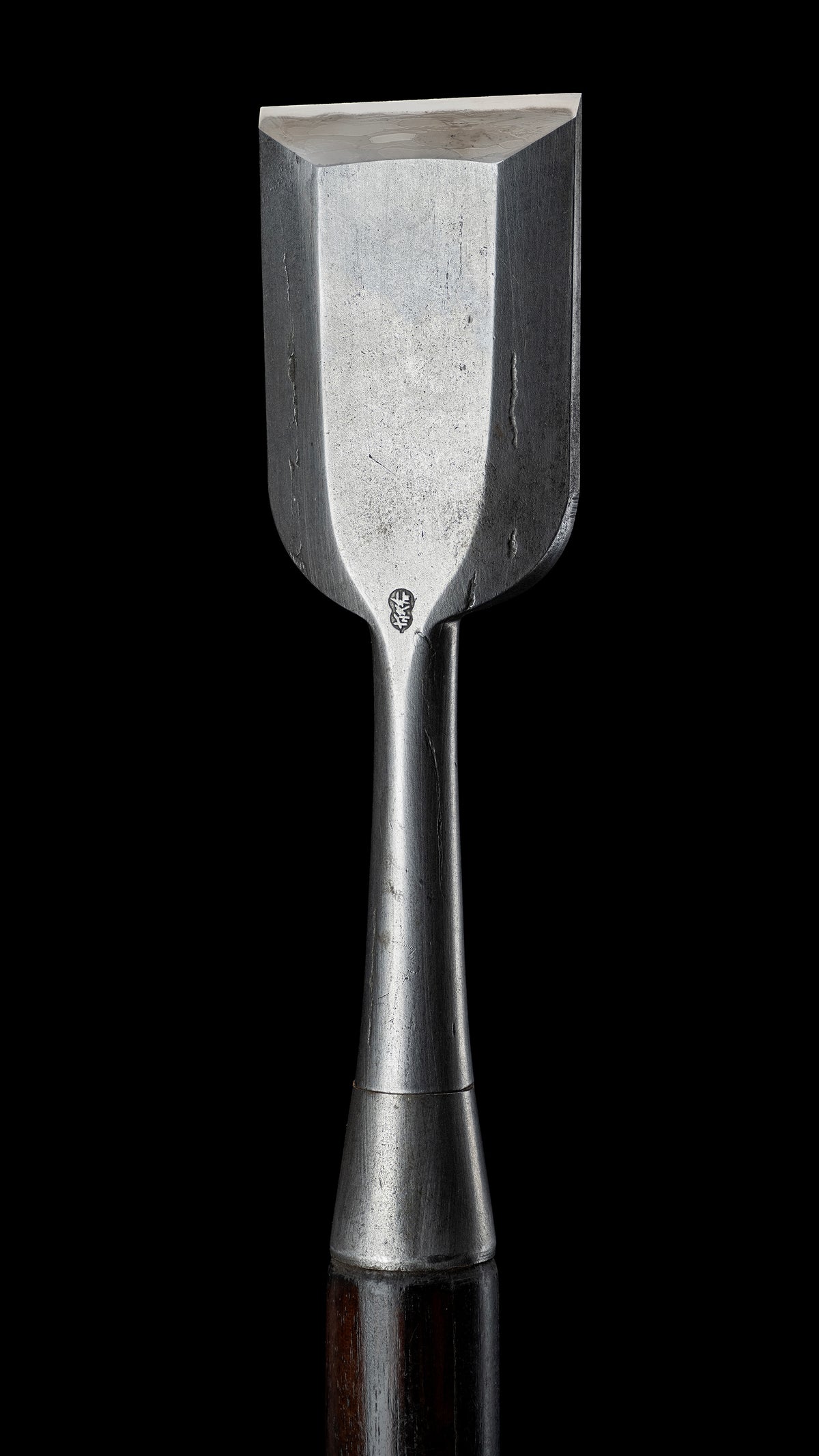
Brand name: Hidari-Hisasaku (左久作)
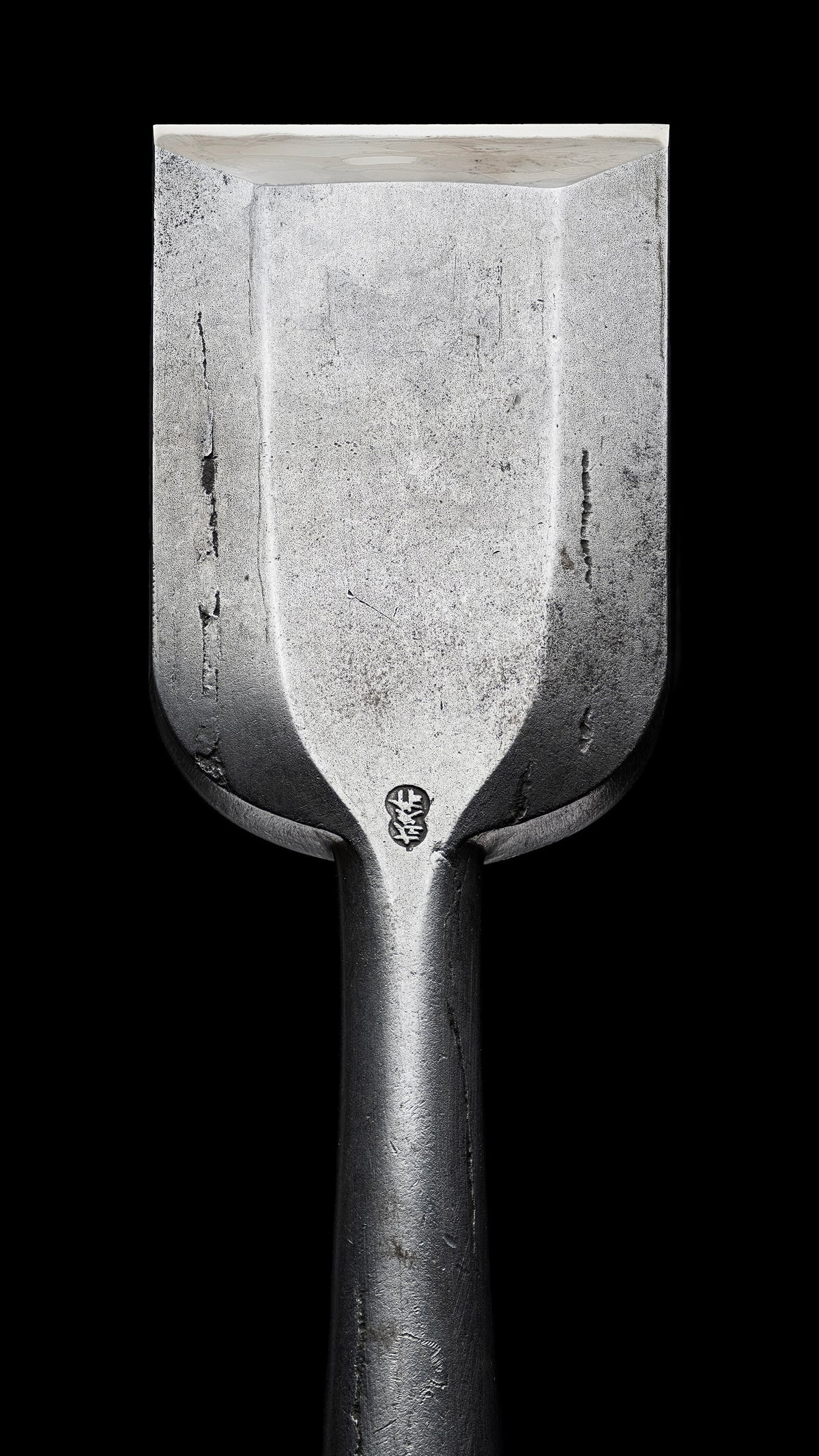
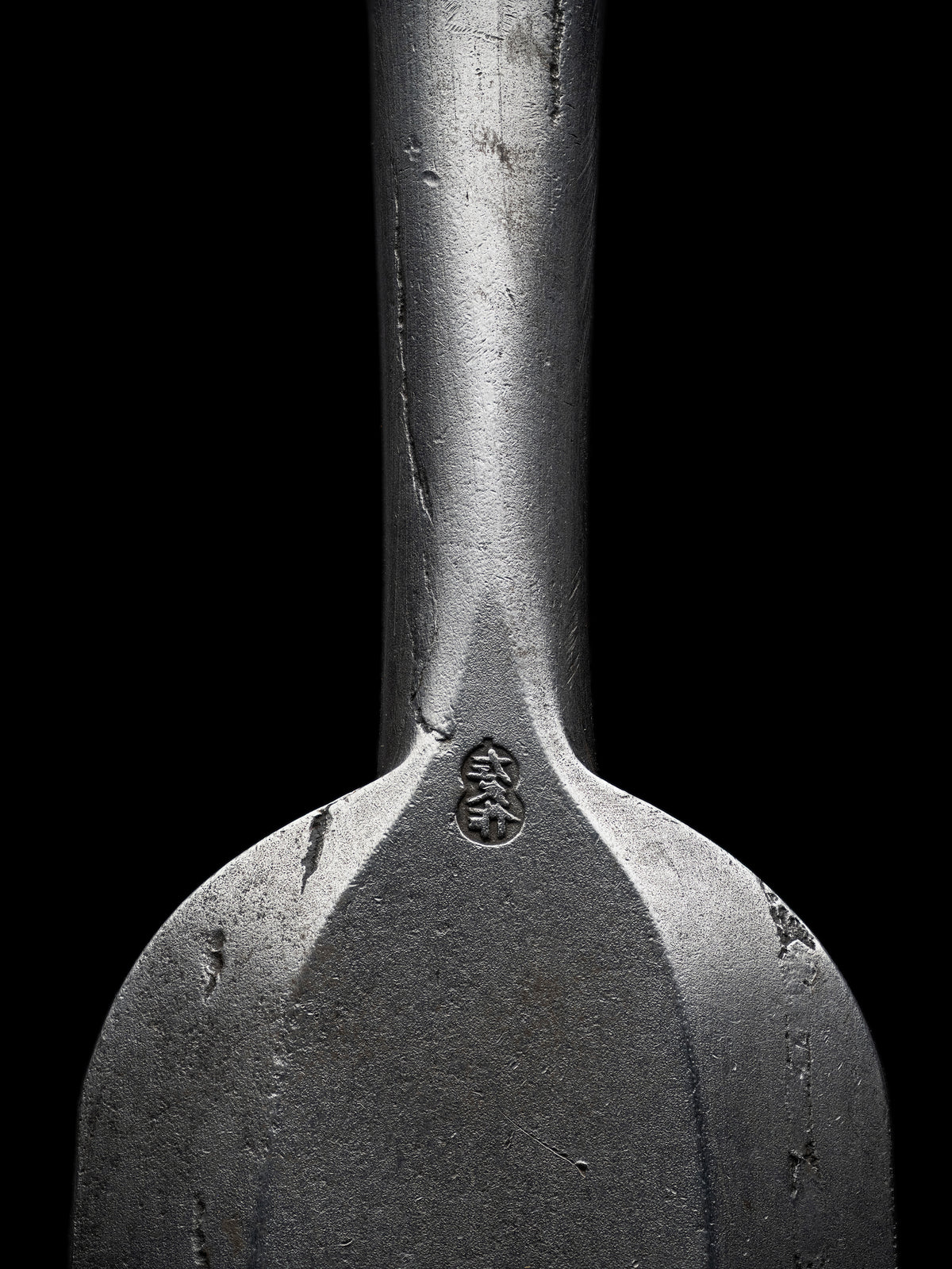
Smith name: Ikegami Kisaku(池上喜作, 1899~?)
Steel: White steel
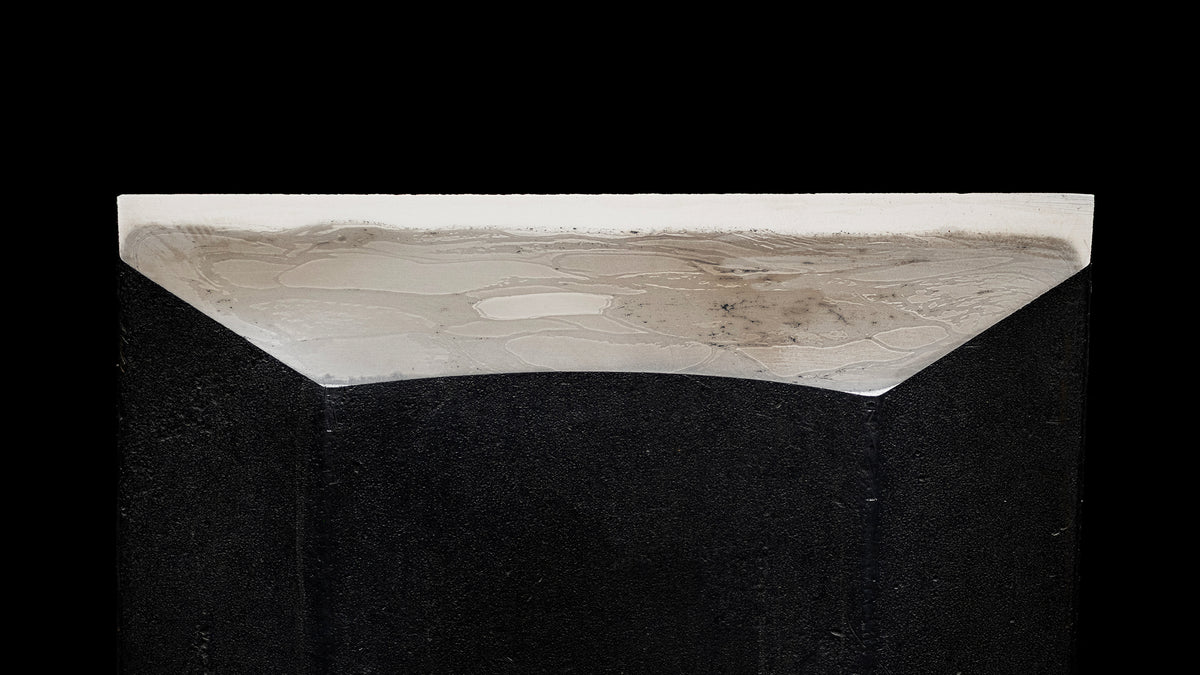
Jigane: Watetsu (三原鉄, Mihara Tetsu)
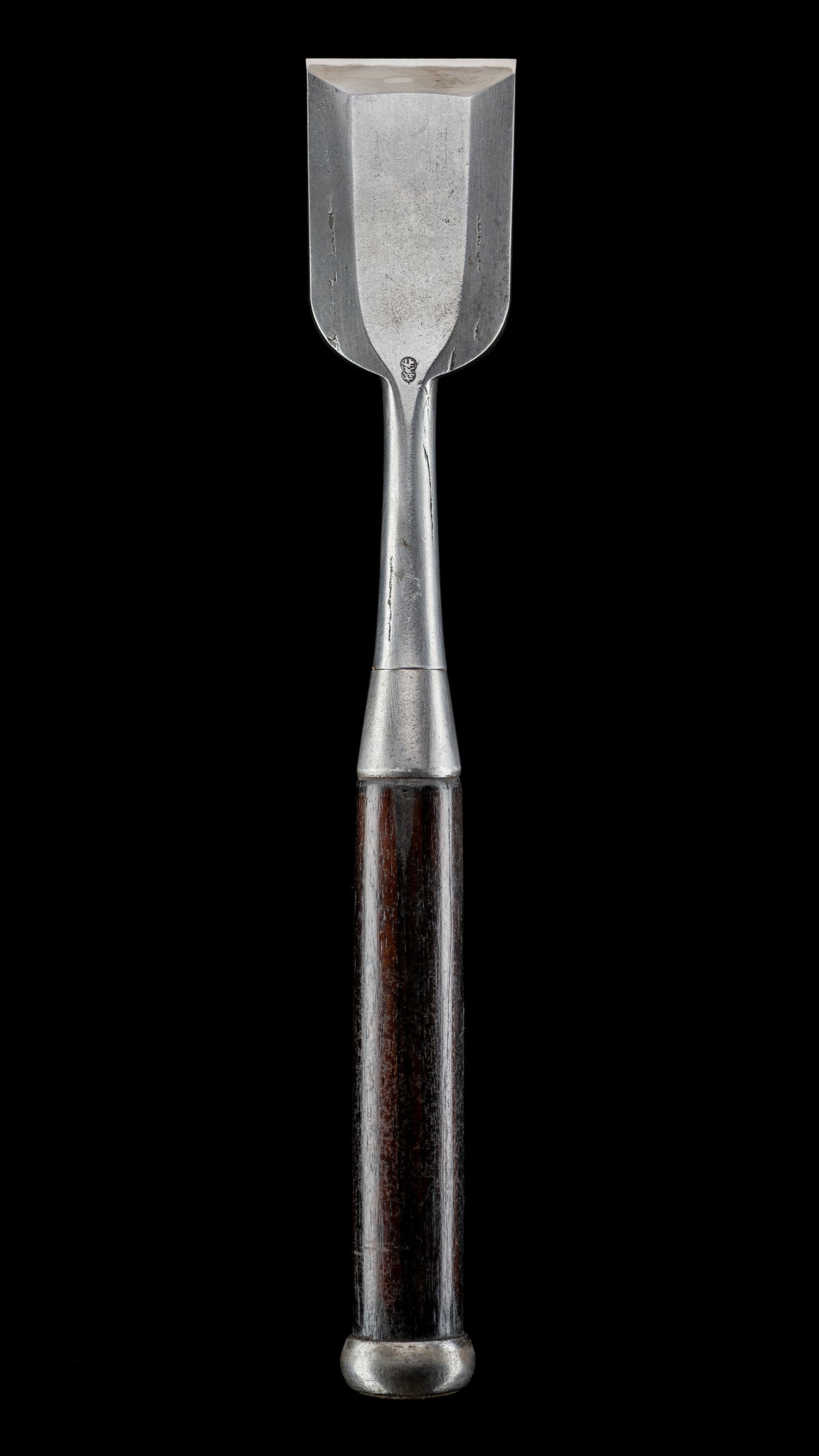
Blade width: 53mm
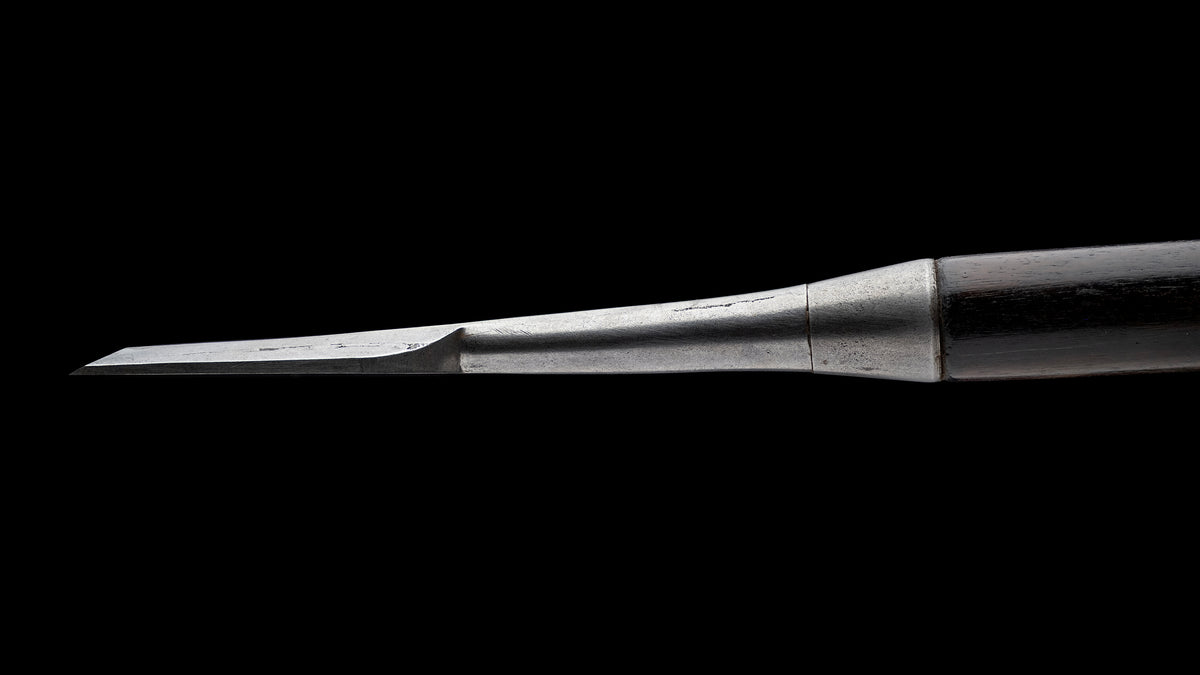
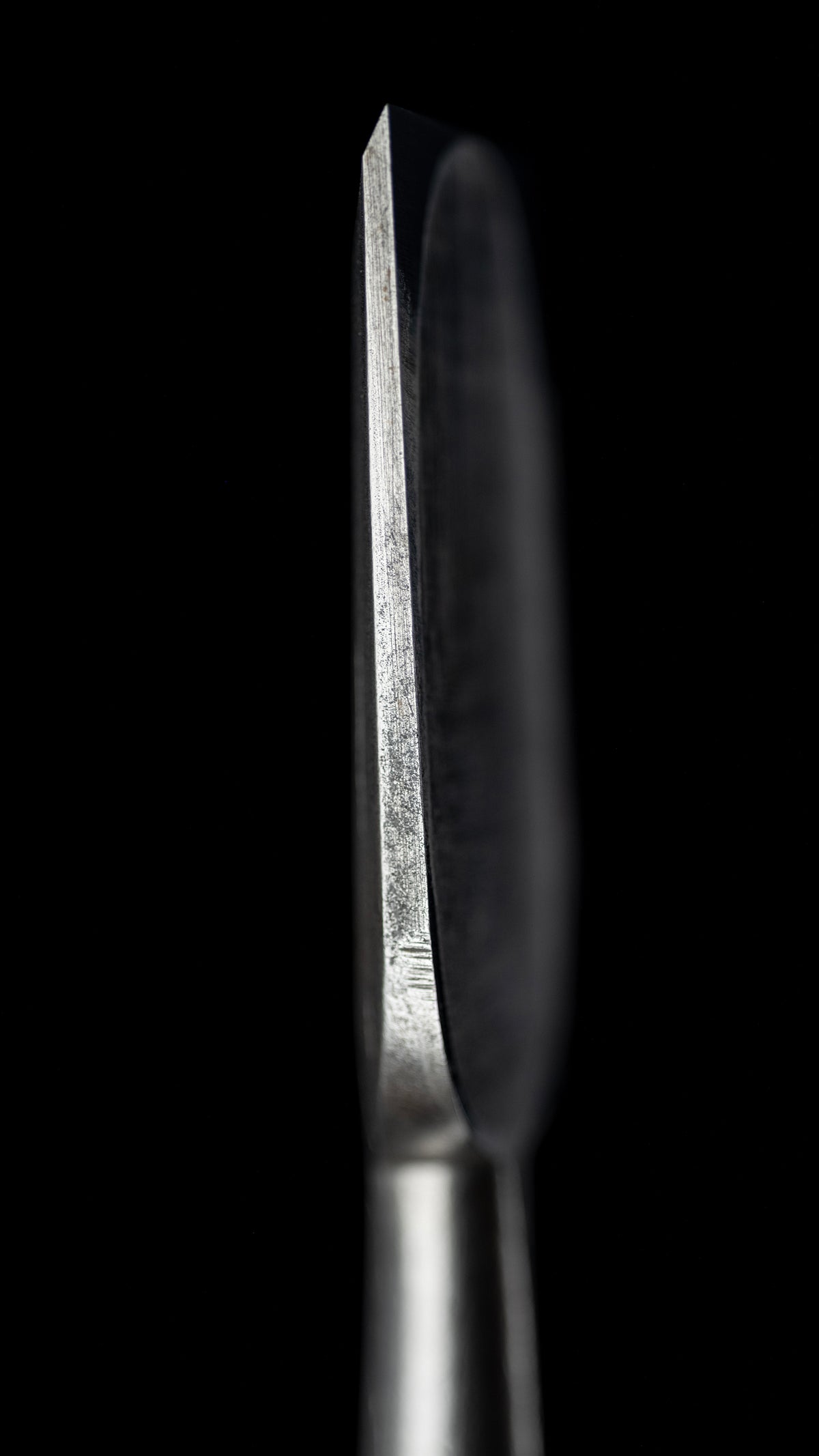
Blade thickness: Blade Bottom(about 10.85mm),The blade near the bevel (about 6.00mm)
Manufacture Era: Around 1950s
Weight: 454g
Blade Angles: 27°
Total length: 339mm
Neck length: 70mm
Blade length: 75mm
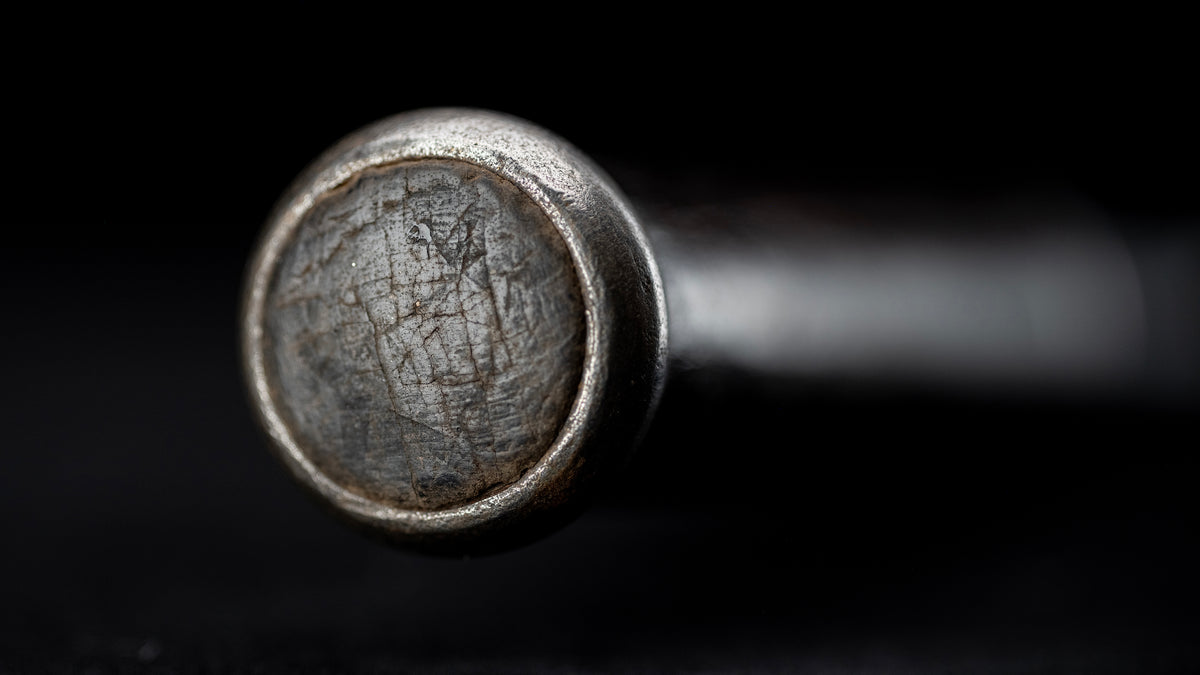
Wooden handles:Ebony
Accessories:—
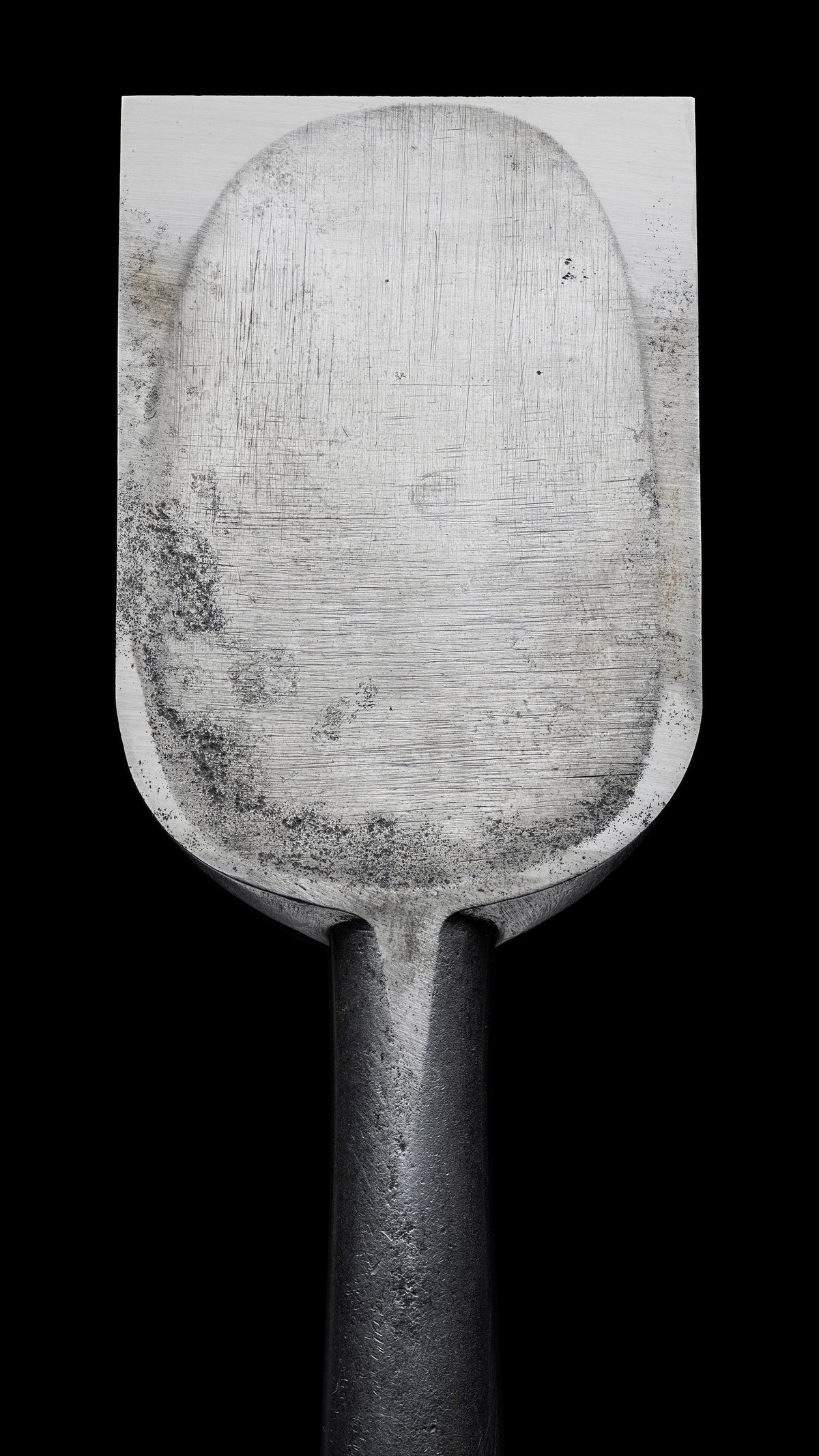
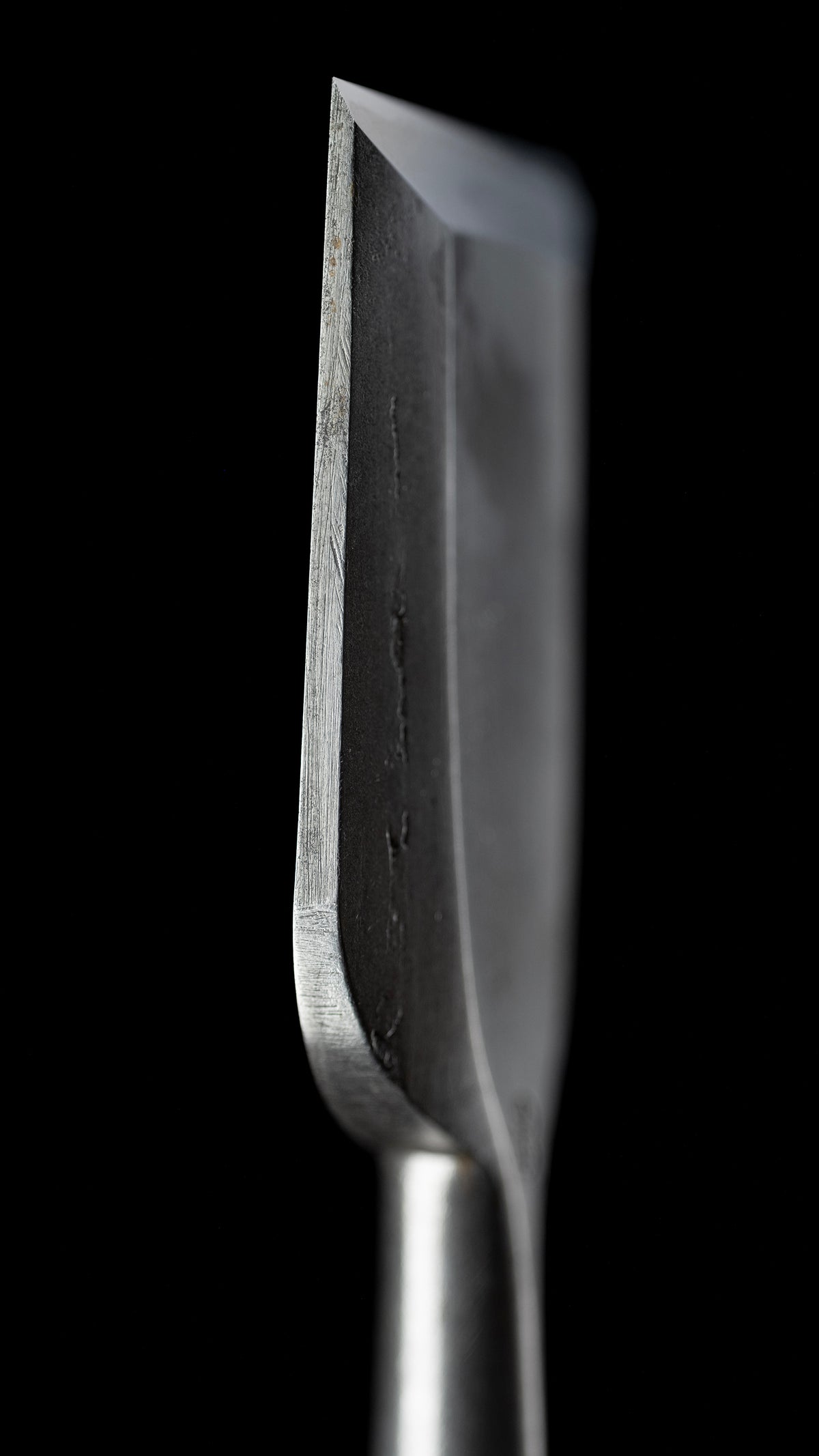
Additional Information: It has been used for a while, and there was once some rust near the neck on the ura side, but it has been removed and does not affect functionality. The wooden handle is a custom extended version. I have given it a basic sharpening, using an Uchigumori stone on the bevel, and sharpening the ura side to around 2000 grit. The steel is fairly hard and presumed to be Shirogami #1 . If working with harder woods, increasing the bevel angle to around 35 degrees is recommended.
What first caught my attention about this chisel was its jigane (soft iron cladding), which looks quite different from that of most watetsu chisels made by Hidari Hisasaku. In addition, its blacksmith stamp is exceptionally crisp and clear, which is also relatively uncommon. I brought it with me to visit the 3rd-generation Hidari Hisasakuu, who still works in Tsukishima, Tokyo. His eyes lit up when he saw it, and he told me that this piece dates back to the period when the 1st and 2nd generations worked together. It is forged with Mihara-tetsu, a scarce variety of watetsu, making it a rare and remarkable find. I also asked him about the rust mark, and he assured me it is completely fine and requires no restoration—noting that at normal rates of use and wear, it would take at least 30 years before the blade ever wears back to that point.
Regarding Mihara iron(三原鉄), he mentioned that compared to the more common Izumo iron(出雲鉄), it is better suited for tataki-nomi due to its higher structural strength, which makes the neck far less prone to bending or breaking. A similar account appears in the book by the 2nd generation Hidari Sakusaku:
"It is Mihara iron from the late Edo period. ... It possesses the distinct resilience of watetsu, making it resistant to breakage. ... While hot forging is straightforward, files and gravers tend to slip slightly during finishing; however, once quenched and fully sharpened, the resulting finish and contrast (togi-iro) are exceptional." —— 『Edo Blacksmith's Order Book ・江戸鍛冶の注文帳』,p156~157
Perhaps owing to the exceptional properties of this Mihara watetsu, the overall profile of this chisel feels noticeably more nimble and refined than typical watetsu tataki chisels made by the 2nd generation Hidari Hisasaku. The taper in thickness from neck to tip and the structural transition lines around the neck lean closer to the pre-WWII Tokyo chisel style. This makes complete sense, considering the 1st generation Hidari Hisasaku was one of the foremost disciples of the 2nd generation Hidari Hisahiro — a master renowned for practical, workhorse Tokyo chisels.
Choose options