
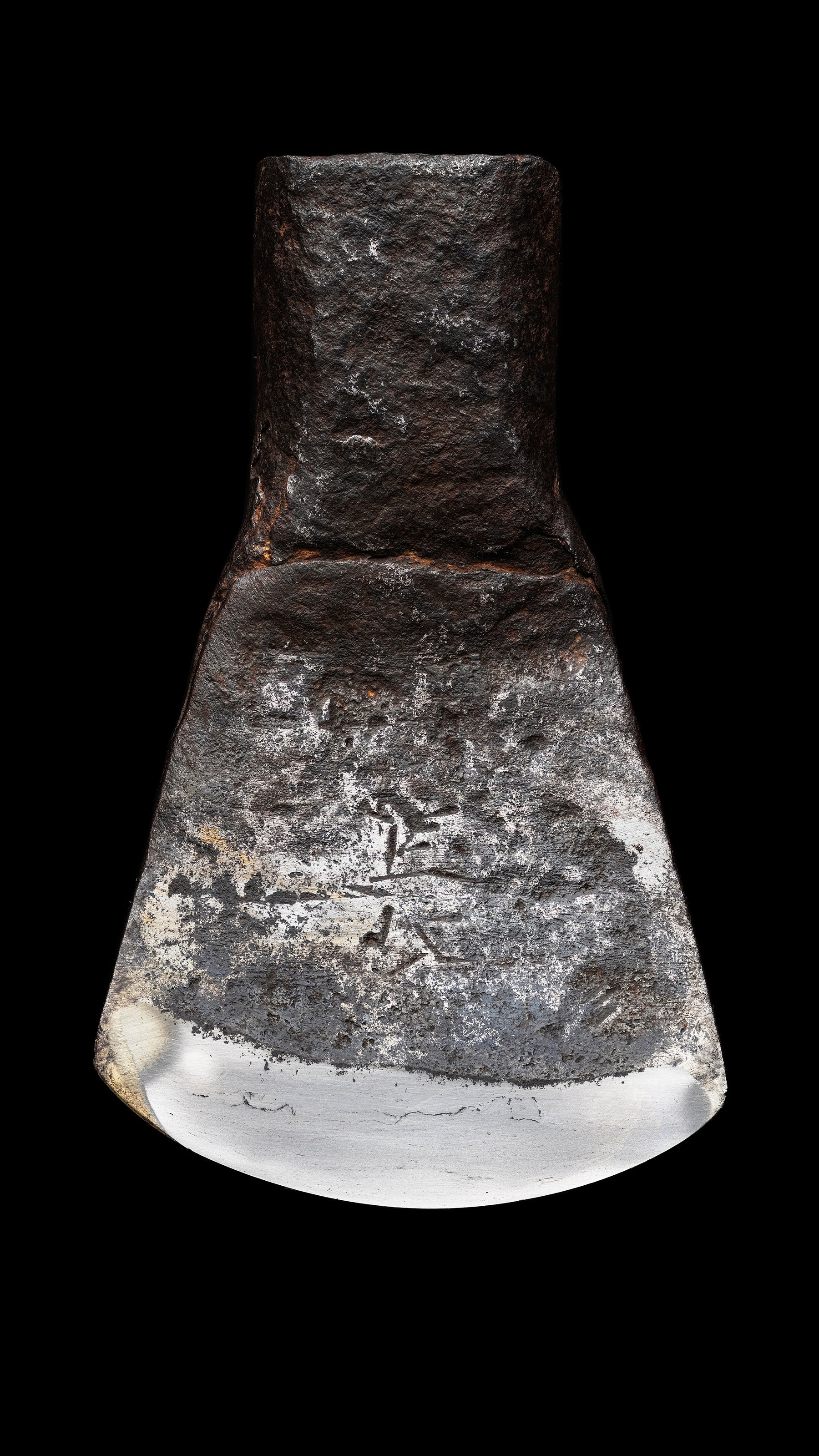
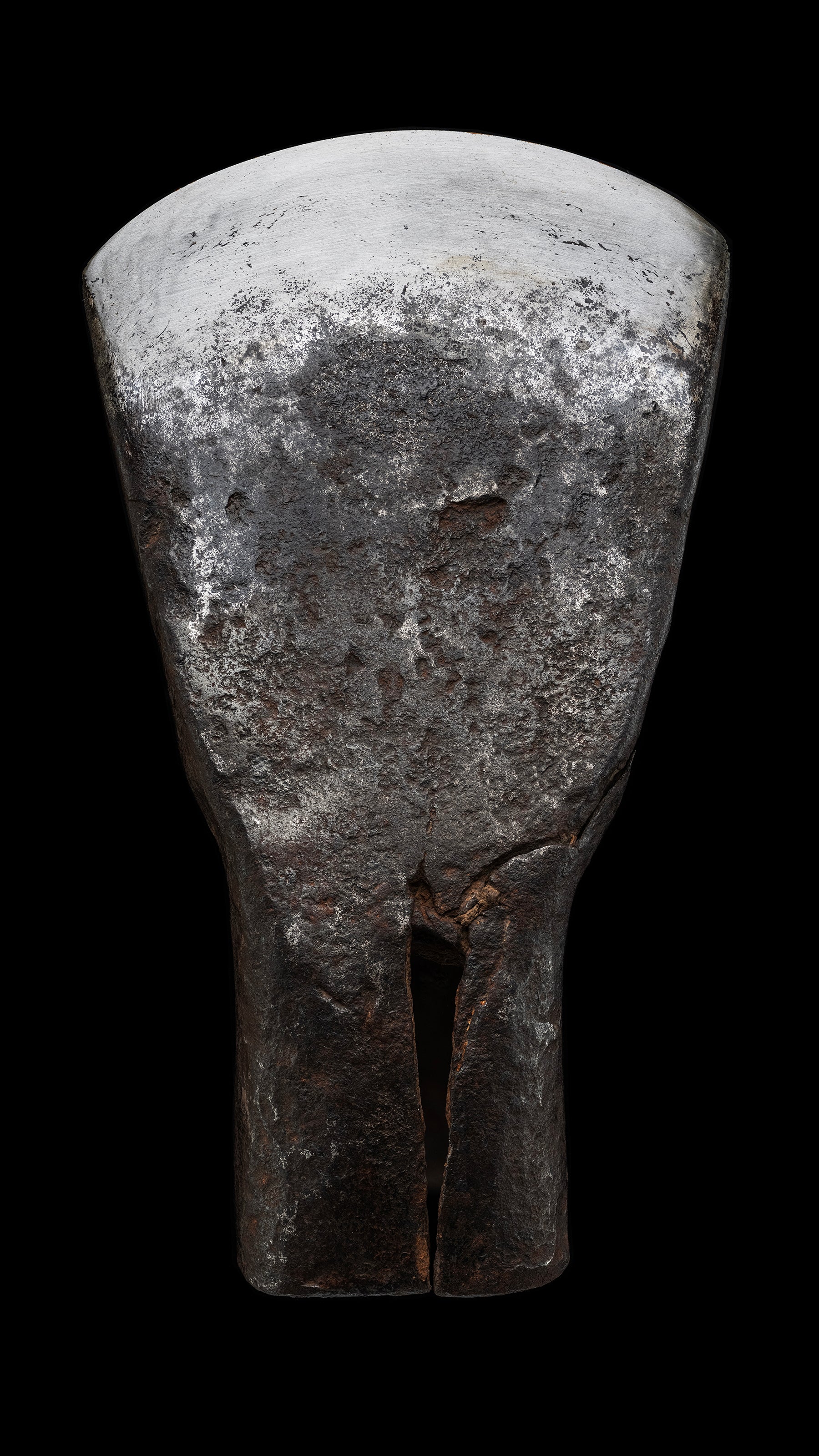
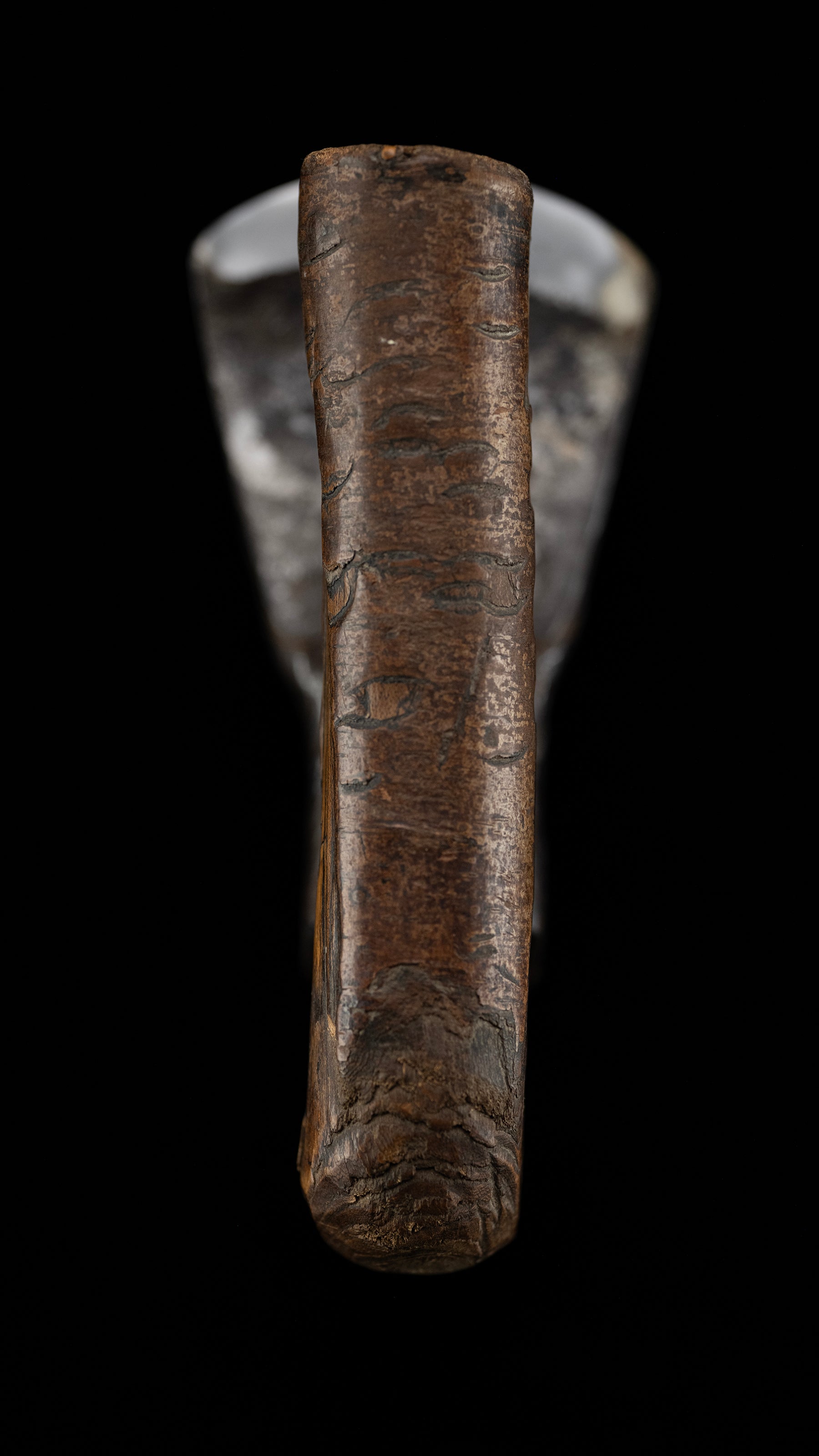
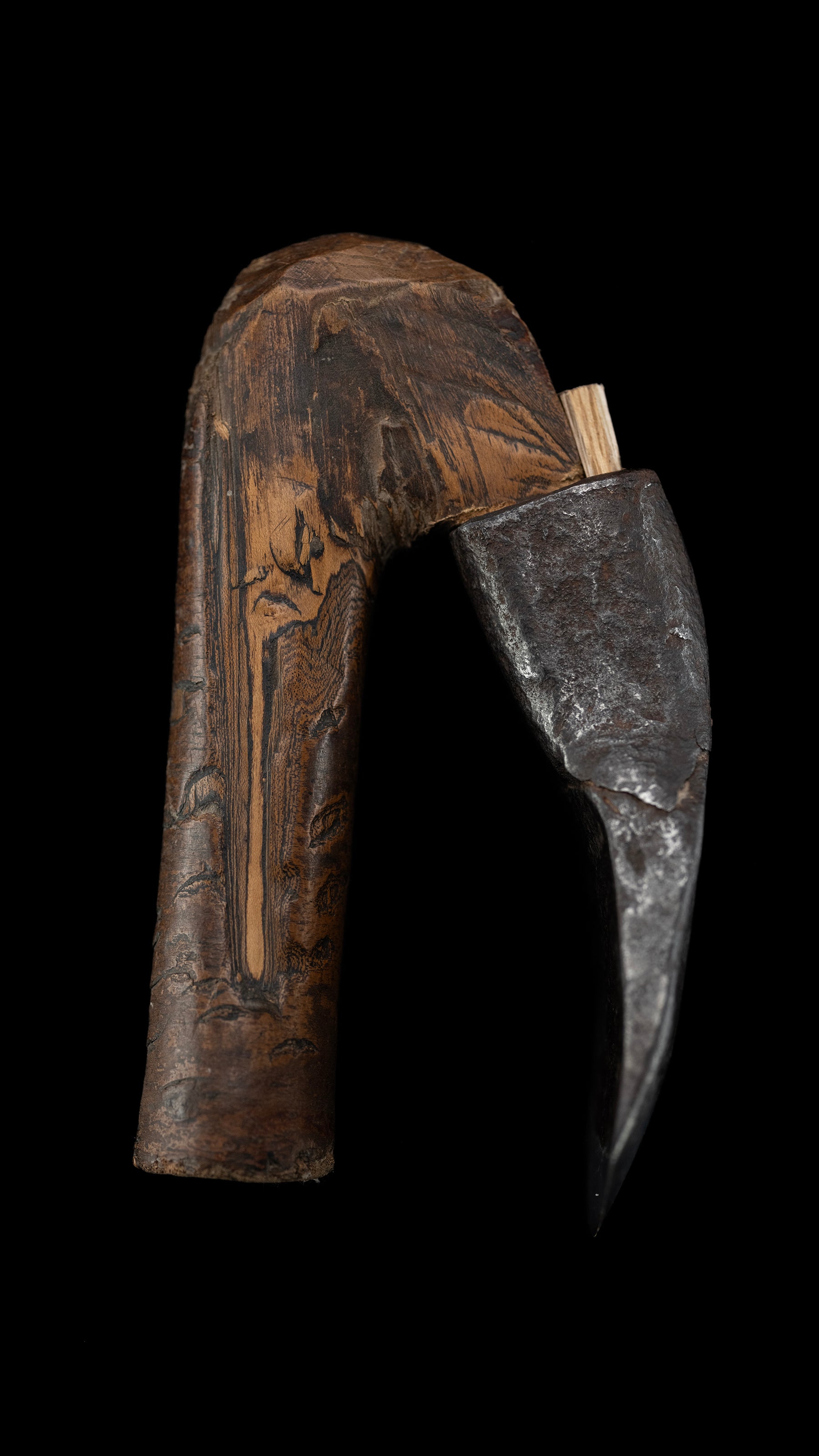
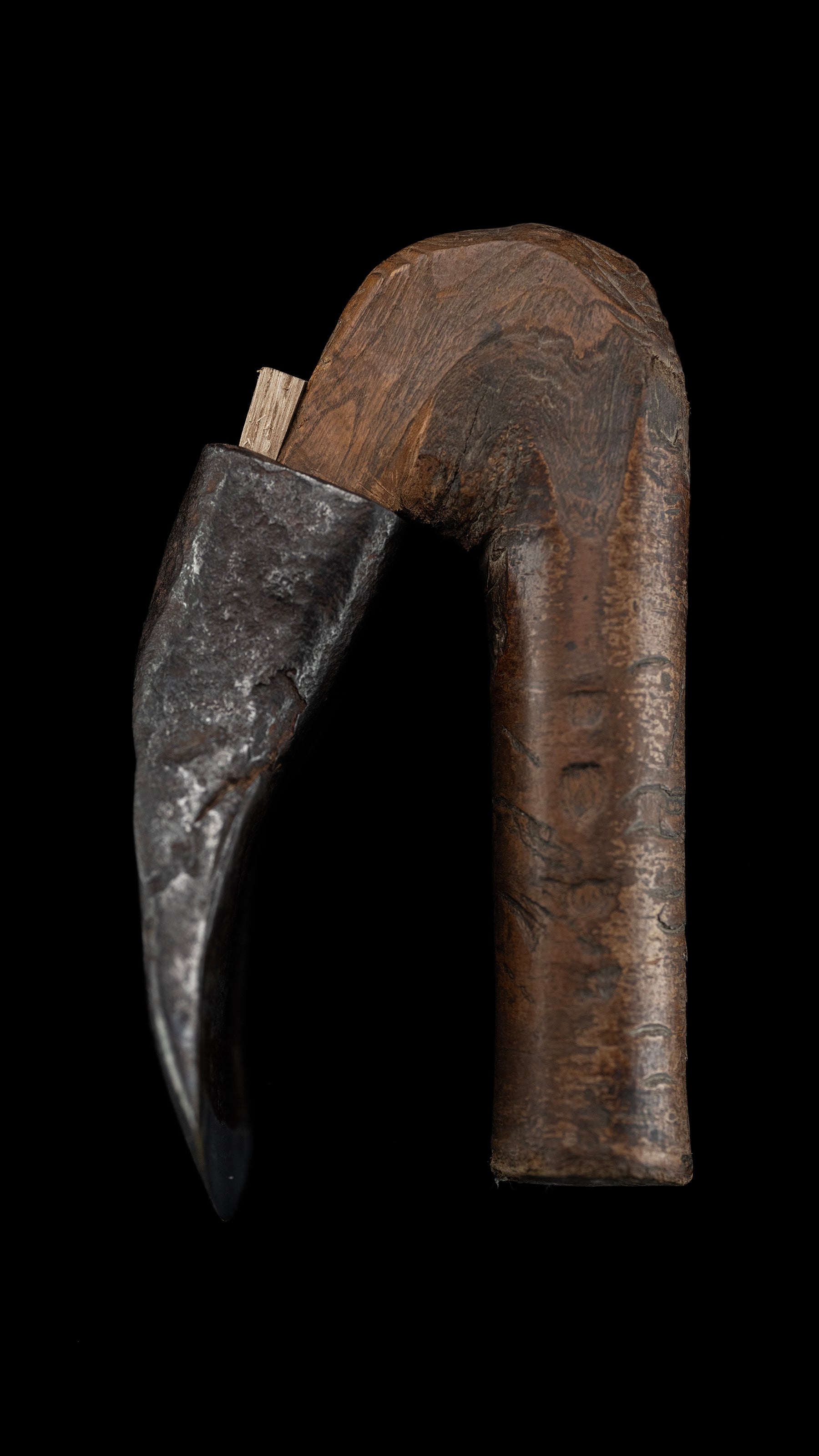
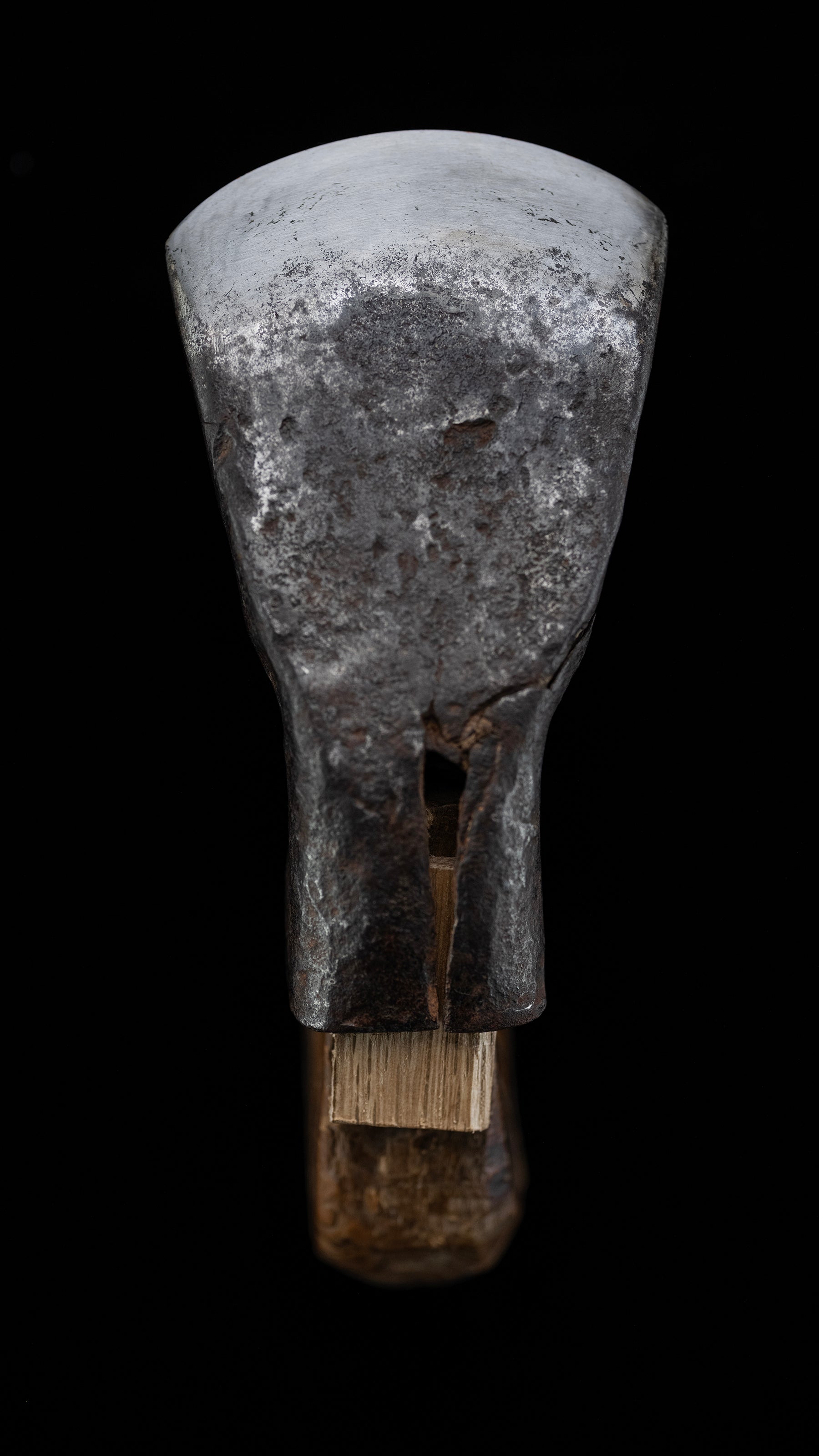
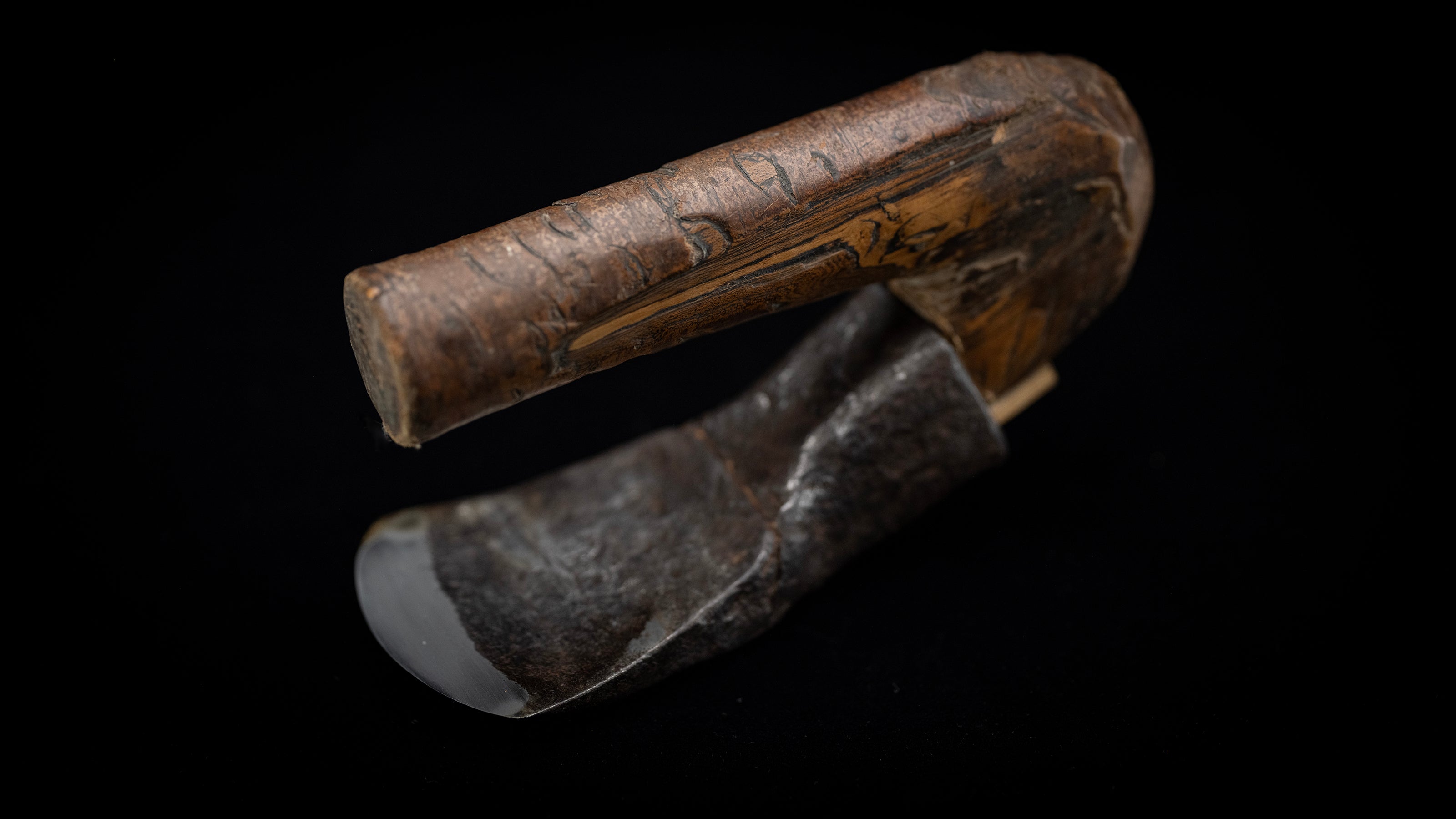
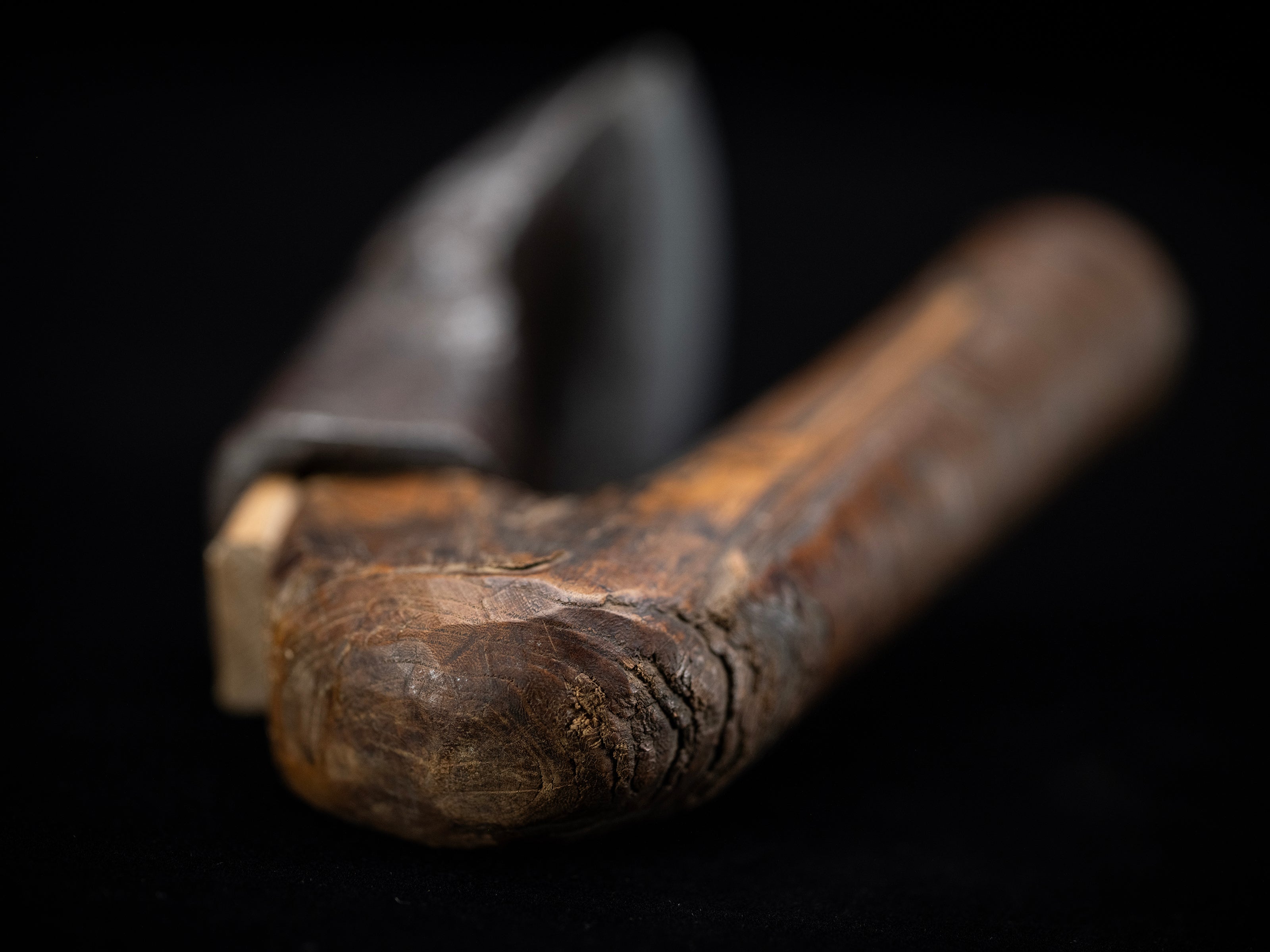
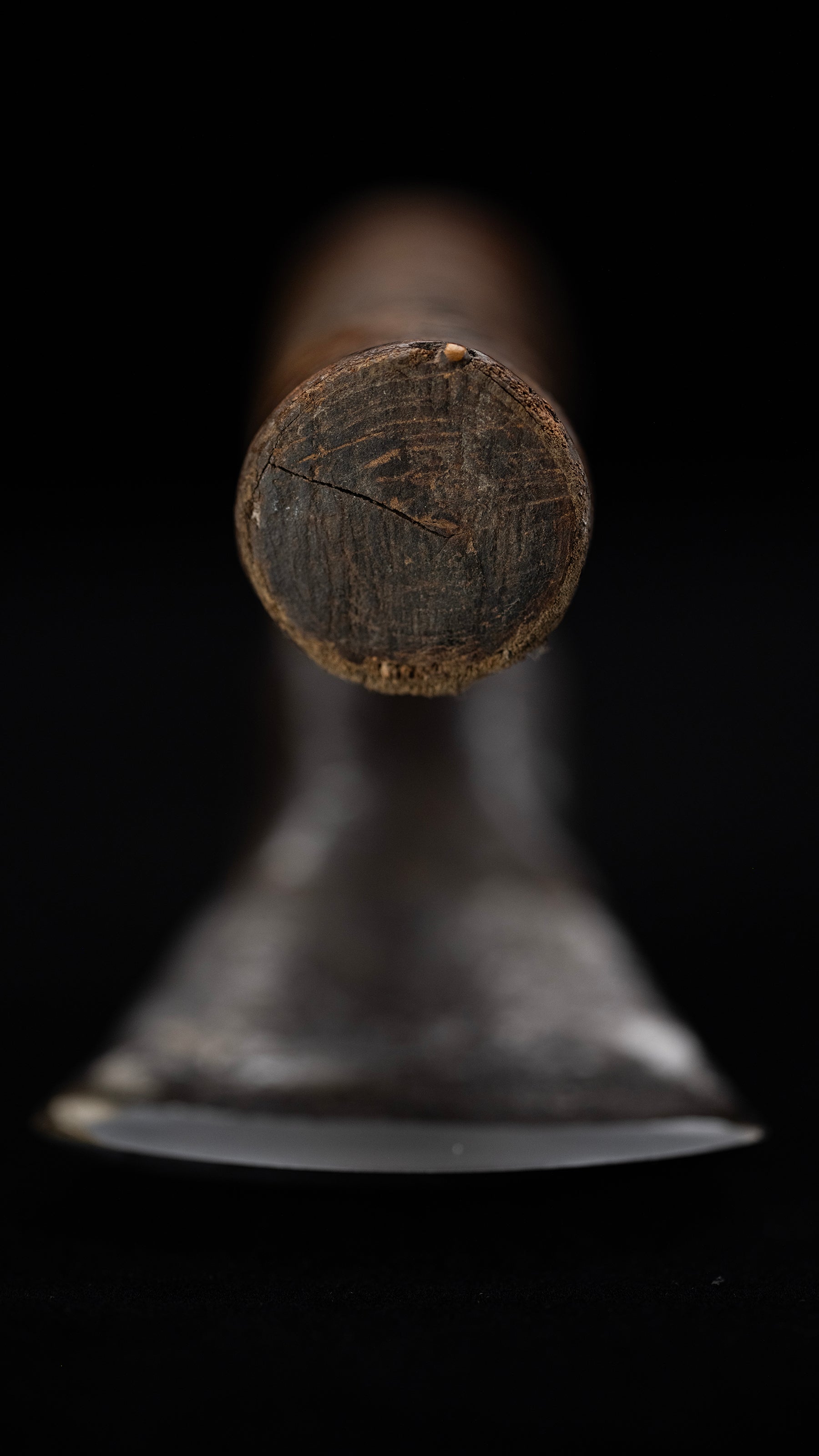
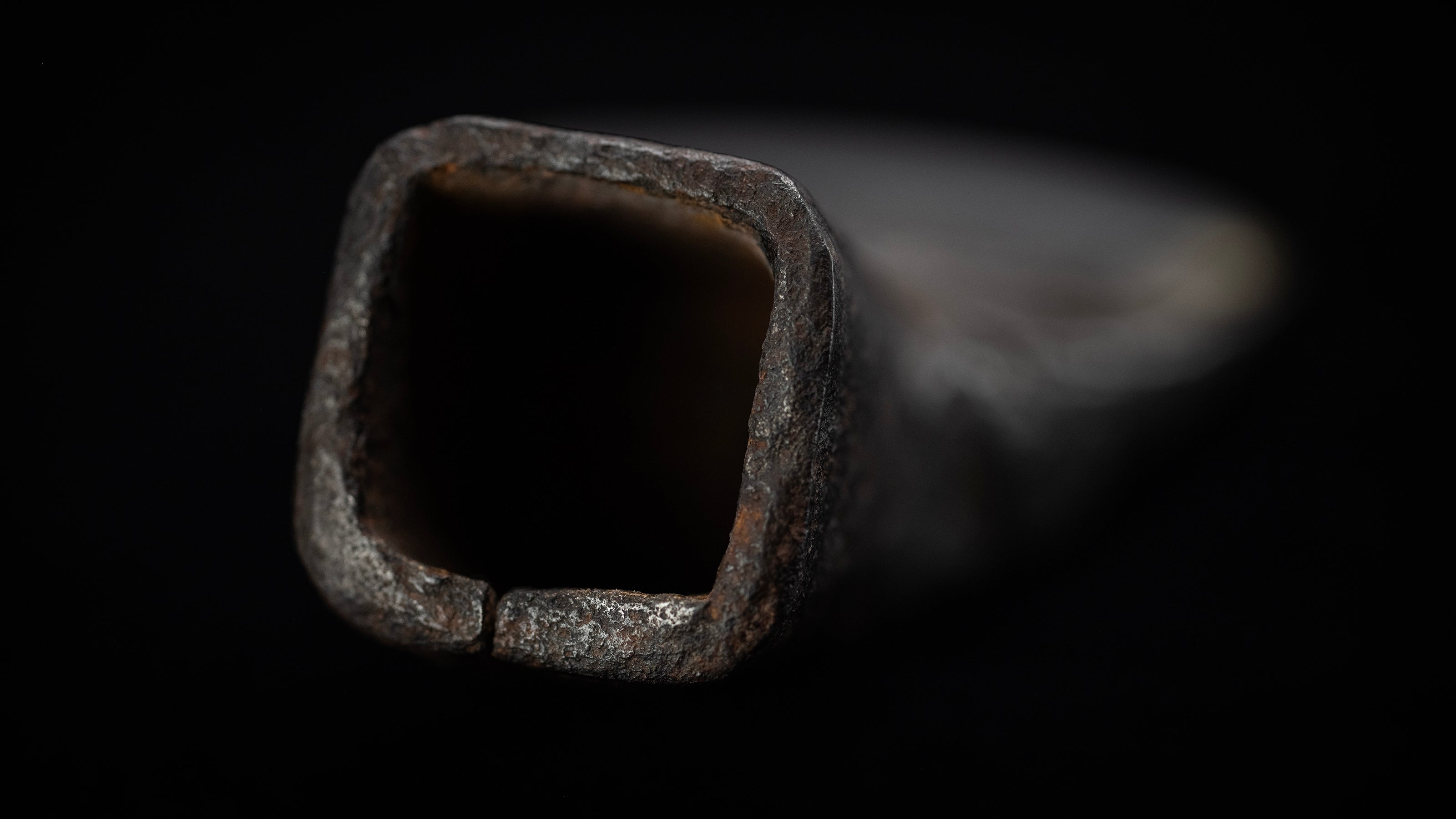
Usubori-Chouna Japanese Traditional Wooden Mortar Craftsman Tool by Miyoshinagamichi
Smith name: Miyoshinagamichi (三善長道)
Steel: Tamahagane
Jigane: Japanese traditional iron
Blade length: 116mm
Blade width: 69mm
Wooden handle length: 150mm
Total length: 160mm
Manufacture Era: Around the end of the 20th century
Blade Weight: 495g
Accessories: Original wooden handle
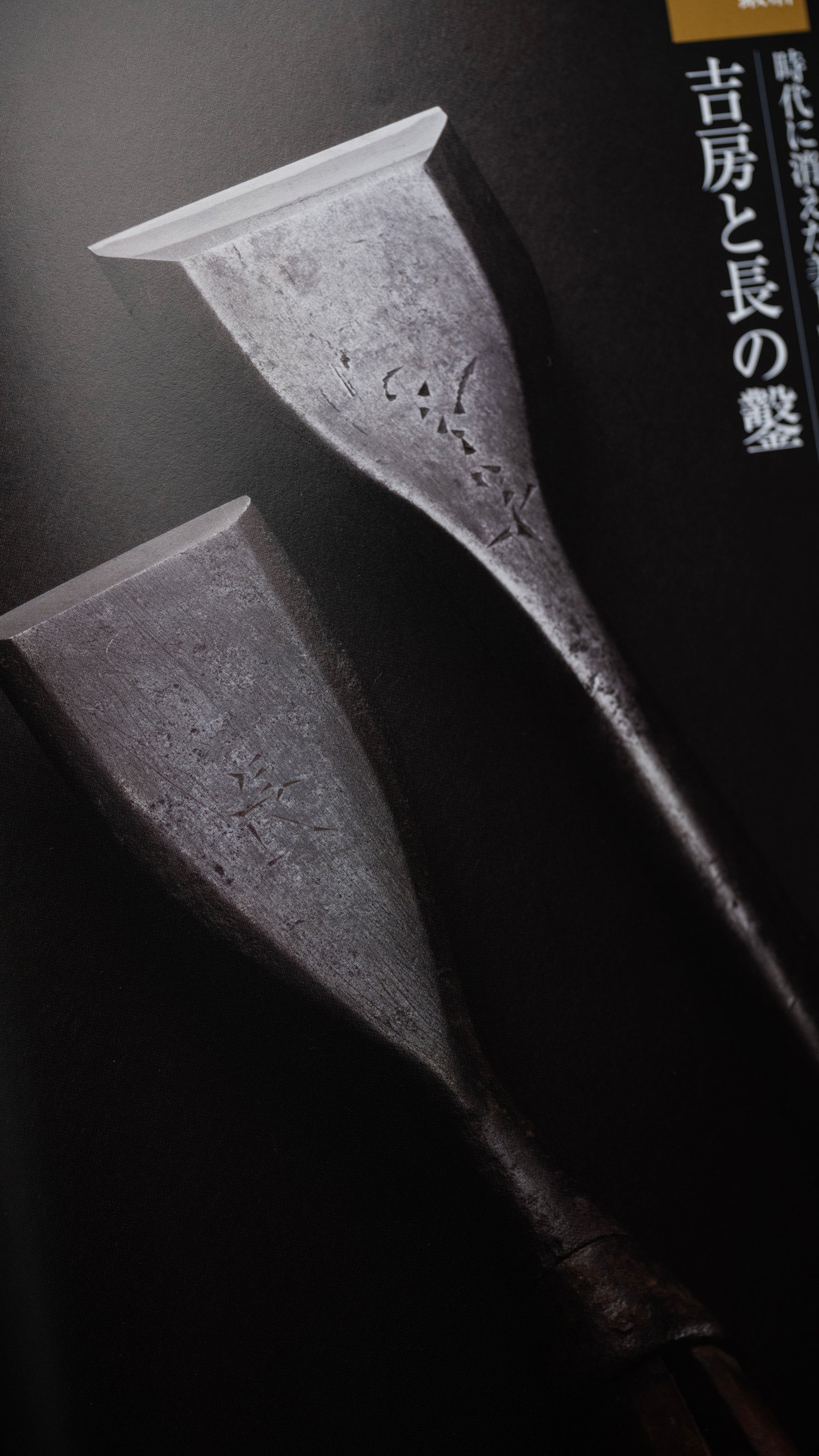
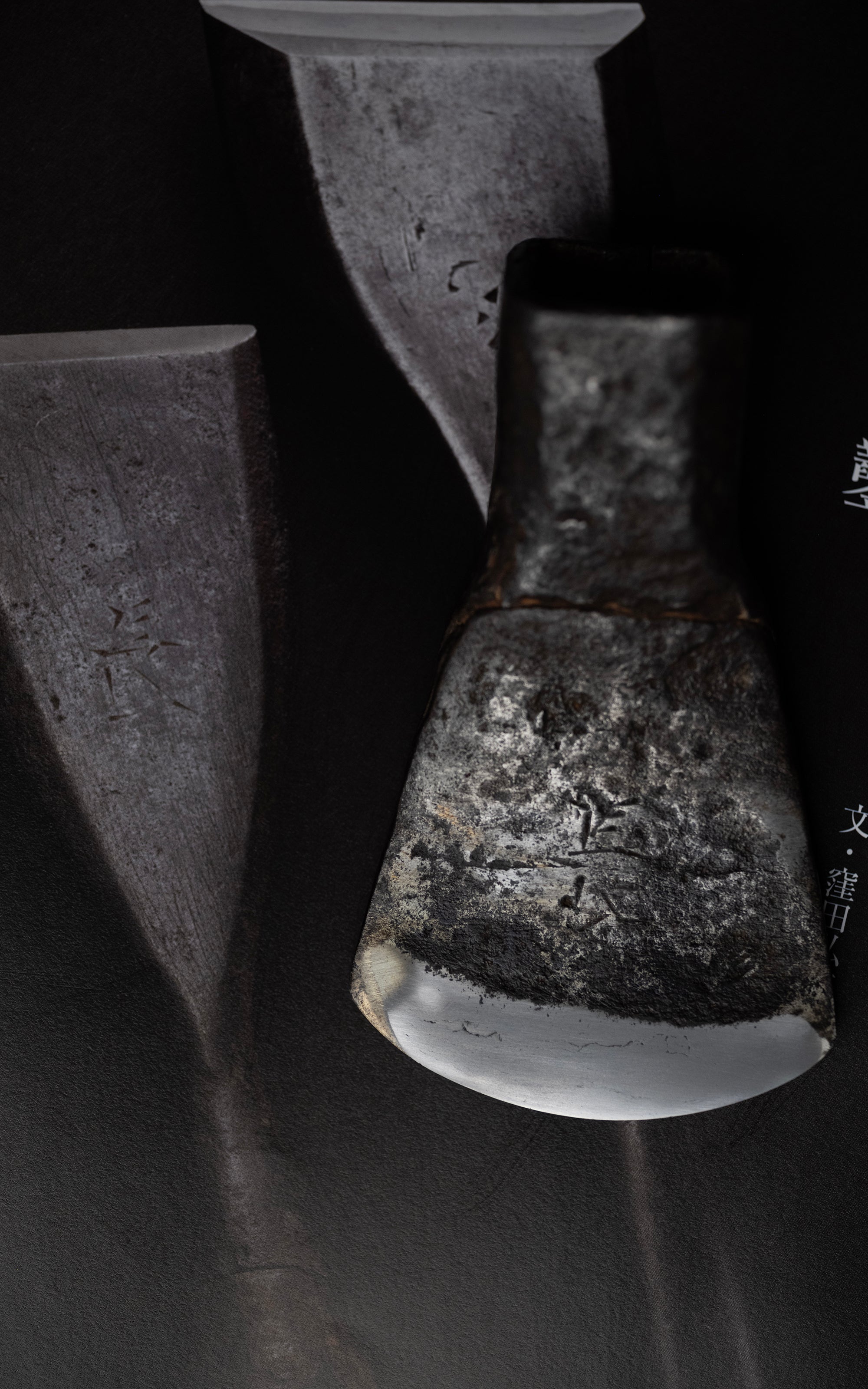
Additional Information: Used. It's a classical style Usubori-Chouna. In the article shown in the last two pictures, I found highly reliable blacksmith information about this tool. This article is from the book「Aizute Katari」 page 144. The mark "長“ of this Chouna is consistent with the mark of the chisel on the left in the picture.
According to the article, this blacksmith “Miyoshinagamichi /三善長道” faction continued from the mid-17th century to the mid-Meiji era in Japan, a total of 11 generations. The main business of the Nagamichi blacksmith faction was making samurai swords, and they were famous swordsmiths. Since the Meiji era, the demand for samurai swords has dropped sharply, and coupled with the sword ban in Meiji 9, the 9th and 11th generations. Nagamichi began to make tools in the Aizu area from Meiji 6.
This chouna is most likely the work of the 9th and 11th generation blacksmiths (they were father and son, working together).
Regarding the steel. I found it to be sticky and hard when I sharpened it, which may be related to its intended use - mainly working on wood ends. Based on my experience, it's most likely tamahagane , and the jigane part is very soft when sharpening, which is most likely using traditional Japanese iron. In addition, the burrs produced when sharpening it can be removed intact like "silk threads",shows that the microstructure of the chouna steel is very uniform and has almost no impurities.
※ When the blade needs to be sharpened, tap the end of the wooden handle to remove the blade.
At 24:25 seconds in the video below, the mortar craftsman begins to use Usubori-Chona (Recent popular styles).
臼(Usu) is a wooden container. It has a bowl-like shape dug into the end of a full length of log that can withstand a beating, as the video below demonstrates.
Choose options