
文章: 『Sawsmith Marks of the Miki Region and Surrounding Areas』
『Sawsmith Marks of the Miki Region and Surrounding Areas』
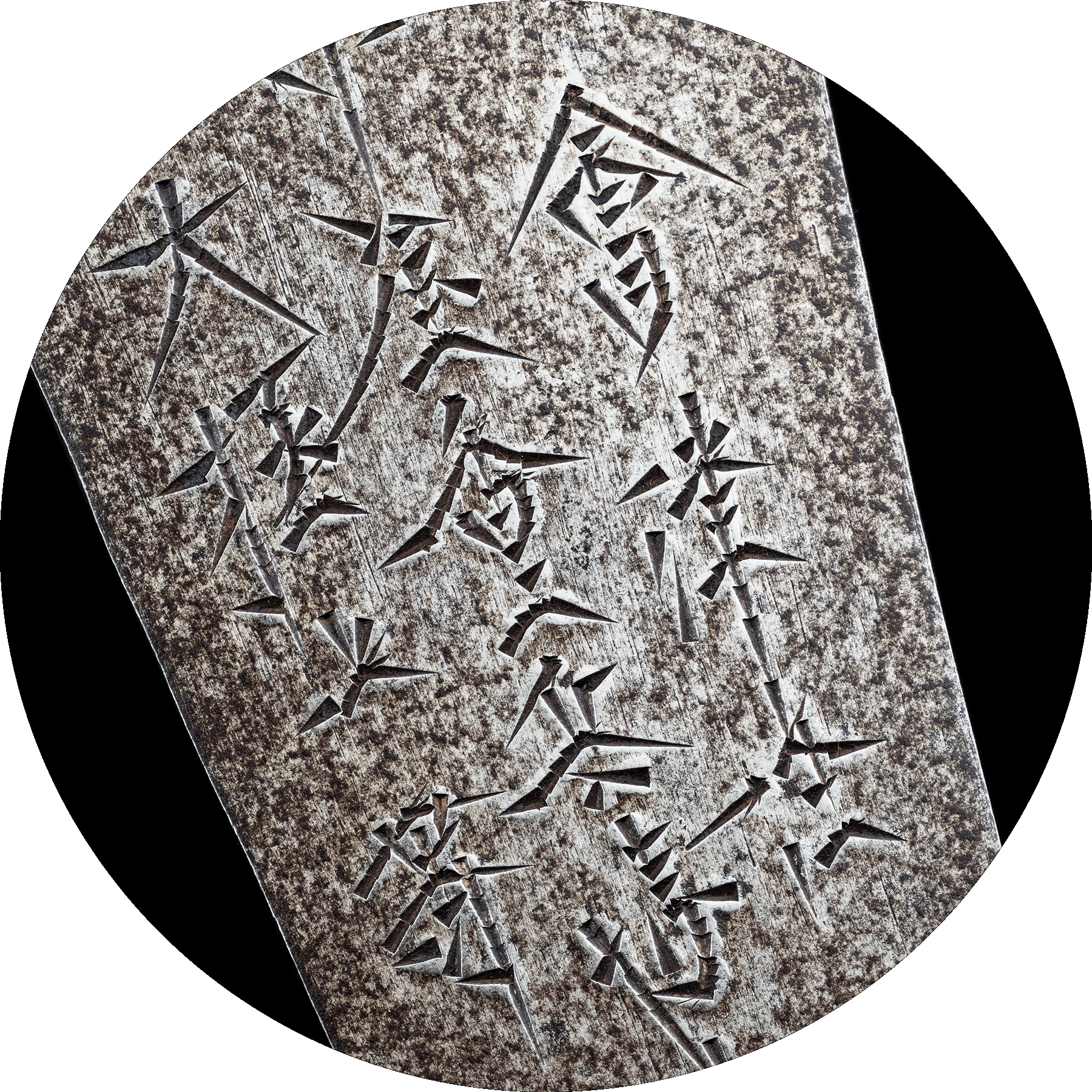
 1: Mark of Miyano Heijiro (宮野平次郎).
Since the mid-Edo period, the Miyano Heijiro (宫野平次郎) family has been a prestigious lineage of master sawmakers, forging saws for generations in the Banshu Miki region. From the end of the Bakufu period (Bakumatsu) to the early Meiji era, Miyano Heijiro (宫野平次郎) of Miki was celebrated alongside Nakaya Heijiro (中屋平治郎) of Edo and Nakaya Sukezaemon (中屋助左衛門) of Aizu as one of the three great master sawmakers of Japan. Historical evidence suggests that the history of Miyano Heijiro sawmaking began with Kamoya Heijiro (加茂屋平次郎). If he is considered the first generation, this illustrious lineage of sawmakers continued all the way to the ninth generation, Miyano Heijiro IX / Miyano Kiichi (第九代宫野平次郎/宫野貴一).
Among the successive generations, it was the sixth-generation successor, Miyano Motokichi (宫野元吉), who elevated the reputation of "Miyano Heijiro" saws to its peak and spread its fame far and wide. He was born in Miki-cho in the fourth year of the Koha era (1847).
Growing up during the turbulent Bakumatsu period, Motokichi succeeded his father in the family trade of saw manufacturing. Before officially taking over the family business, he traveled to Fushimi, Kyoto, to apprentice under Taniguchi Seibei (谷口清兵衛), a renowned master from a distinguished family of sawmakers. After mastering the oil-quenching technique—the most advanced heat treatment of that time—Motokichi returned to Miki. The exceptional quality of the saws he produced propelled the 'Miyano Heijiro' brand—previously known only locally—to widespread renown. It was this very Motokichi, under the name "Miyano Heijiro," who came to be ranked alongside Nakaya Heijiro (中屋平治郎) and Nakaya Sukemon (中屋助左衛門) as one of the three great master sawmakers.
Thereafter, the craftsmanship of saws bearing the "Miyano Heijiro" brand was passed down to the seventh generation, Yoshinosuke (吉之助), the eighth generation, Tanekichi (胤吉), and finally the ninth generation, Kiichi (貴一). Per Mr. Tsuchida’s X (Twitter) post, the 9th-generation Miyano Heijiro kept the blacksmith shop active into Japan's Heisei era (1989–2019); the precise closing time is unknown.
(Note: There is also a theory that regards Miyano Heijiro Motokichi as the true founder/first generation of the "Miyano Heijiro" saw line. The generations of Heijiro saws listed on this website are categorized based on this alternative theory.)
The mark shown above is from a single-edged crosscut saw (Kataba Nokogiri), which has been appraised by Mr. Tsuchida and identified as being made of Tamahagane. It is highly likely a work by the second-generation Yoshinosuke.

 2: Mark of Miyano Tetsunosuke (宮野鉄之助). The mark shown above is from a 'gagari' saw in my personal collection, crafted by the second-generation Miyano Tetsunosuke.
There are conflicting theories regarding the first-generation Miyano Tetsunosuke (初代宫野鉄之助), with some suggesting he was either the second or fourth son of the sixth-generation Miyano Heijiro / Miyano Motokichi (六代宫野平次郎/宫野元吉); regardless, he completed his sawmaking apprenticeship under his father. The eldest son Yoshinosuke went on to succeed to the family's "Miyano Heijiro" brand.
He established his independence and assumed the name Miyano Tetsunosuke (宫野鉄之助).
The second-generation Born in Fukui, Miki City, in the 34th year of the Meiji era (1901), his birth name was Endo Masaichiro (遠藤政一郎). After completing a local apprenticeship under a sawmaker, he moved to Osaka to further master the art of saw Metate. Upon returning to Miki, he entered into an apprenticeship under the first-generation Miyano Tetsunosuke.
In the 12th year of the Taisho era (1923), he married Tetsunosuke’s eldest daughter, and was legally adopted into the family, changing his name to Miyano Masaichiro (宫野政一郎). However, two or three years later, without a divorce, his surname was reverted back to Endo (遠藤). In the 13th year of the Showa era (1938), in recognition of his exceptional sawmaking craftsmanship, he formally succeeded to the name of the second-generation Miyano Tetsunosuke (二代宫野鉄之助). It was the second-generation head who truly elevated the reputation of the Miyano Tetsunosuke (宫野鉄之助) brand.
 3: Mark of Taniguchi Seizaburo (谷口清三郎). This saw is from my personal collection. The full text on the mark reads "伏見住谷口清三郎/Fushimi-ju Taniguchi Seizaburo." "伏見住" means "residing in Fushimi," which is an area located in the southern part of Kyoto.
According to the information I have, the history of saw forging in the Fushimi region can be traced back more than 400 years. The pioneer was Higashi-Nakaya [Name], followed by Nishi-Nakaya [Name] and the Taniguchi family. The Nakaya family mainly sold to the Kanto region, while the Taniguchi family targeted the Kansai direction.
Anyone with a knowledge of Japanese history would take this for granted. This is because Kyoto had been the political and cultural center of Japan since 794 AD, right up until the capital relocated to Tokyo in modern times. Later, as modern maritime trade flourished, industries in the landlocked Fushimi area gradually declined, and the saw manufacturing center of the Kansai region progressively shifted to the Miki area.
However, the Taniguchi Seibei (谷口清兵衛) line—which spanned about 15 to 16 generations—was kept alive by its final master, Taniguchi Taido(谷口泰道), until they finally closed their doors in the 1950s (Showa 30s).
The saw shown above has been authenticated and sharpened by Mr. Tsuchida, who confirmed it is a Tamahagane saw. It is estimated to have been crafted between the late 19th century and the early 20th century.
Currently, there are no further records to clarify the exact lineage or relationship between Taniguchi Seizaburo and Taniguchi Seibei. However, based on the naming convention, it is highly probable that Seizaburo was the third son of one of the Taniguchi Seibei generations, who later branched out to establish his own independent brand and blacksmith workshop.
.%C2%A0%0A%0ASince%20the%20mid-Edo%20period,%20the%20Miyano%20Heijiro%20(%E5%AE%AB%E9%87%8E%E5%B9%B3%E6%AC%A1%E9%83%8E)%20family%20has%20been%20a%20prestigious%20lineage%20of%20master%20sawmakers,%20forging%20saws%20for%20generations%20in%20the%20Banshu%20Mik...)