
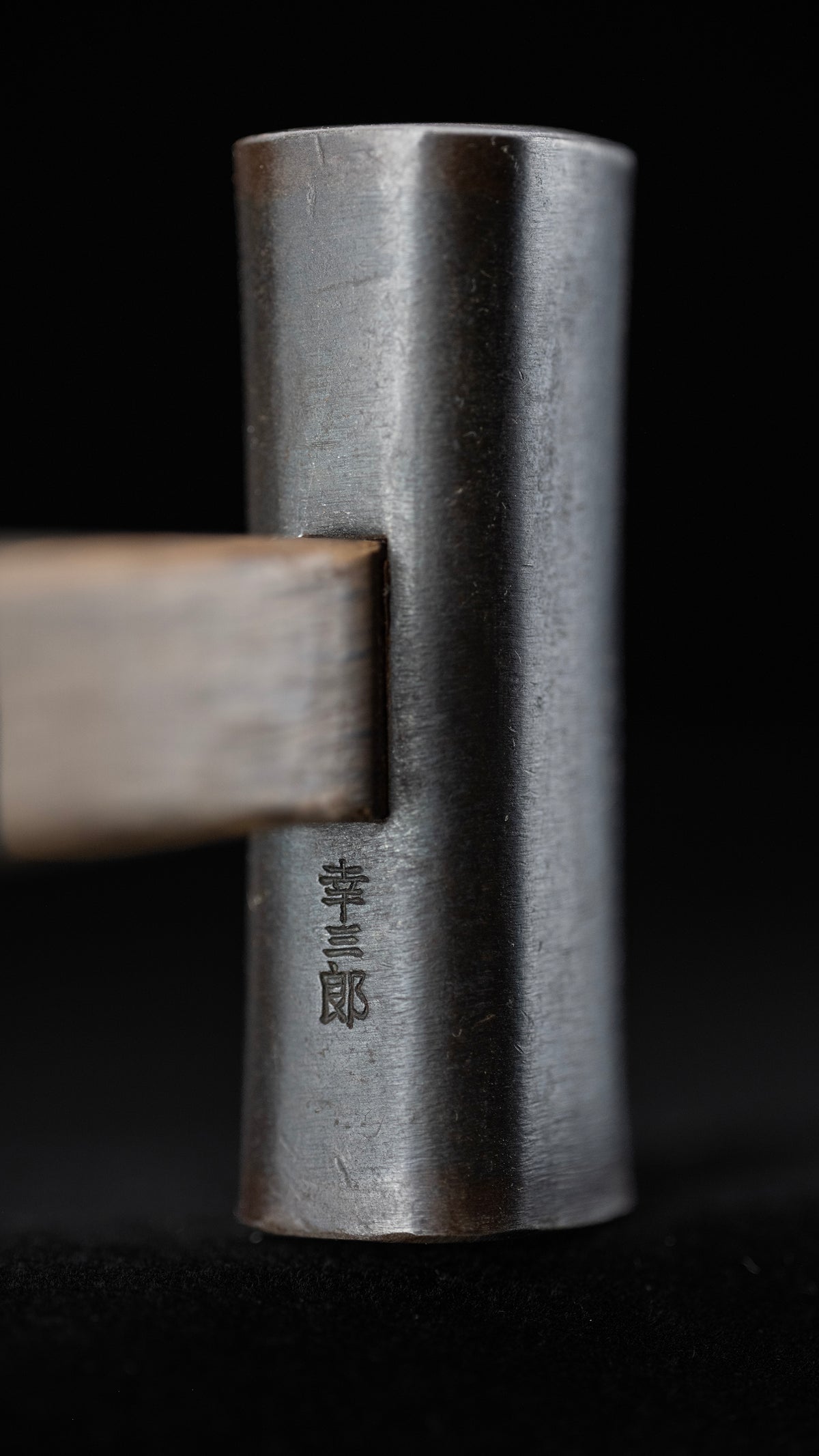
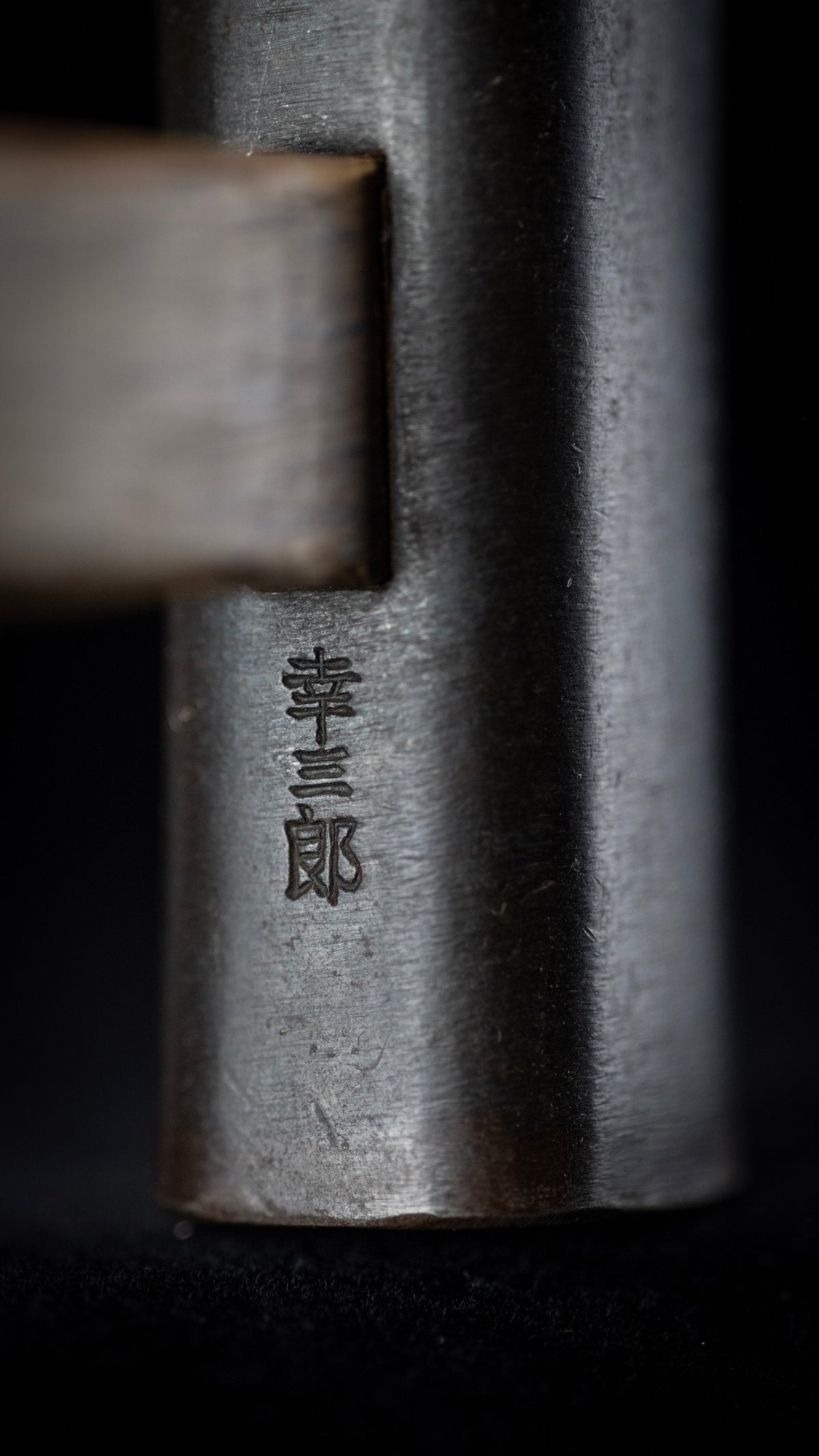
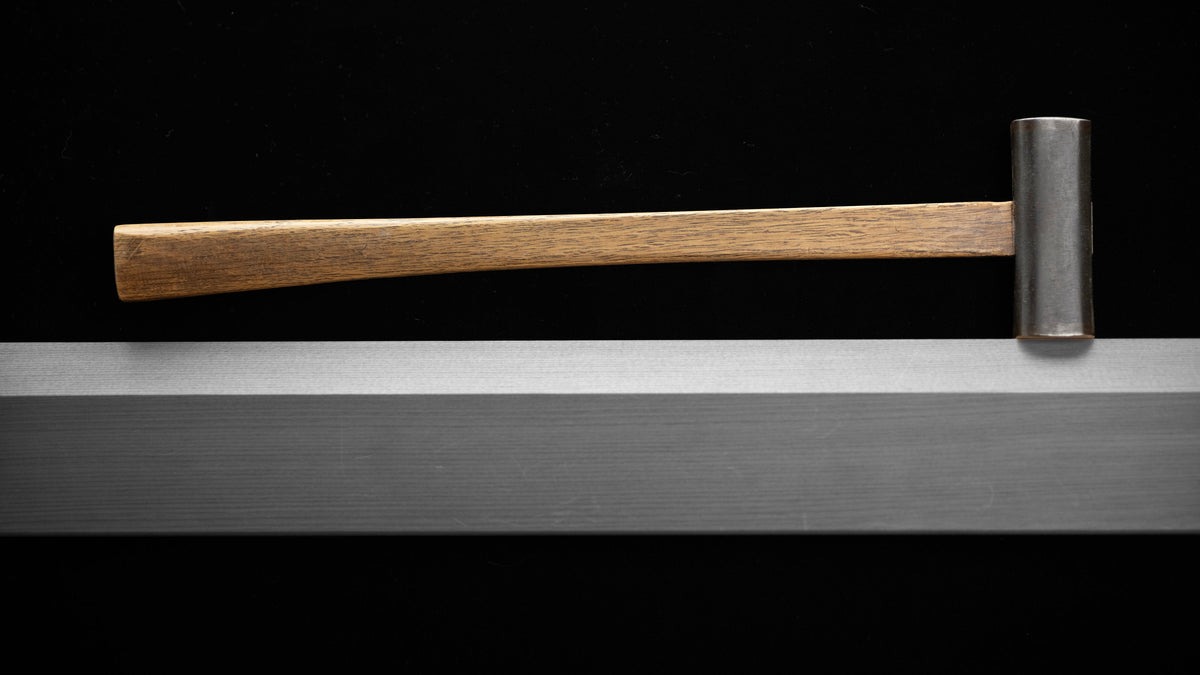
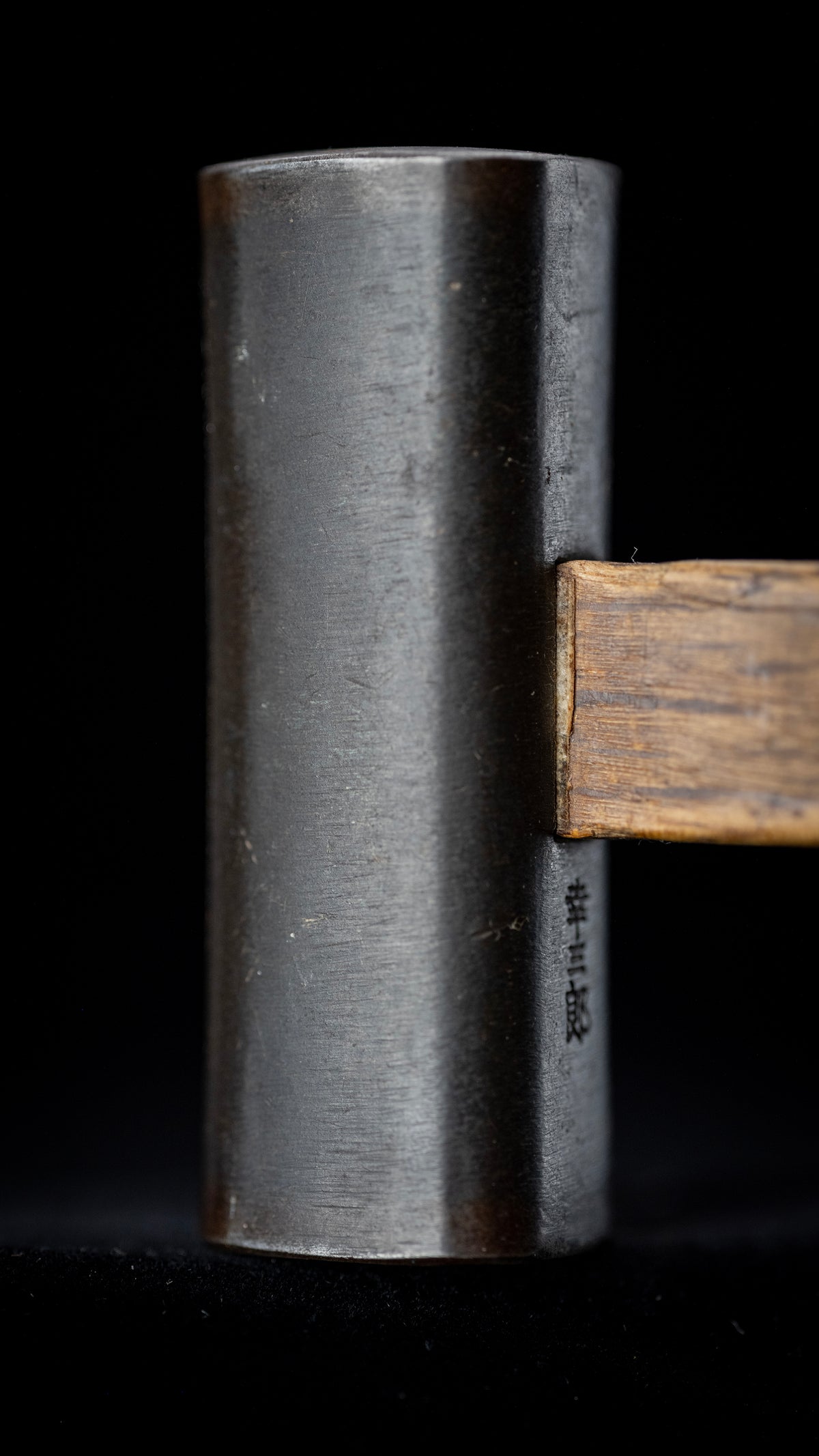
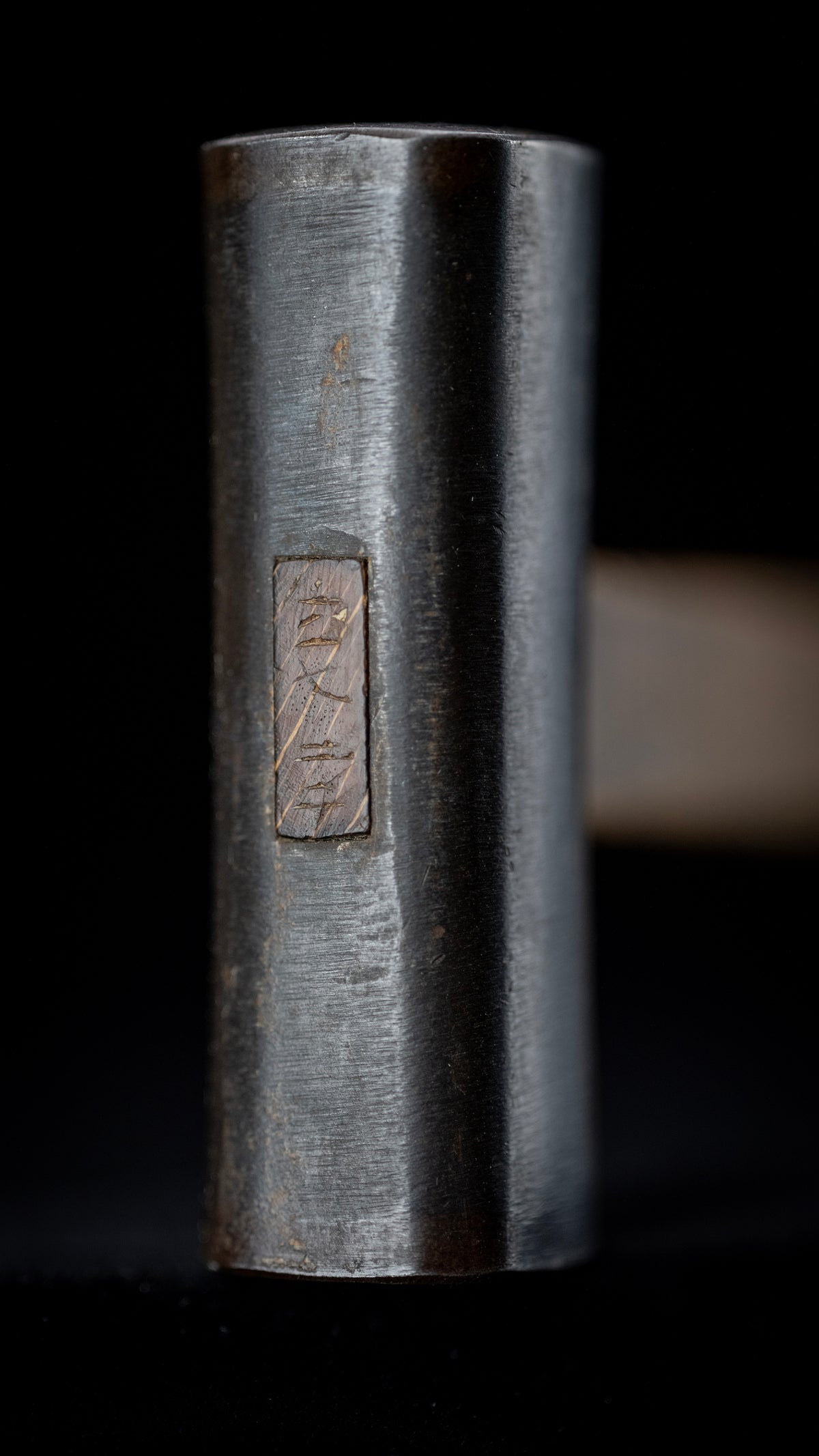
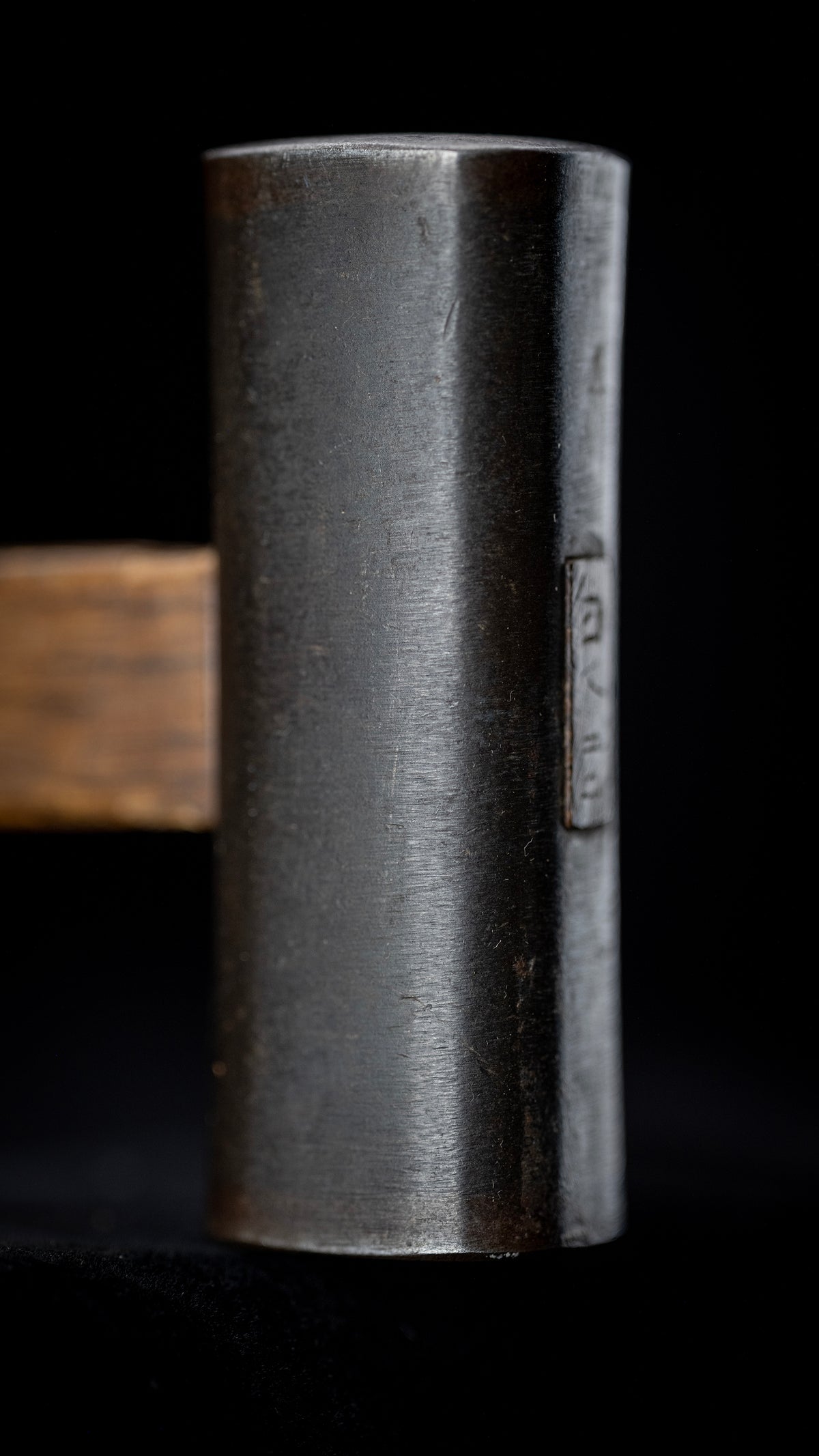
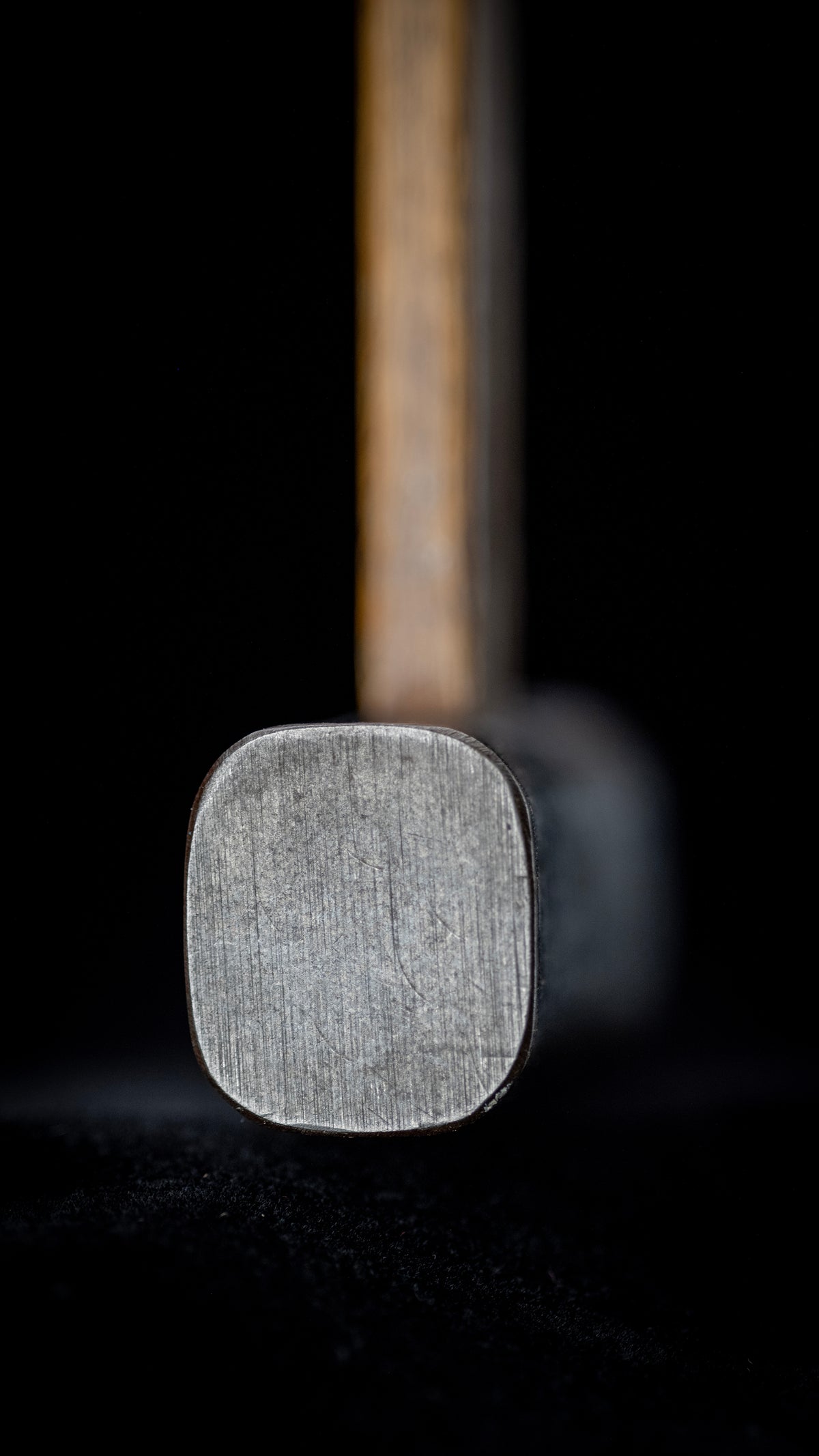
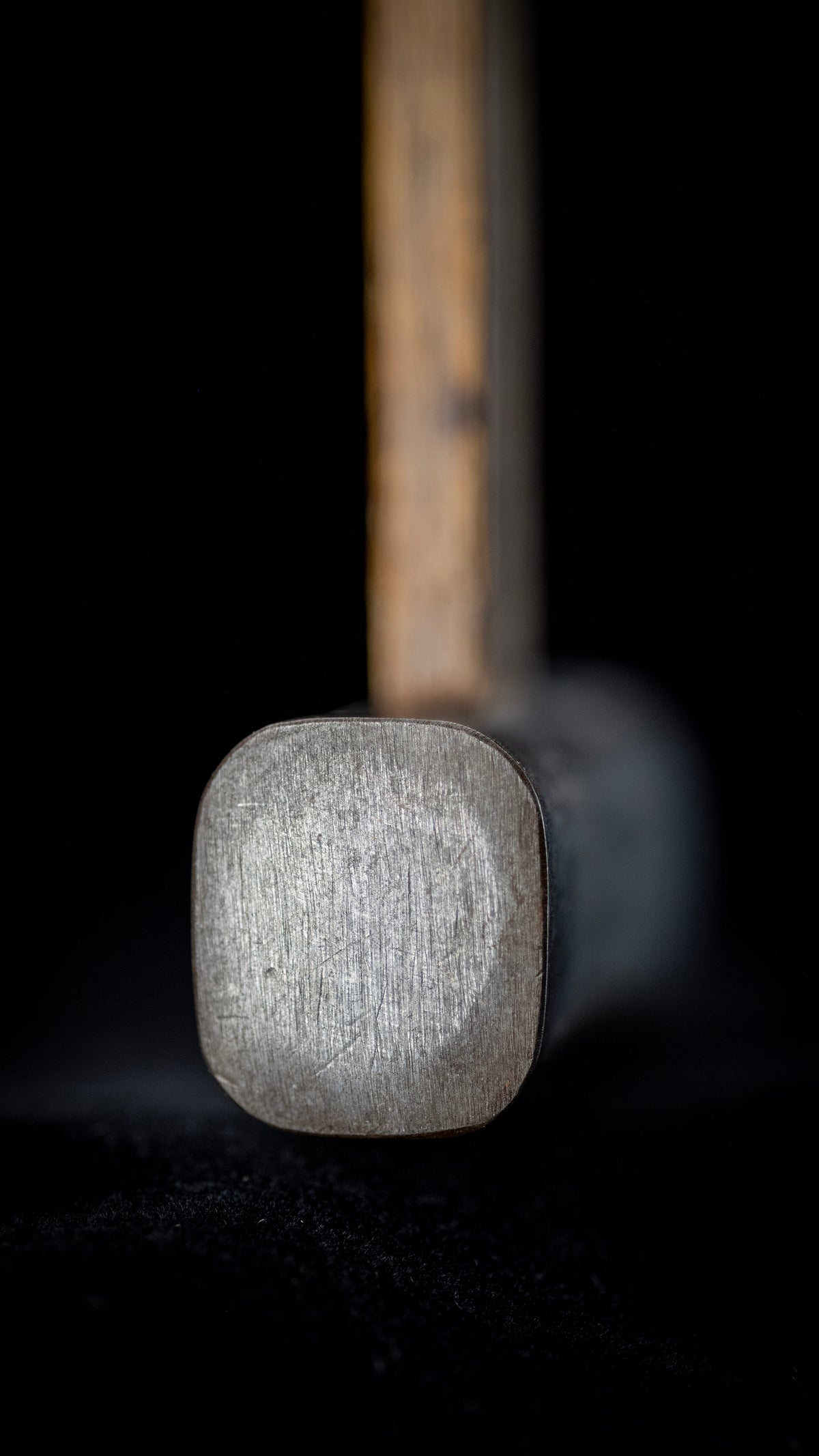
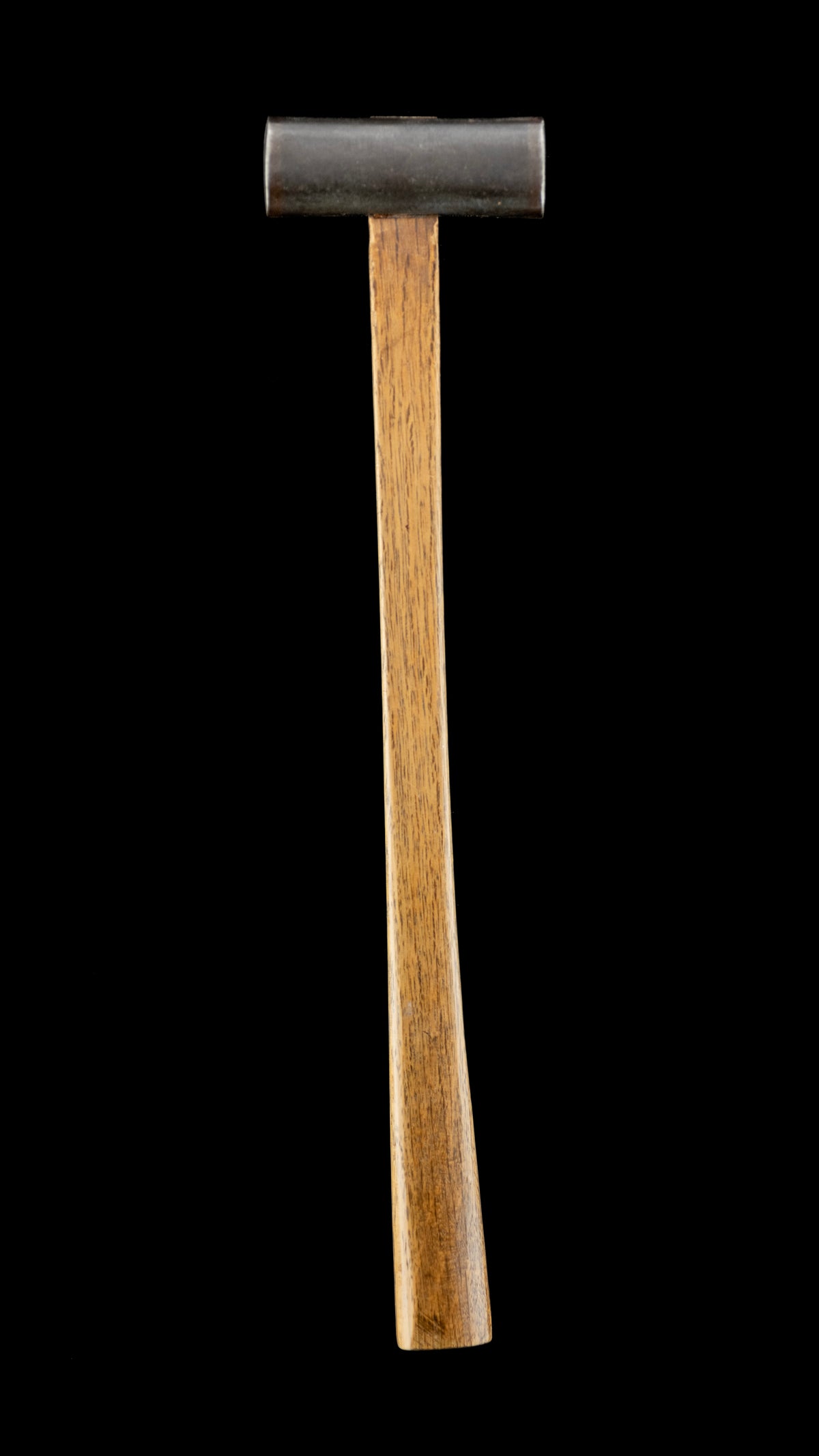
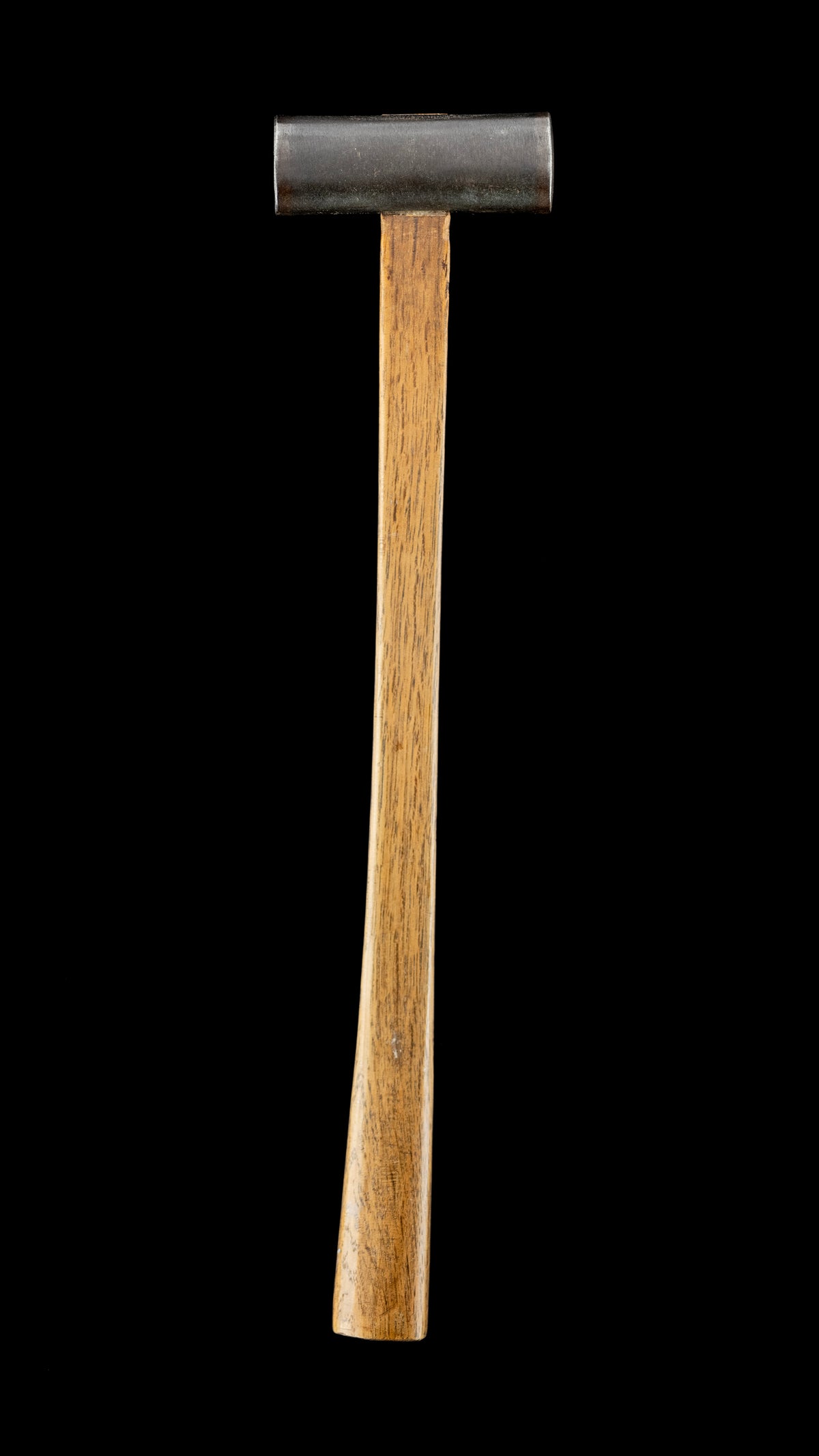
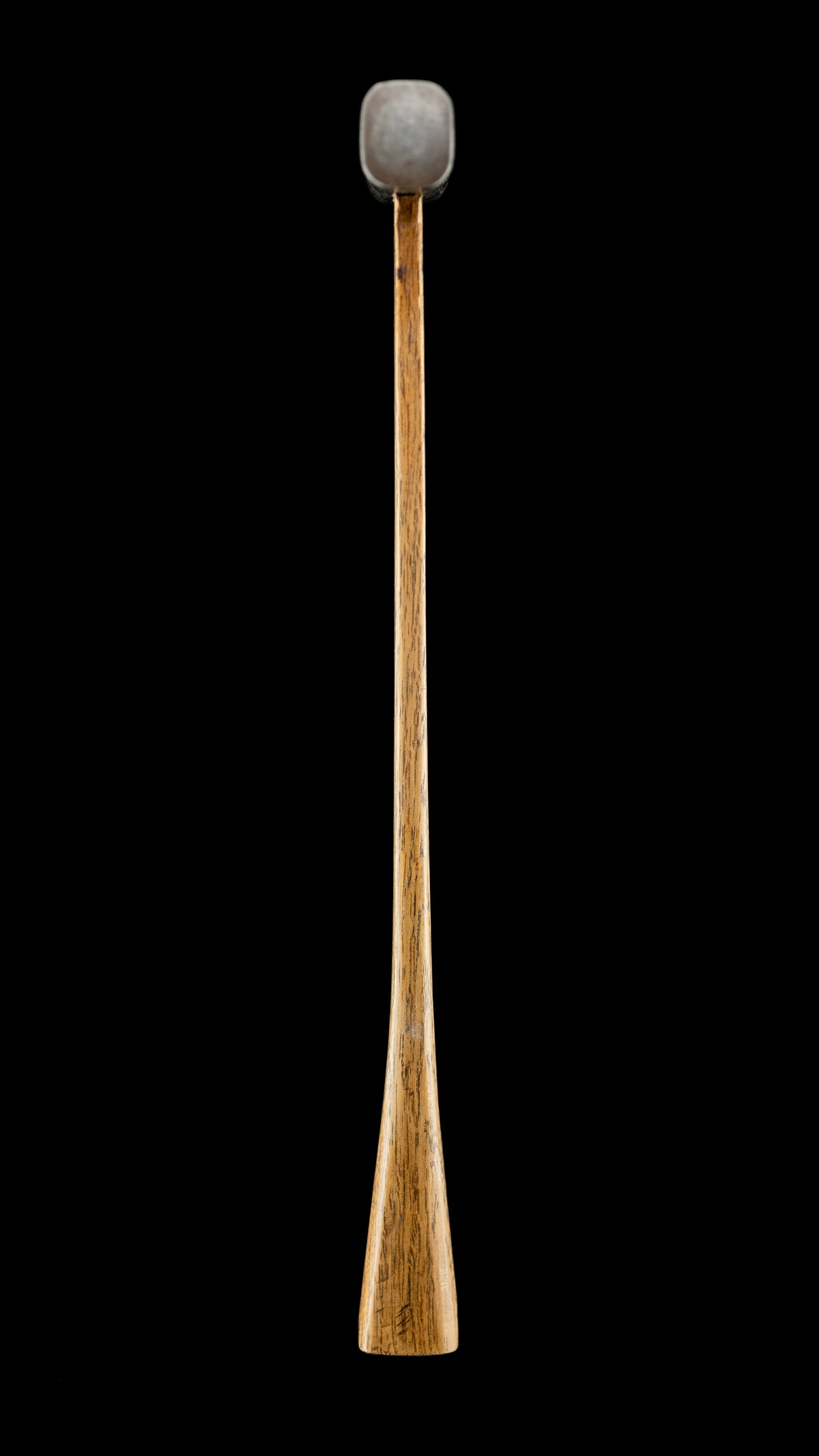
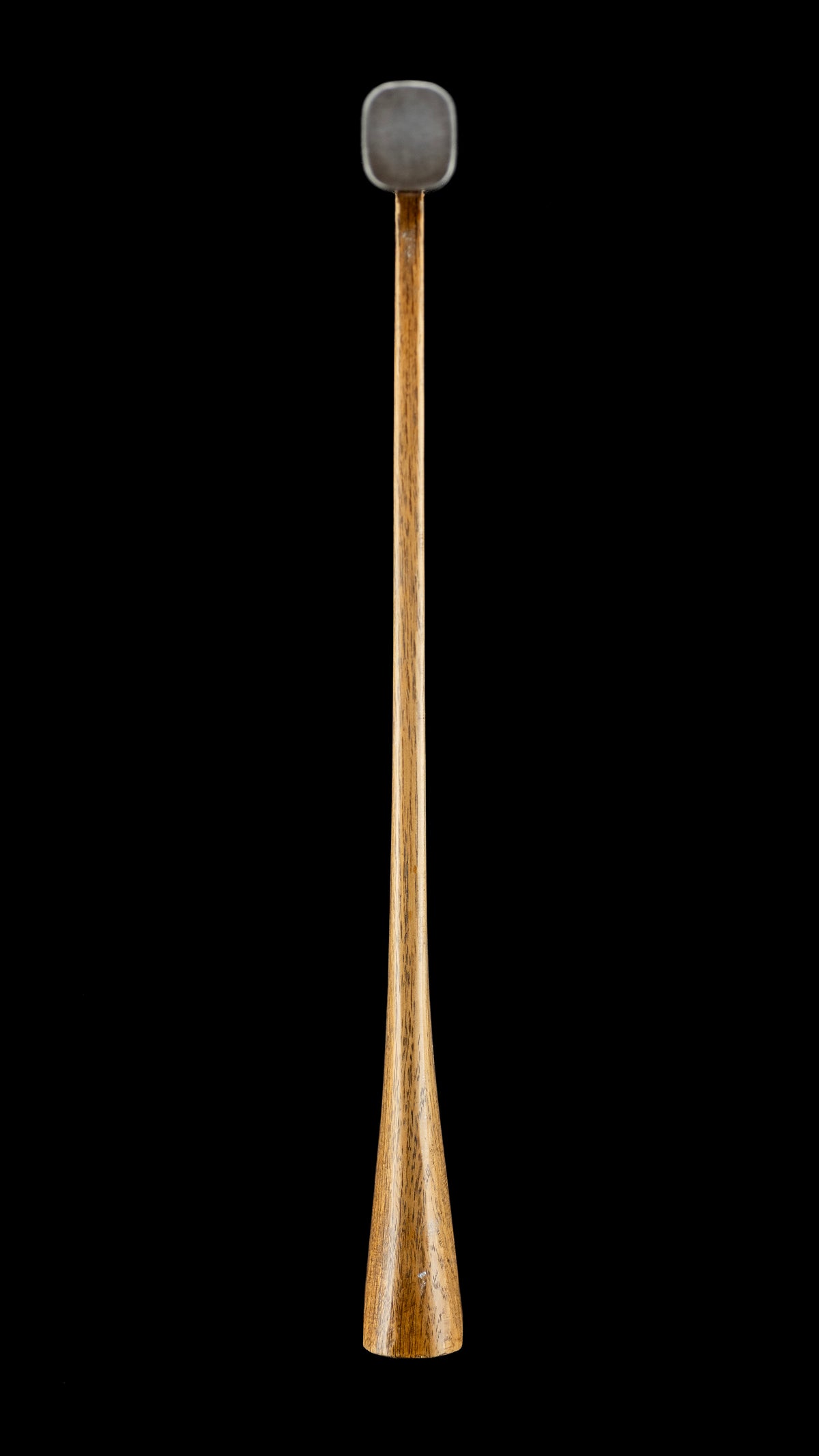
Ko Genno Japanese Hand Made Hammer by Kouzaburo - 50 Monme
Smith name: Hasegawa Kouzaburo (1935~2004)
Shape: Square
Type: All steel
Total Weight: 248g
Height: 68mm
Head size: 24mm x 21mm
Hammer eye size: 16.2mm x 5.9mm
Vertical-to-horizontal ratio of the eye: about 2.74 : 1
Manufacture Era: around 1980s (according to collector’s memory)
Accessories:-
Additional Information: The hammer has been used, but both the head and wooden handle remain in great condition. It comes from a retired carpenter in the Tokyo area. Judging by his collection of tools, he was a master tategu-ya (joiner / sliding door and screen specialist) who also worked on sukiya-style architecture. Some of the premium natural whetstones recently listed—such as Uchigumori, Nakayama Tomae, and Okudo Suita—were also sourced from him.
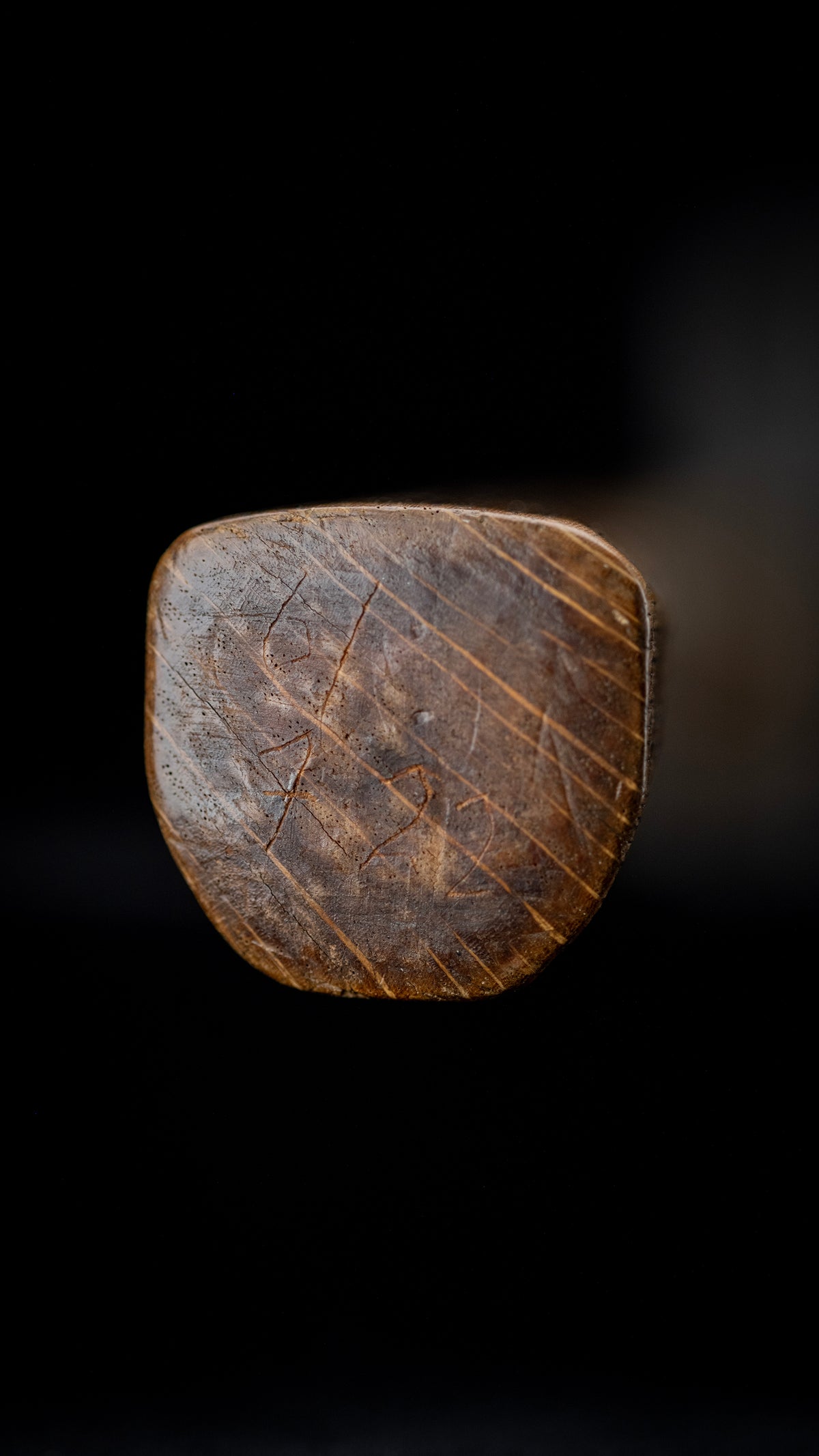
Both ends of the wooden handle bear carved inscriptions: the front reads “三七 ニチ” (meaning unclear), while the butt end is marked “61 722”—likely indicating the handle was fitted on July 22, Showa 61 (1986).
According to information provided by Tsuchida-san, Japanese genno (hammers) are traditionally classified into four size categories:
Mame-genno (豆玄翁): Refers to 20 to 30 monme (approx. 75–112.5 g). Used for driving nails and other small hardware.
Ko-genno (小玄翁): Refers to 50 to 80 monme (approx. 187.5–300 g). Used for striking oire-nomi (bench chisels).
Chu-genno (中玄翁): Refers to 100 to 120 monme (approx. 375–450 g). Used for versatile, general-purpose tasks.
Dai-genno (大玄翁): Refers to 150 monme or heavier (approx. 562.5 g and above). Used for striking heavy timber chisels (tataki-nomi / atsunomi).
Mame-genno are also well-suited for performing uradashi on smaller blades, such as miniature planes (ko-ganna), carving chisels, flat woodcarving knives, and kiridashi knives.
Furthermore, Tsuchida-san recommends using a 30 to 50 monme genno when performing uradashi on standard size (like 60,65,70mm) plane blades. Although this process is slower, he prefers delivering lighter, more frequent strikes to induce plastic deformation within the jigane (soft iron backing)—which gently draws the hard steel cutting edge into a minute curve—rather than using a heavier hammer to force the front of the blade to bend rapidly.
In my own observation and practice, while the two approaches may appear identical on the surface, the underlying mechanical intent differs: the former is focused on forcing the tip to bend directly in the direction of the blow, whereas the latter is focused on coaxing the jigane to elongate first, allowing the blade's edge to curve naturally in the direction of the force.
選擇選項