
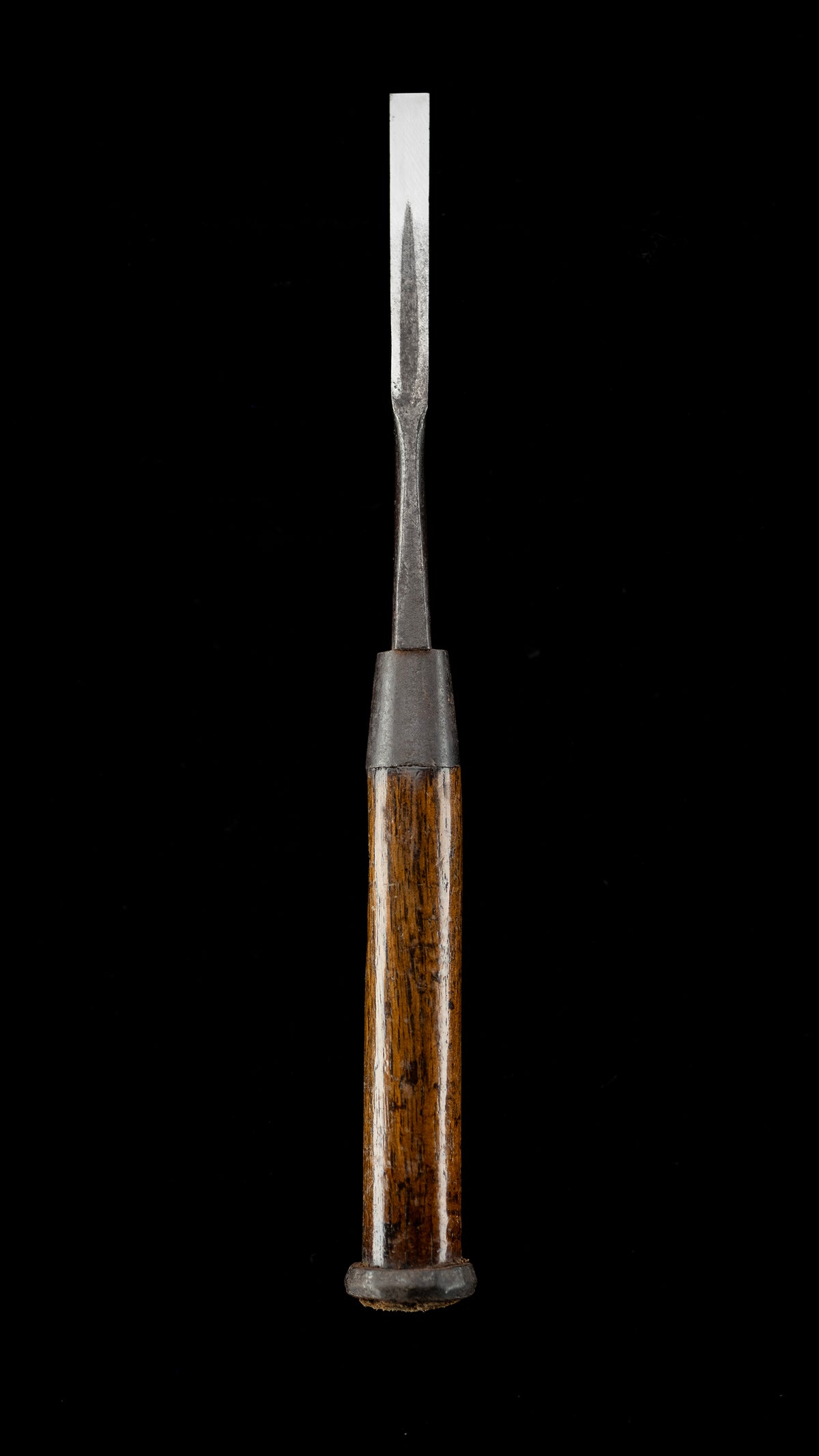
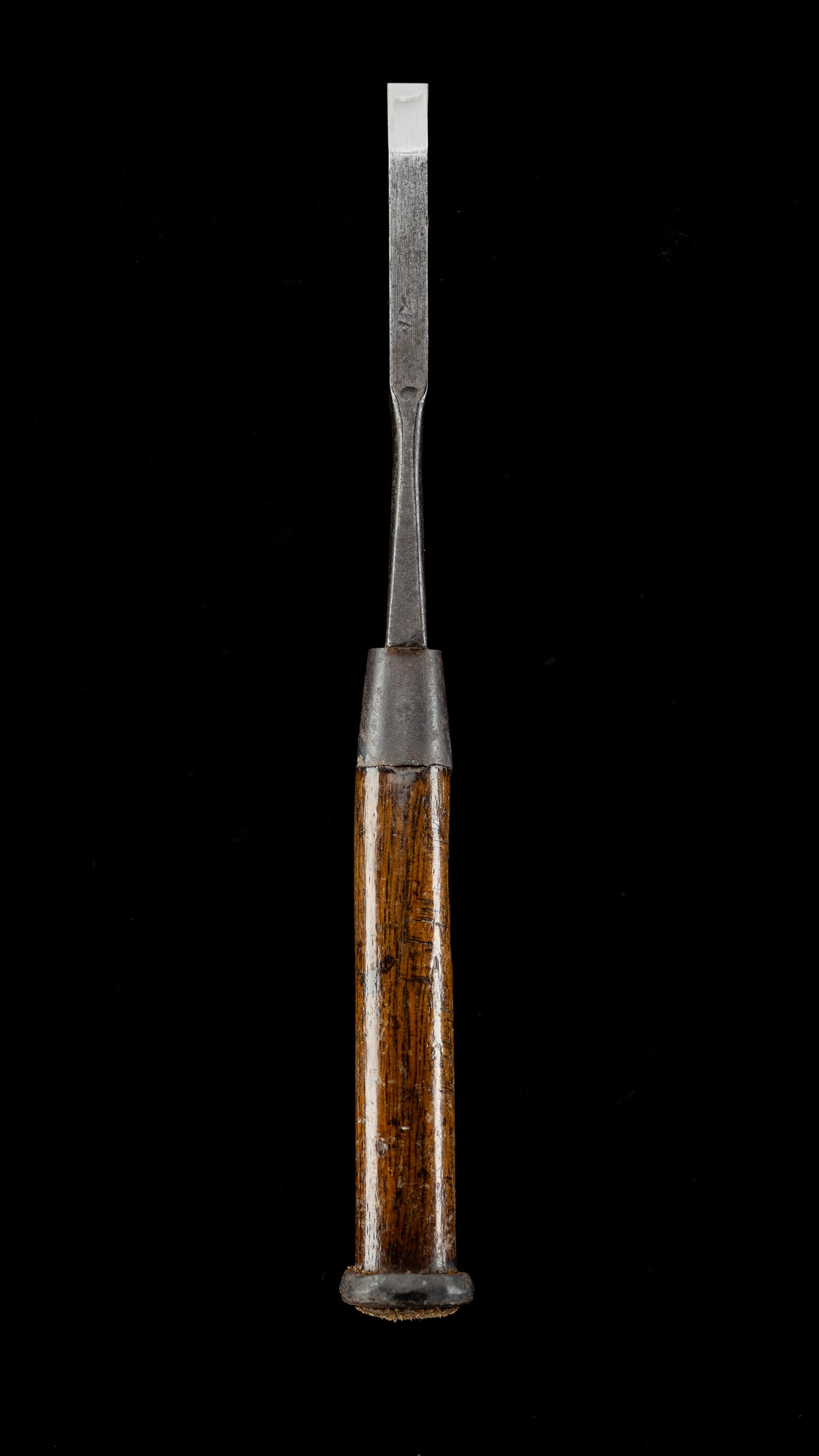
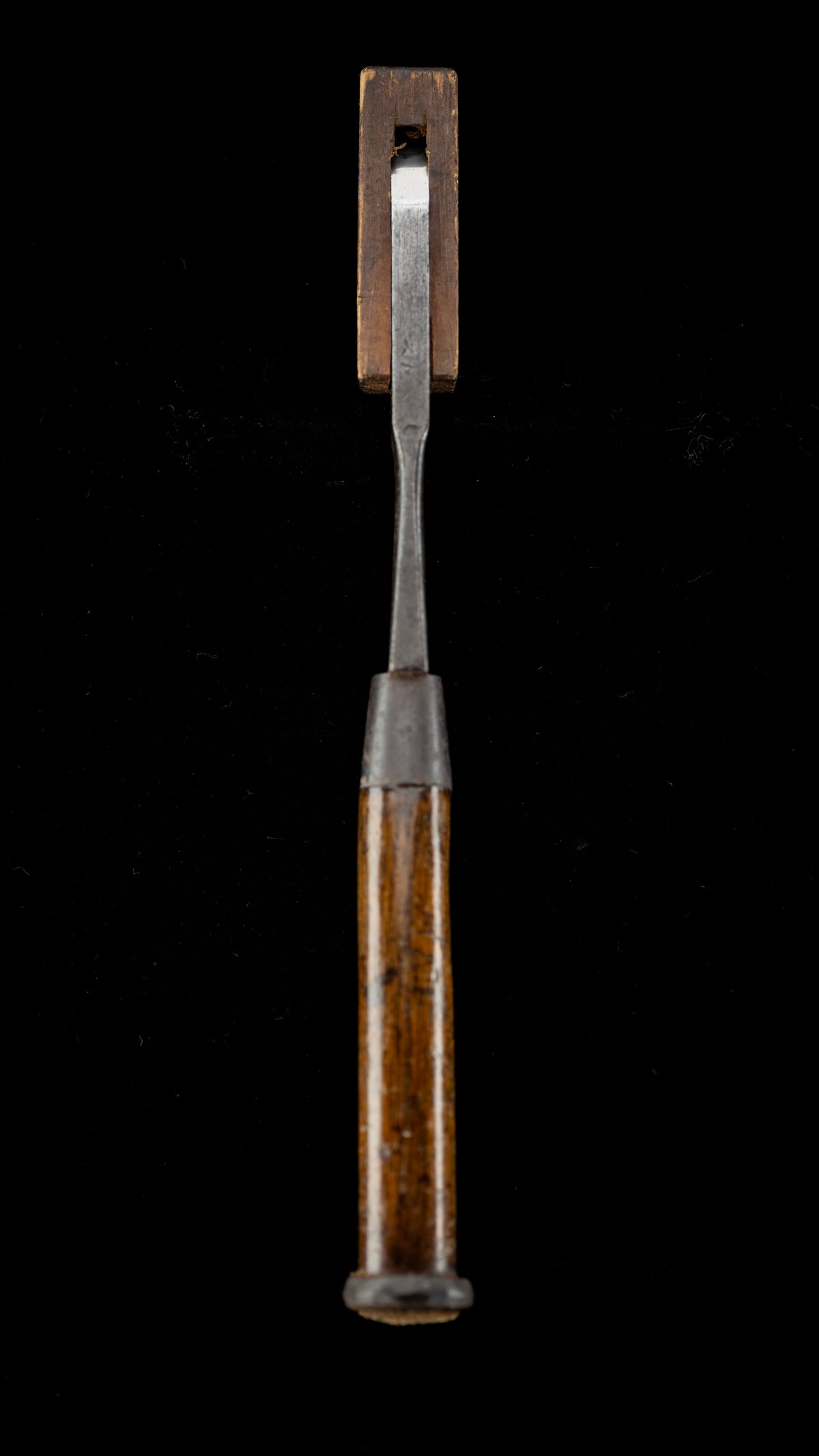
Mukomachi-Nomi Japanese Hand Made Mortise Chisel from Kansai - 7.5mm
Brand name: Unknown
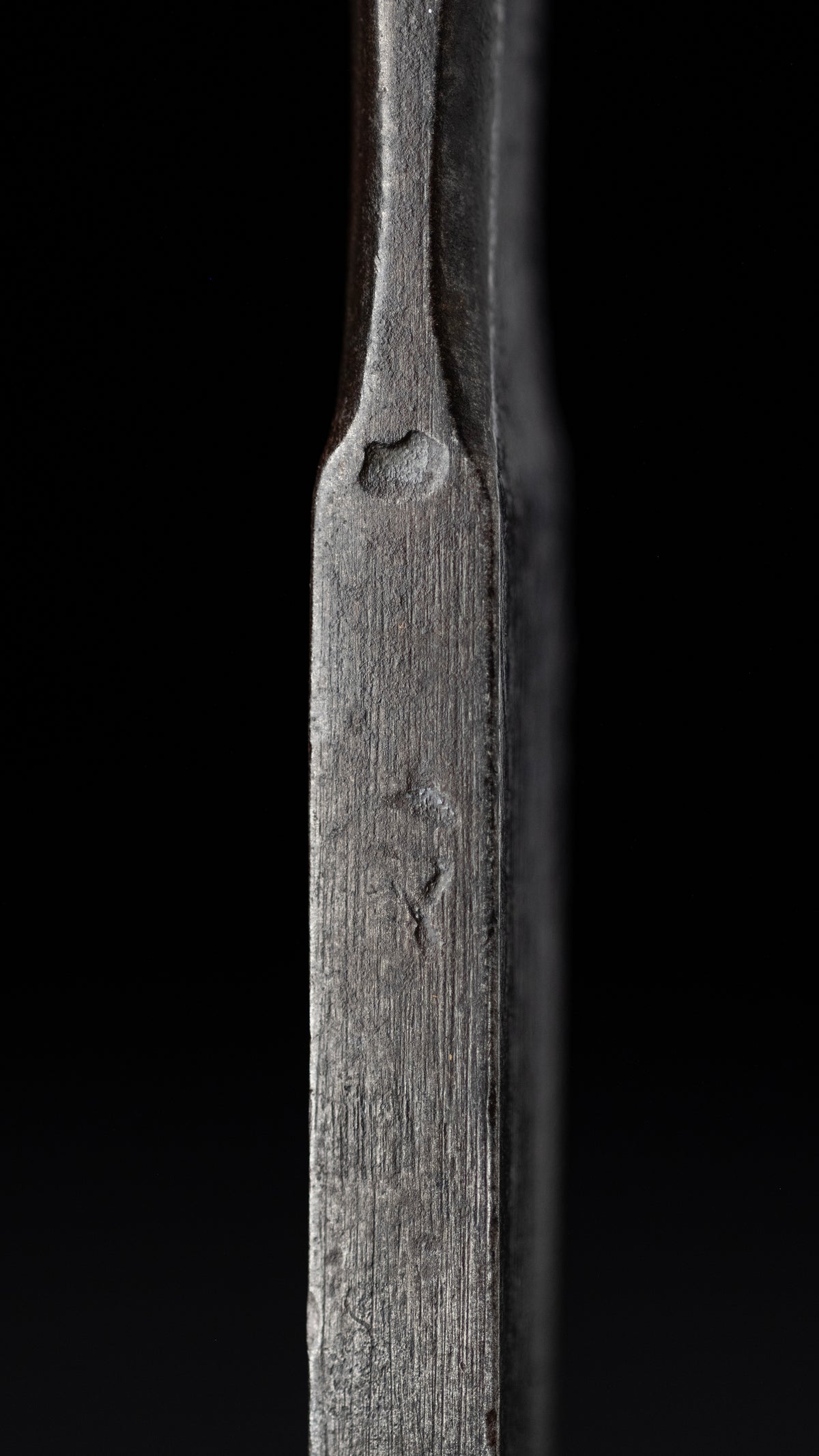
Smith name: Unknown(Although remnants of the blacksmith mark remain, they are no longer legible. After appraisal by Mr. Tsuchida, it was confirmed to have been crafted by a Kansai blacksmith.)
Steel: Tamahagane
Jigane: Watetsu
Blade width: 7.5mm
Blade thickness: Blade Bottom(about 13.10mm), The blade near the bevel(about 9.90mm)
Manufacture Era: Based on Mr. Tsuchida's appraisal, it dates approximately from the late Edo to early Meiji period
Weight: 112g
Blade Angles: 35°
Total length: 224mm
Neck length: 42mm
Blade length: 57mm
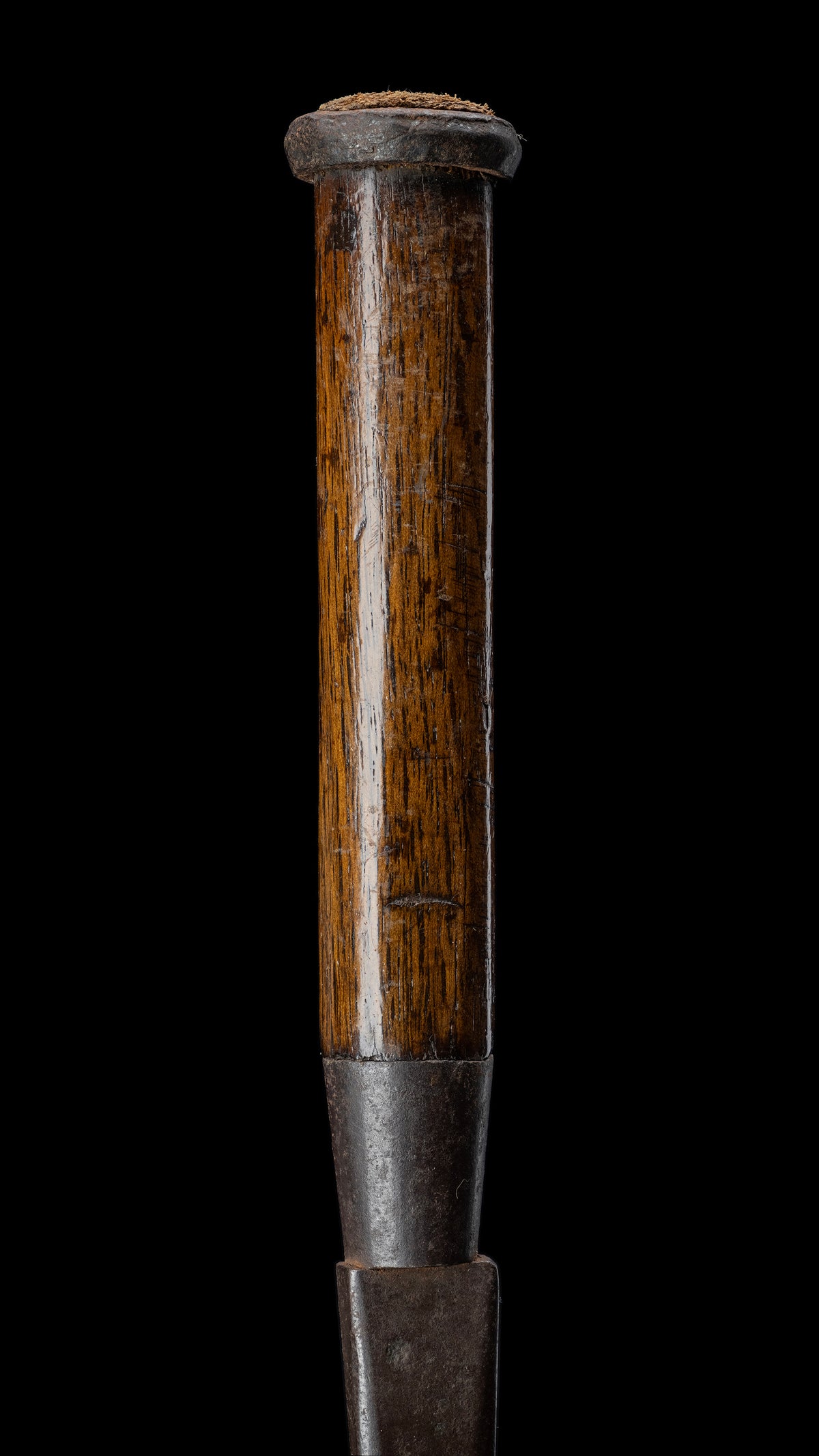
Types of wooden handles:Japanese White Oak(Shirakashi)
Accessories:Original wooden sheath (saya)
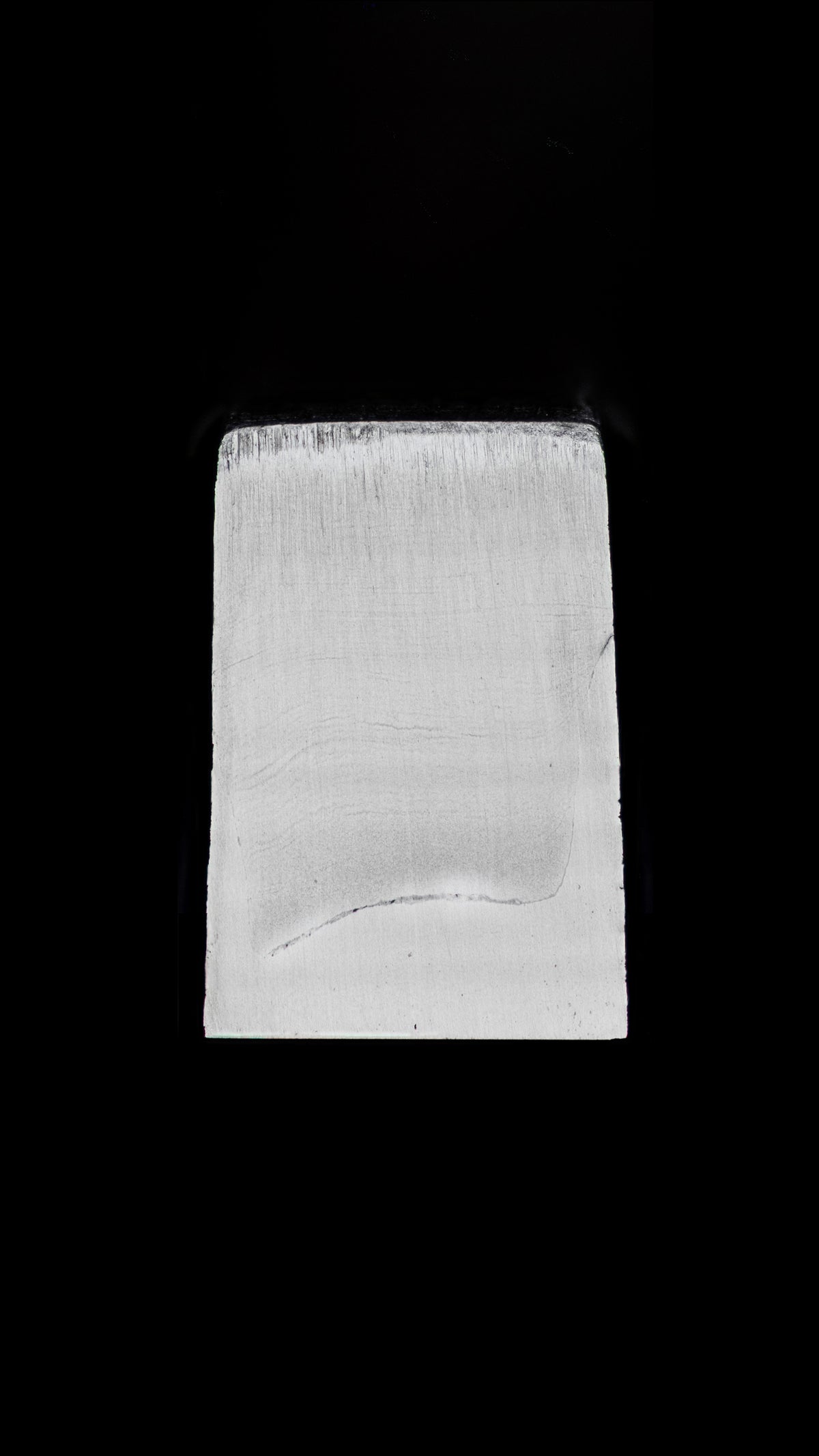
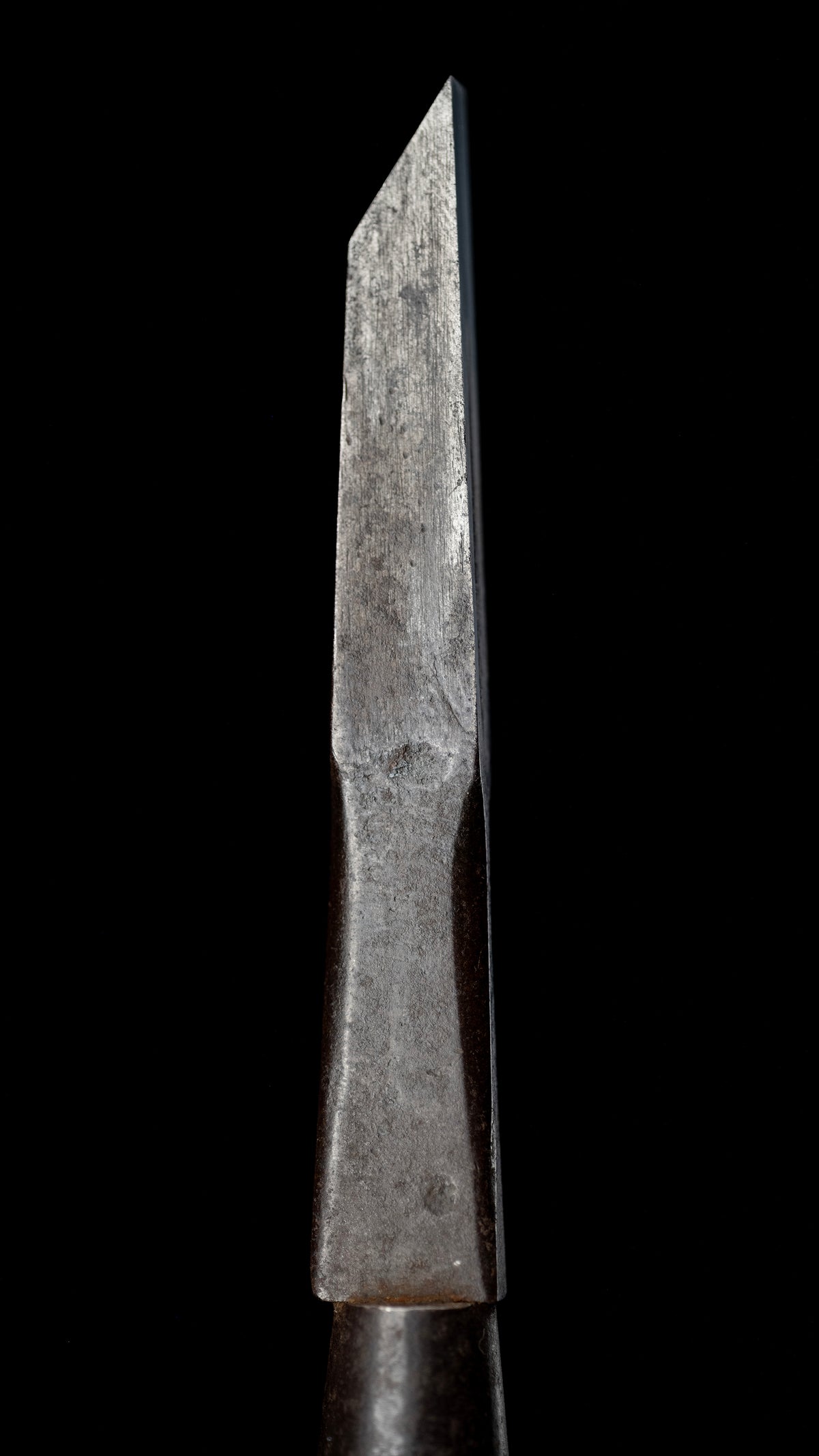
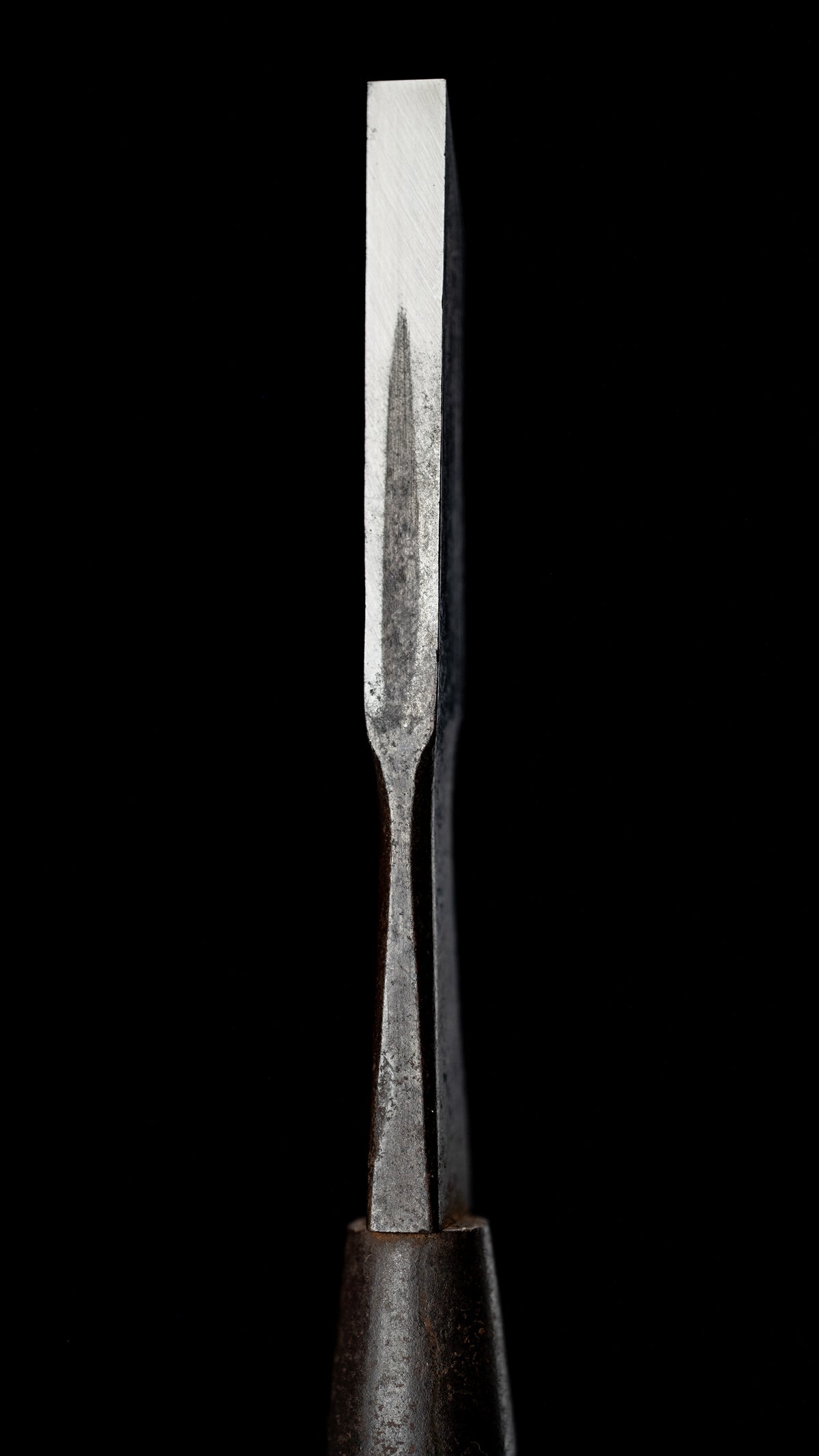
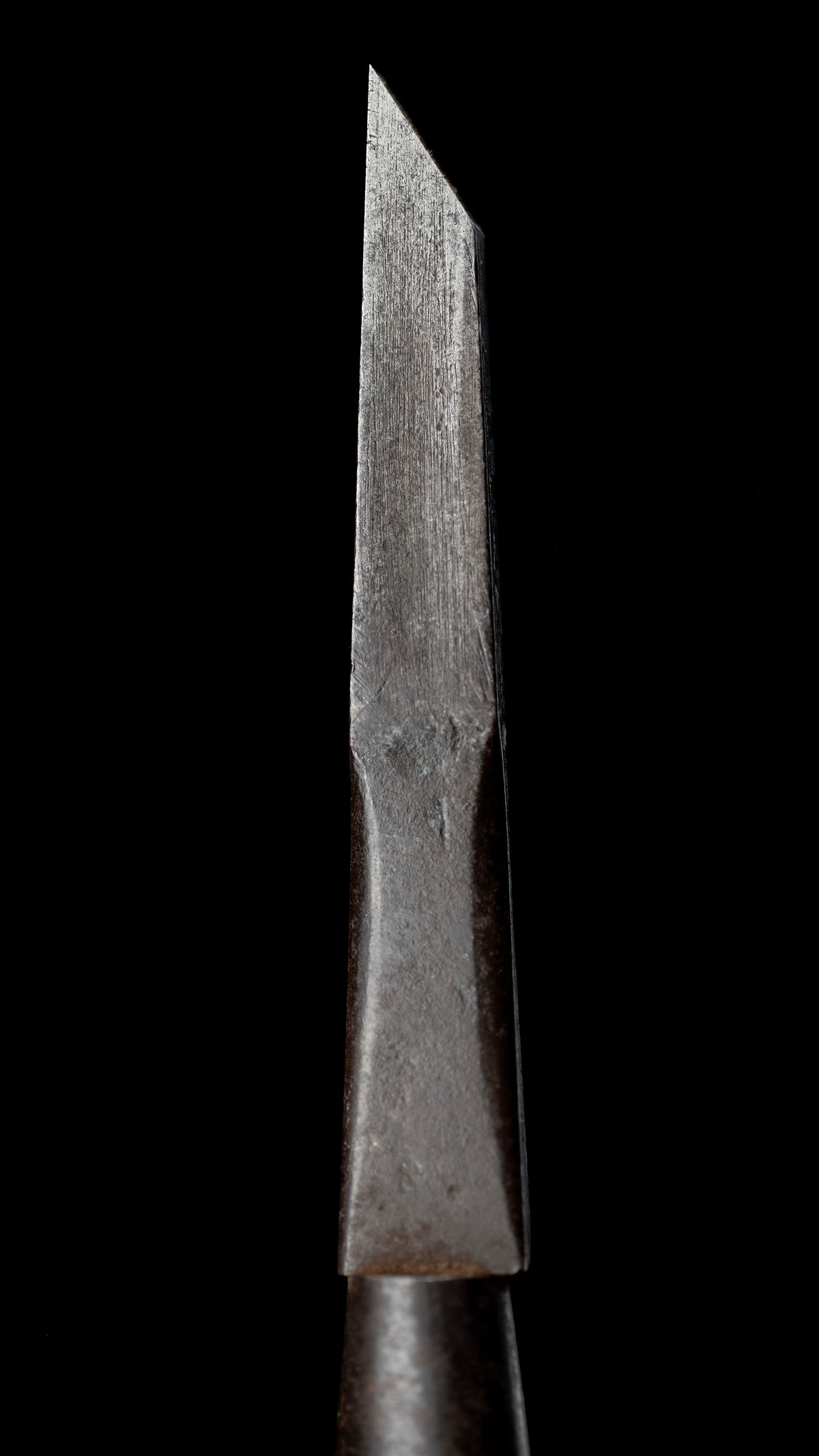
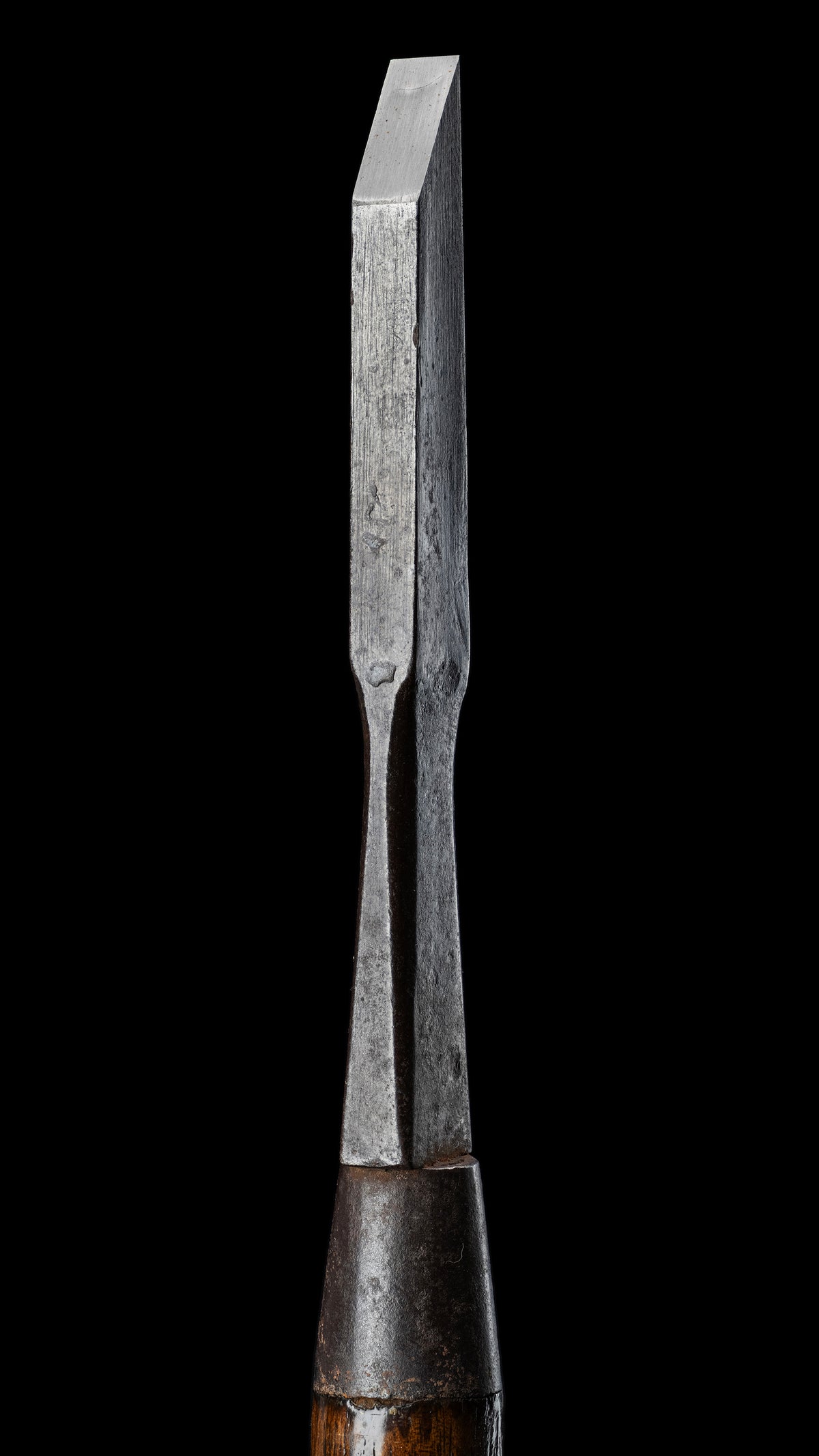
Additional Information: This chisel comes from a descendant of a Miyadaiku carpenter in the Kansai region, whose careful preservation has kept it in fine condition. According to Mr. Tsuchida's appraisal, it was entirely hand-forged by a Kansai blacksmith between the late Edo and early Meiji periods using watetsu (traditional wrought iron) and tamahagane. I have sharpened it, finishing the bevel on an Uchigumori whetstone to bring out the subtle grain of the watetsu jigane, while the ura has been sharpened to around #1000 grit. During sharpening, the jigane felt noticeably firmer than modern ultra-soft iron (gokunantetsu); the steel (tamahagane) exhibits high tenacity and stickiness, though it is slightly softer in hardness compared to modern tool steels.
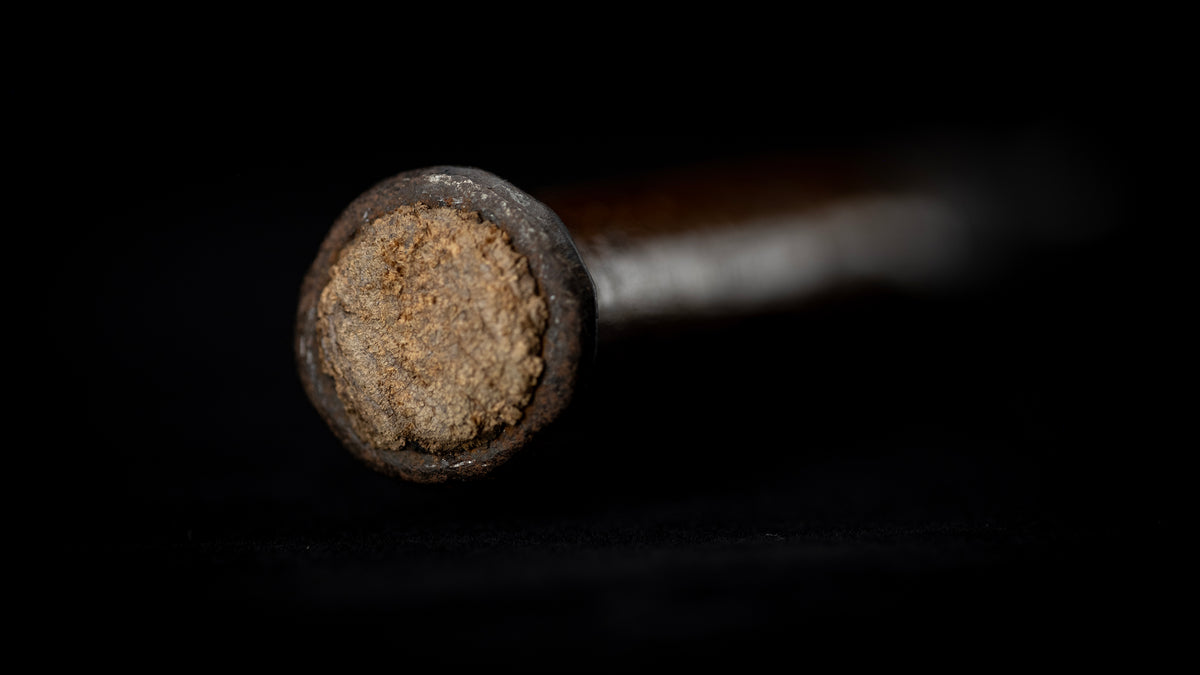
The chisel retains the unpretentious, understated appearance characteristic of the purely hand-forged era. Both flanks feature hollowed relief worked with a sen, and longitudinal sen scraping marks remain distinctly visible in the hollow of the urasuki. The hand-forged seam on the ferrule (kuchigane) is also clearly discernible. Furthermore, unlike the thicker handles common today, it features a more slender wooden handle designed for superior force transfer. Through decades of careful use, the wood has developed a rich, amber patina.
選擇選項