
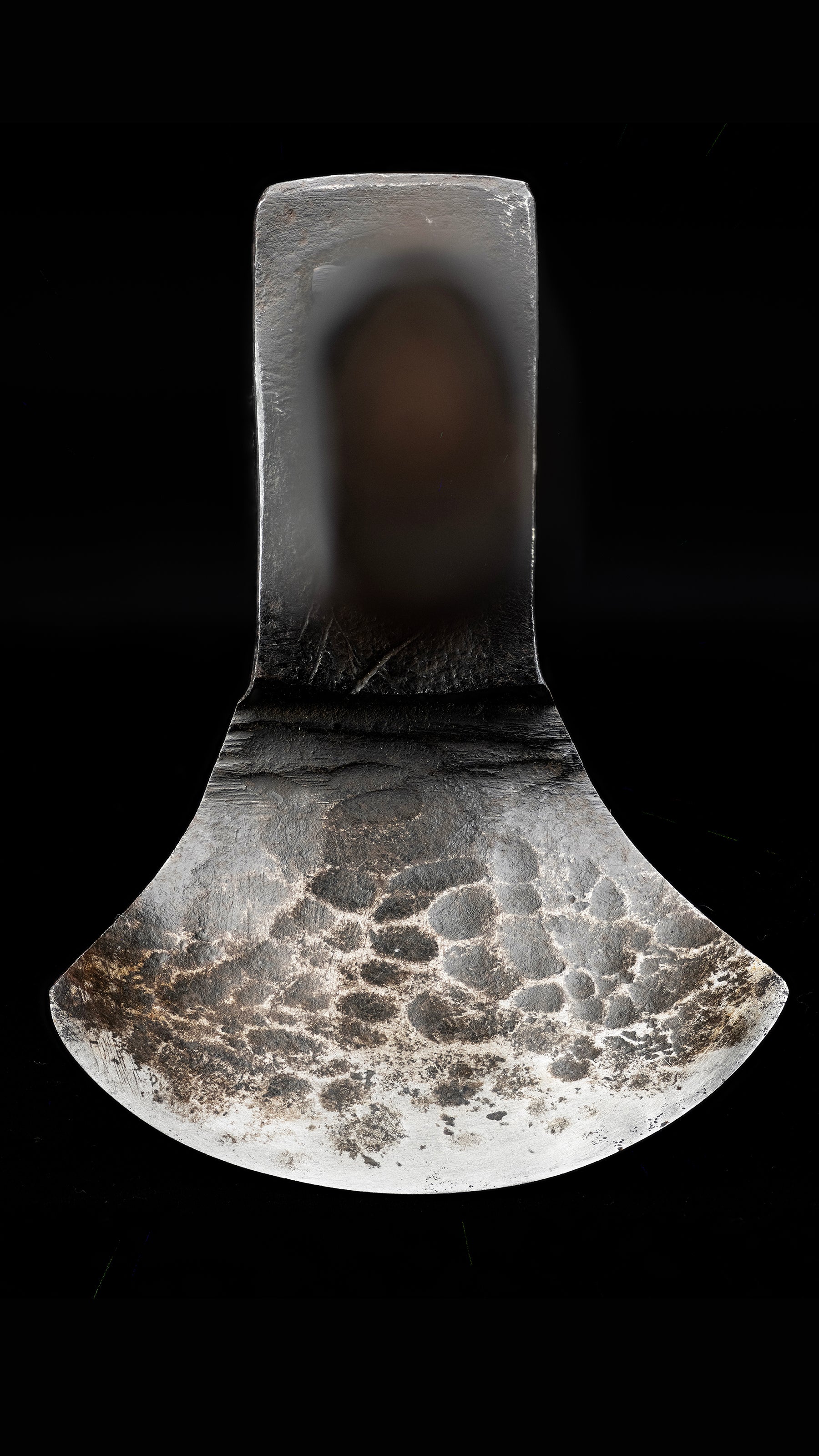
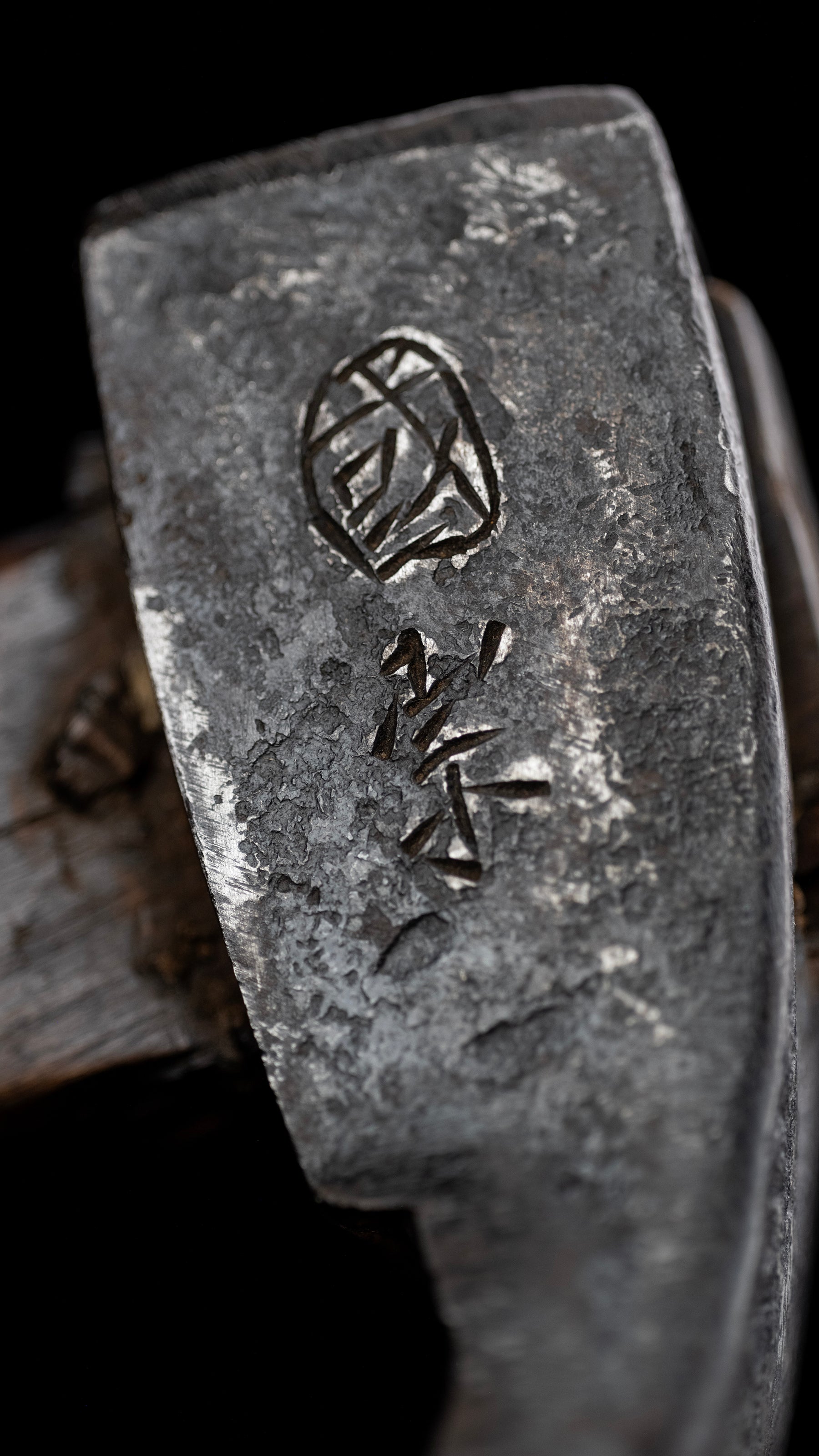
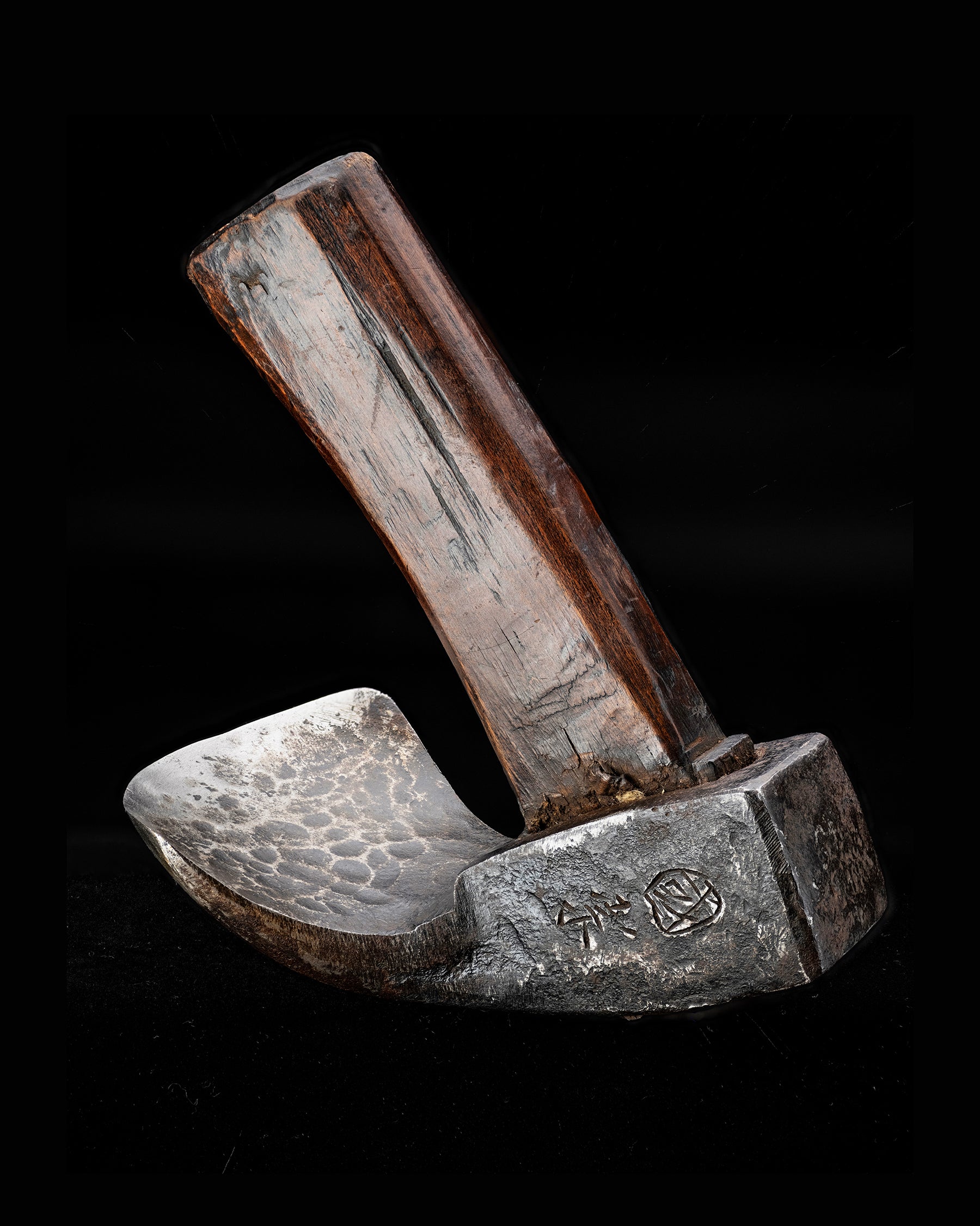
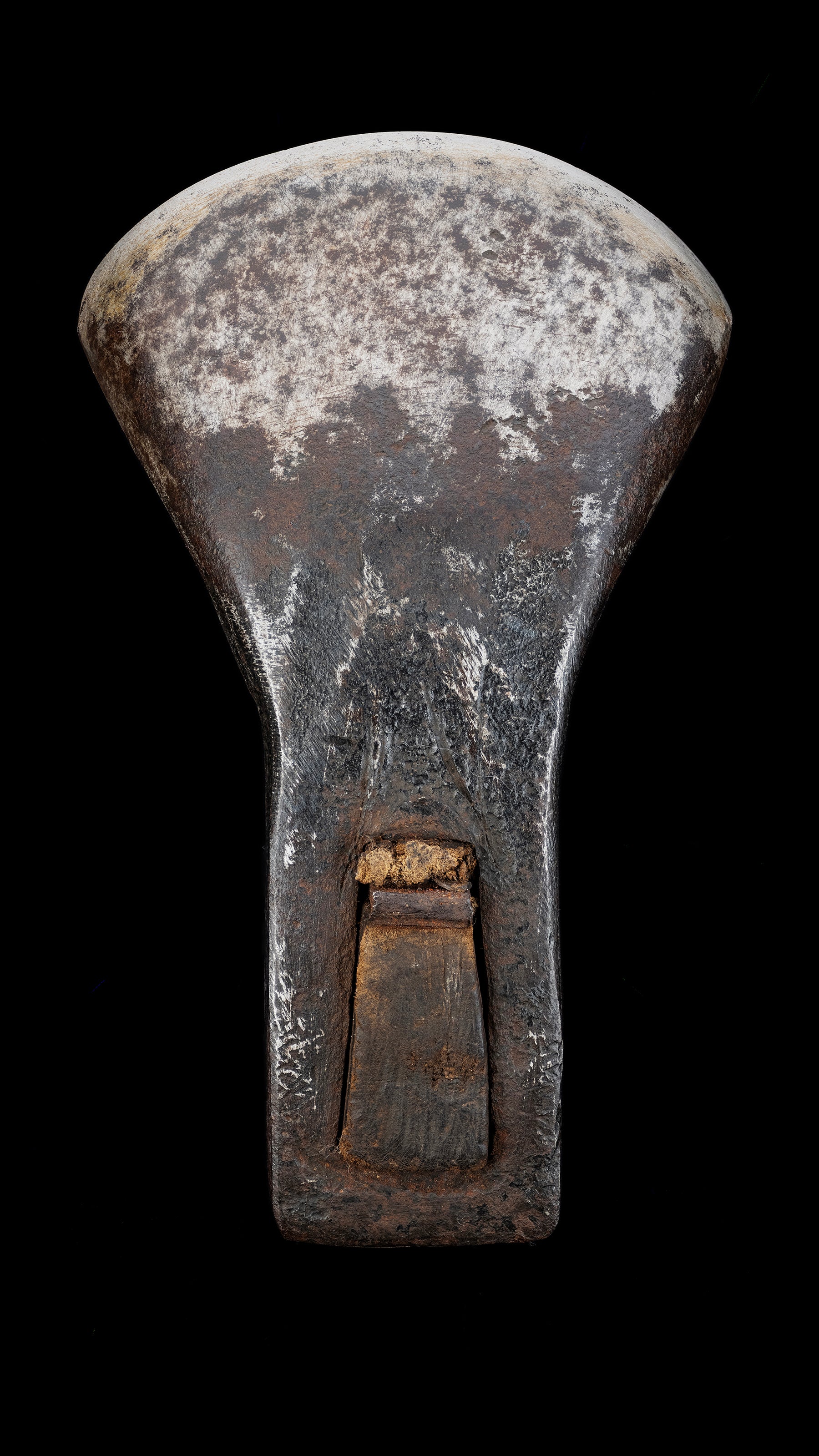
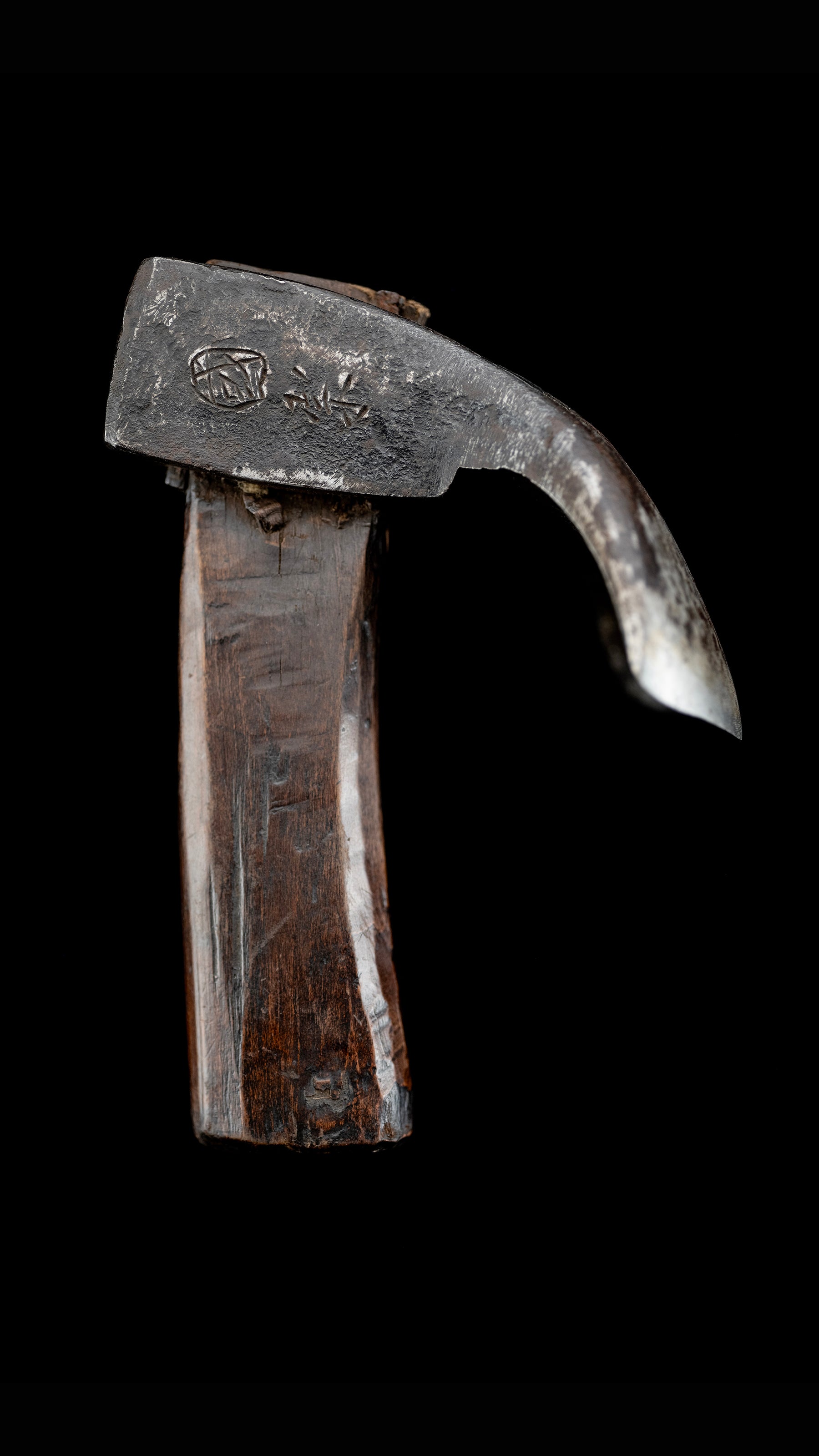
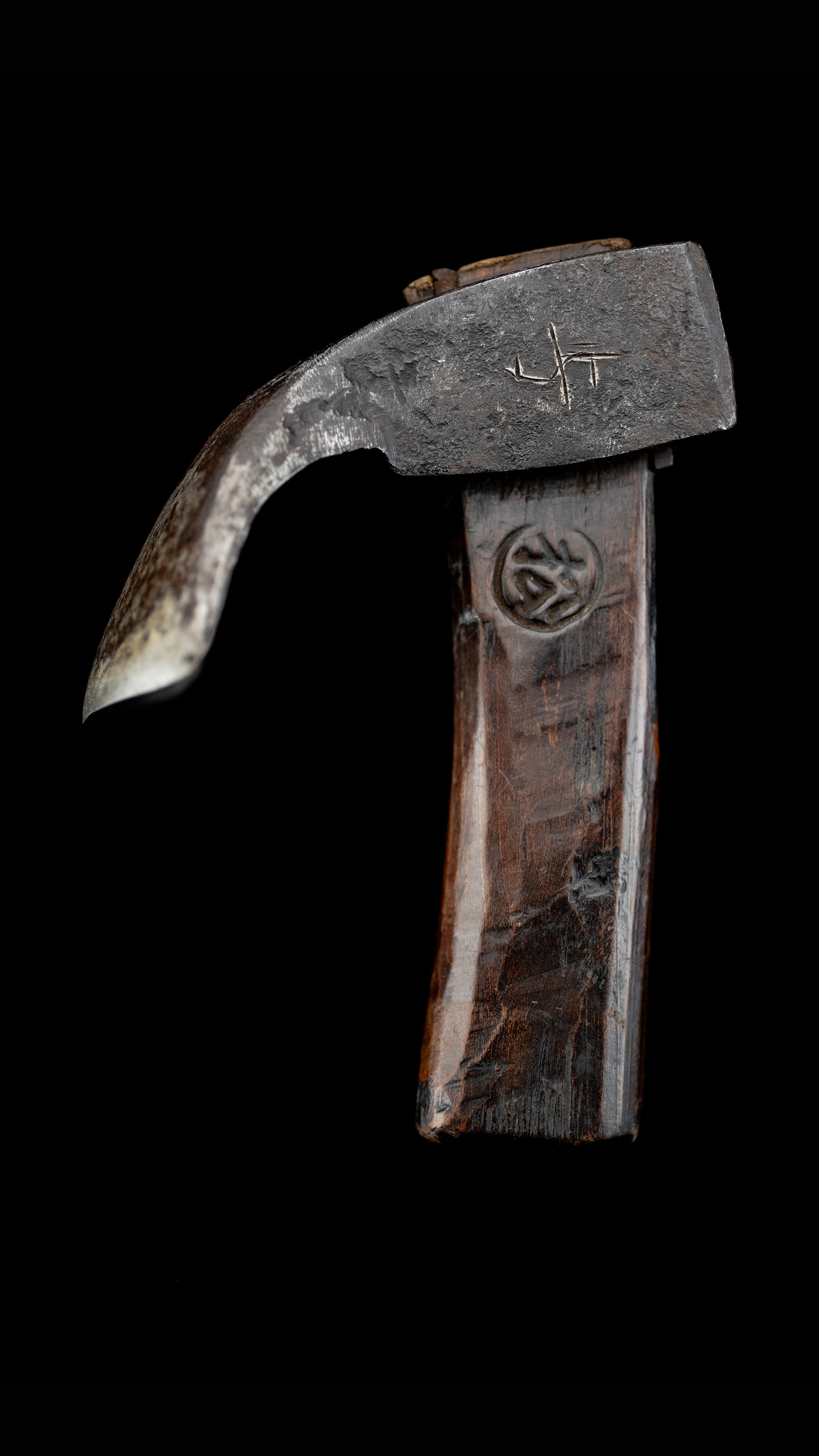
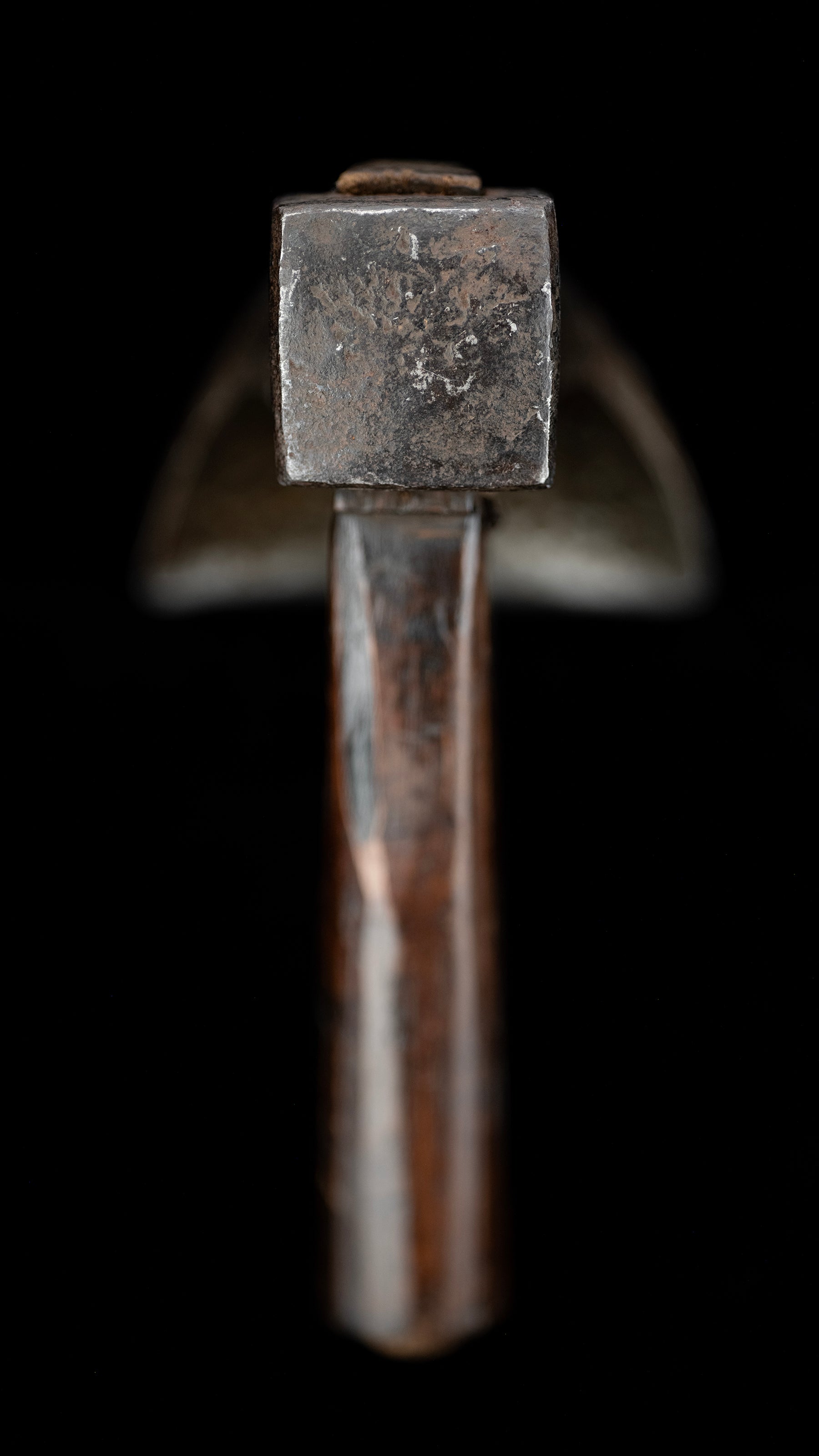
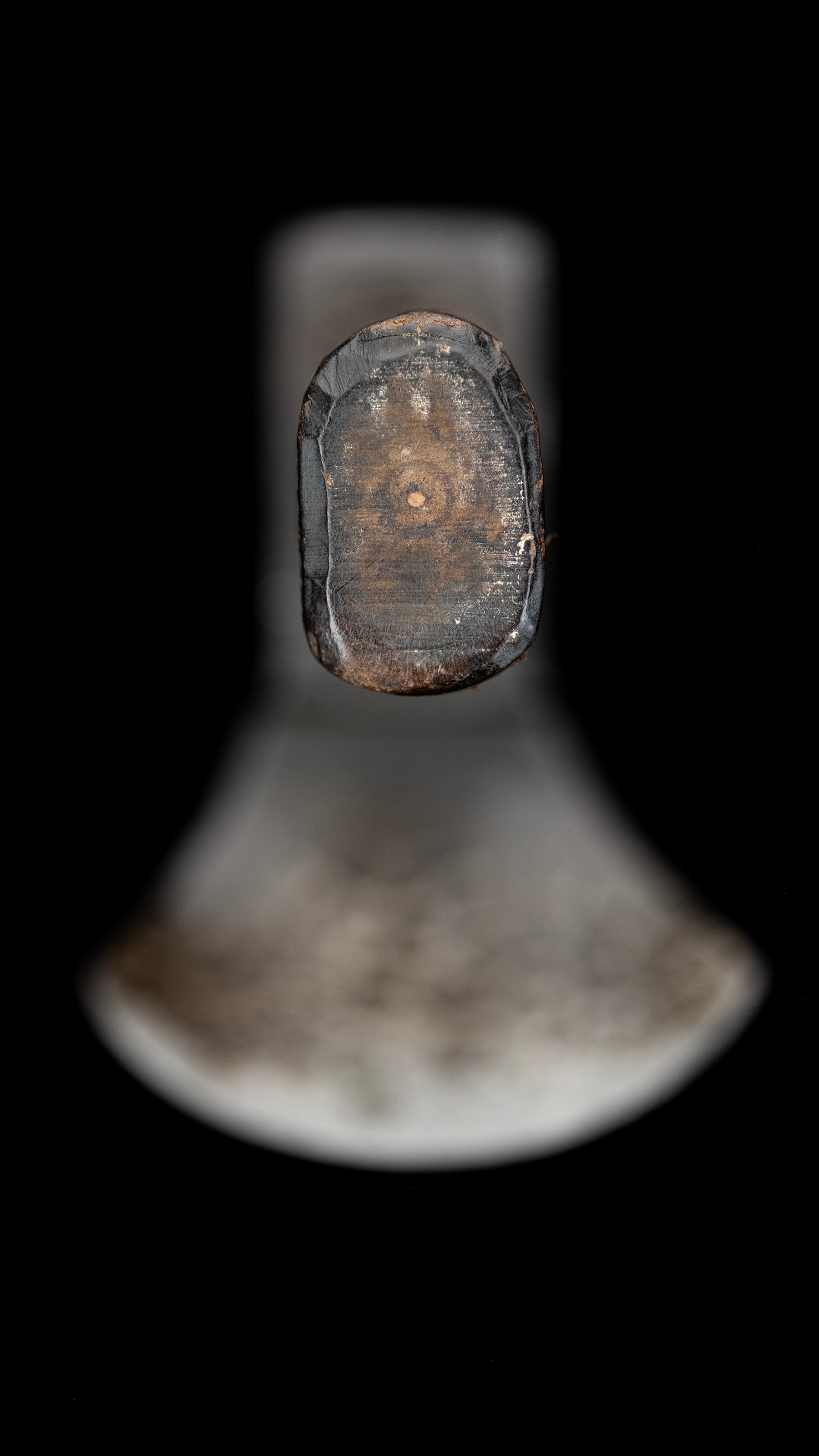
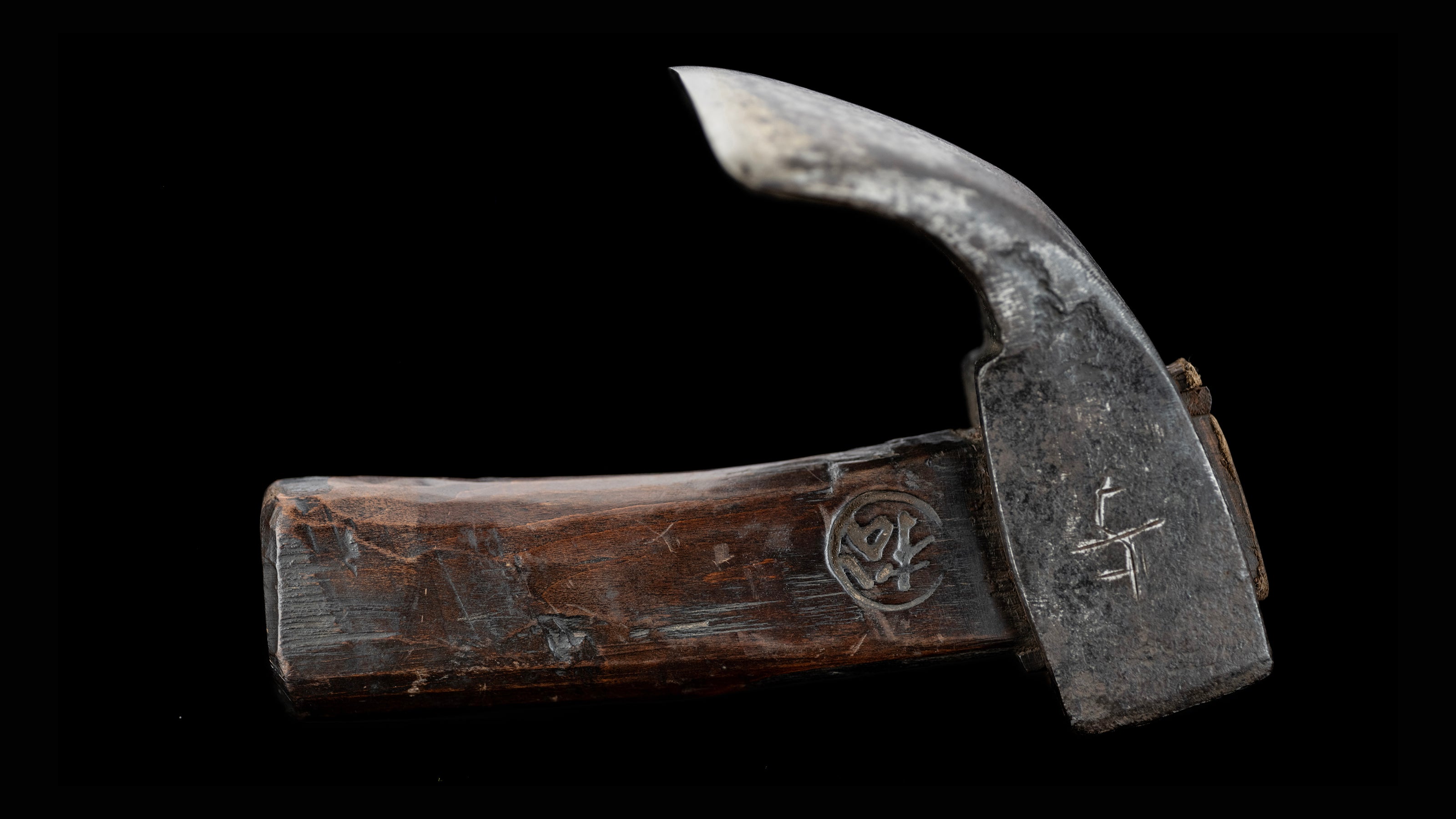
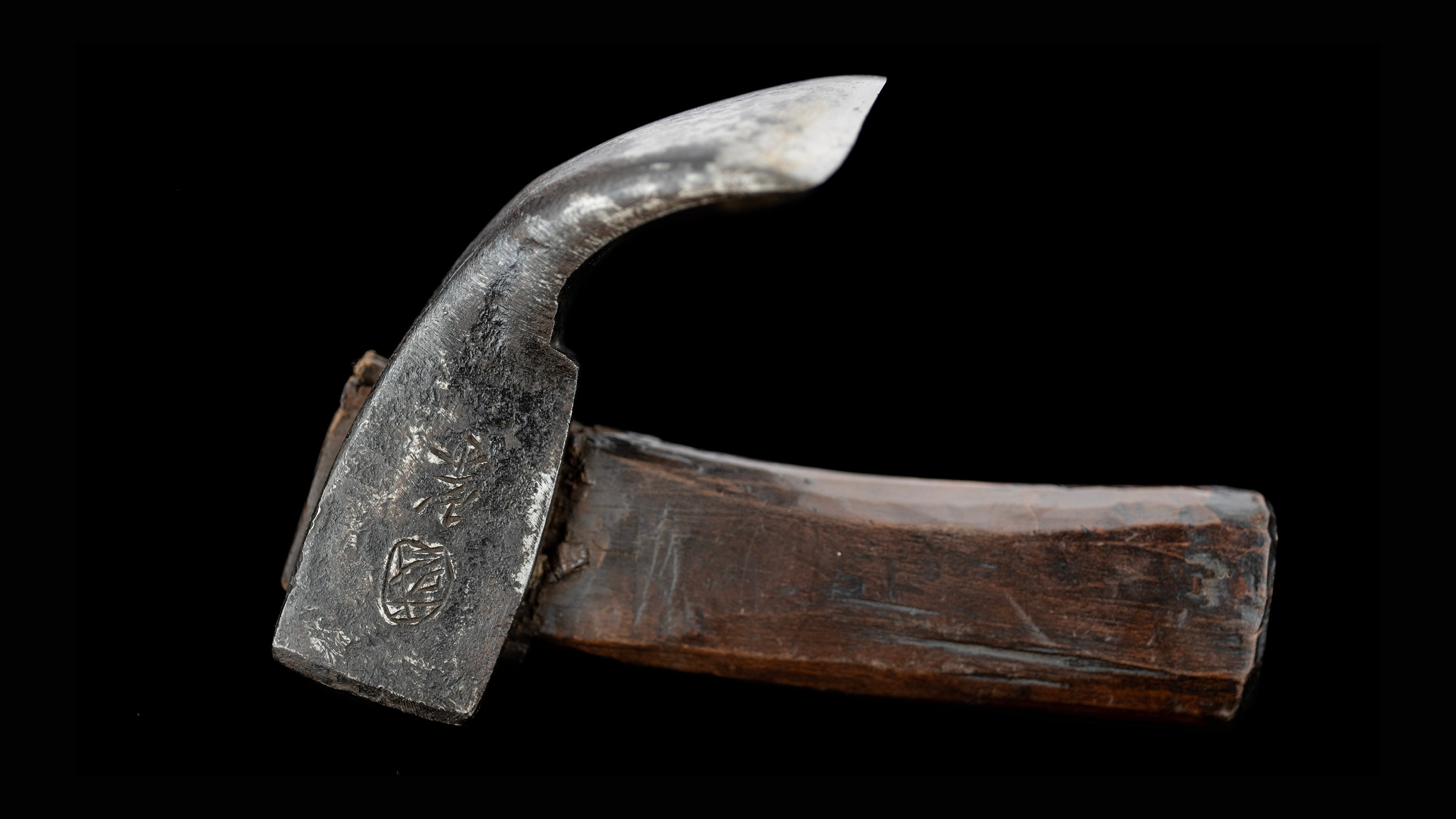
Usubori-Chouna Japanese Traditional Wooden Mortar Craftsman Tool by Kunimune
Smith name: Munekuni(國宗)
Steel: Carbon steel
Jigane: Unknown
Blade length: 130mm
Blade width: 84mm
Wooden handle length: 120mm
Total length: 160mm
Manufacture Era: Earlier than 1950
Weight: 946g
Accessories: -
Additional Information: This is a used, classic-style Usubori-Chouna. I discovered it in an antique shop near Yokohama. What captivated me most was the remnants of the hammer texture left on the blade. The entire piece embodies the rustic beauty of a functional tool shaped by time and honest labor. The handle, which has developed an amber patina from long-term use, blends seamlessly with the blade. Judging from the tool marks and its overall form, the blacksmith’s mastery is clear—there is no hesitation in his craft. The work shows minimal file work and absolutely no signs of an electric grinder; it was shaped almost entirely through the blacksmith's cold-hammer forging.
The history of this blacksmith and his lineage is documented on pages 205 and 206 of the book "The Nokaji (Rural Blacksmiths) of Aizu". Based on my research, it was likely crafted by the first-generation Kunimune, whose birth name was Ota Yuji (born in the 39th year of Meiji, and passed away on March 30, the 63th year of Showa). He apprenticed under his uncle, Ota Kameshiro (brand unknown), before independently establishing his own brand, Kunimune. He specialized in forestry and agricultural tools, and was particularly renowned for his sickles (Kama).
Interestingly, his uncle's son—who was two years younger than Yuji—inherited Kameshiro's business and relocated to the Yokohama area in the 29th year of Showa. This historical thread might perfectly explain how this specific Chouna found its way into an antique shop in Yokohama.
At 24:25 seconds in the video below, the mortar craftsman begins to use Usubori-Chona (Recent popular styles).
臼(Usu) is a wooden container. It has a bowl-like shape dug into the end of a full length of log that can withstand a beating, as the video below demonstrates.
選擇選項